Missing the Bus
Perdí el autobús
Leo misses his bus to work and tells his friend Emma about the rough start to his day. Emma asks what happened.
Leo pierde el autobús que lo lleva al trabajo y le cuenta a su amiga Emma que el día empezó mal. Emma le pregunta qué pasó.
Diálogo8
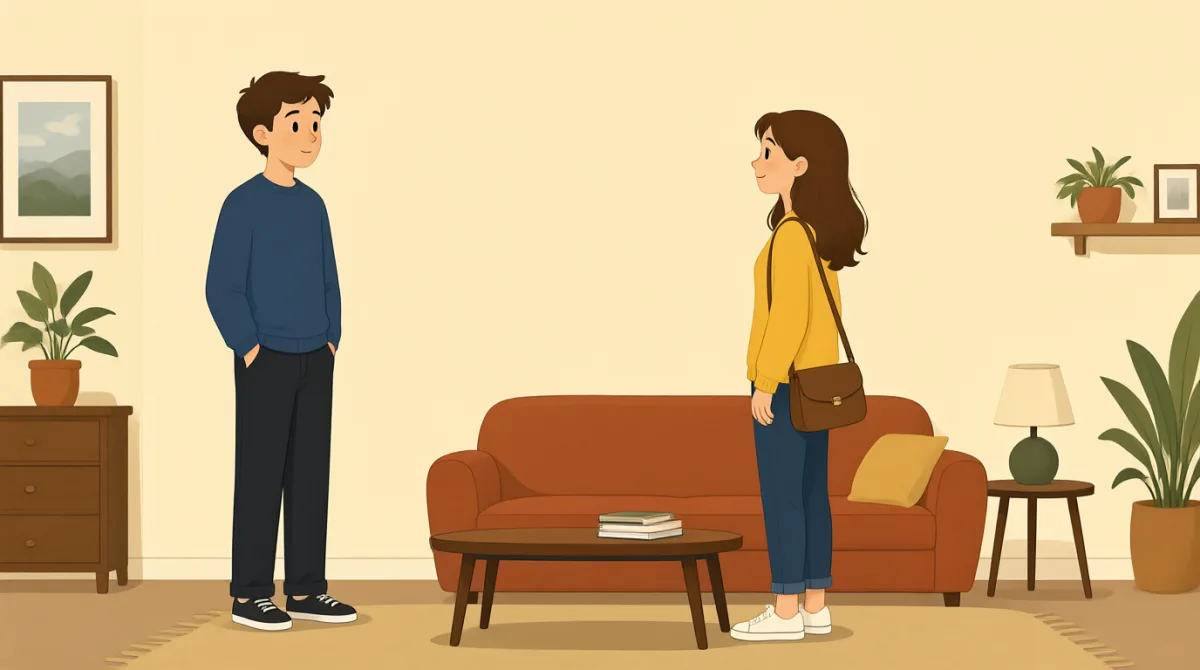

I had a terrible start to my day. I missed the bus to work.
Empecé el día fatal. Perdí el autobús para ir al trabajo.

Oh no! What happened? Did you get up late?
¡Vaya! ¿Qué pasó? ¿Te levantaste tarde?
No, I got up on time, but I couldn't find my keys.
No, me levanté a tiempo, pero no encontraba las llaves.
That sounds frustrating. Where did you look?
Qué frustrante. ¿Dónde buscaste?
I looked in my bag and on the kitchen table. They were by the door.
Busqué en mi bolso y en la mesa de la cocina. Estaban junto a la puerta.
Oh, I hate when that happens. Did you catch the next bus?
Uf, odio cuando pasa eso. ¿Pudiste tomar el siguiente autobús?
No, it had already left. I had to wait twenty minutes.
No, ya se había ido. Tuve que esperar veinte minutos.
I'm sorry, Leo. I hope the rest of your day goes better.
Lo siento, Leo. Espero que el resto del día te vaya mejor.
Vocabulario7
- terrible startun comienzo terrible
A very bad beginning to a day or event. You can say, “I had a terrible start to my morning.”
Un comienzo muy malo de un día o un evento. Puedes decir: “I had a terrible start to my morning” (Tuve un comienzo terrible de la mañana).
- missed the busperdí el autobús
You did not get on the bus because it left before you arrived. Use “missed the bus” to explain why you are late.
No alcanzaste a subirte al autobús porque se fue antes de que llegaras. Usa “missed the bus” para explicar por qué llegas tarde.
- looked in my bagbusqué en mi bolso
Searched inside your bag for something. Use “looked in” when you search inside a place or container.
Buscaste algo dentro de tu bolso. Usa “looked in” cuando buscas dentro de un lugar o recipiente.
- by the doorjunto a la puerta
Next to or near the door. You can use “by” to say where something is, as in “My shoes are by the door.”
Al lado de la puerta o cerca de ella. Puedes usar “by” para decir dónde está algo, como en “My shoes are by the door” (Mis zapatos están junto a la puerta).
- catch the next bustomar el siguiente autobús
Get on the next bus that comes. You can ask, “Can we catch the next bus?”
Subirte al siguiente autobús que pase. Puedes preguntar: “Can we catch the next bus?” (¿Podemos tomar el siguiente autobús?).
- had to waittuve que esperar
Needed to stay somewhere until something happened. Use “had to” to talk about something necessary in the past.
Necesitaste quedarte en algún lugar hasta que pasara algo. Usa “had to” para hablar de algo que fue necesario en el pasado.
- the rest of your dayel resto del día
The part of the day that is still left. You can wish someone, “I hope the rest of your day goes well.”
La parte del día que todavía queda. Puedes desearle a alguien: “I hope the rest of your day goes well” (Espero que el resto del día te vaya bien).
Frases clave8
- 1
I had a terrible start to my day.
Tuve un comienzo terrible del día.
Use this to say that your day began badly. You can replace “terrible” with “good” or “busy” to describe a different start.
Usa esta frase para decir que tu día empezó mal. Puedes cambiar “terrible” por “good” o “busy” para describir un comienzo diferente.
- 2
I missed the bus to work.
Perdí el autobús para ir al trabajo.
This is a simple way to explain that you did not get on your bus. Replace “the bus” with another thing you missed, such as “my train.”
Esta es una forma sencilla de explicar que no alcanzaste a subirte al autobús. Cambia “the bus” por otra cosa que perdiste, como “my train”.
- 3
Did you get up late?
¿Te levantaste tarde?
Use this question to ask if someone woke up later than planned. You can ask, “Did you get up late for school?”
Usa esta pregunta para saber si alguien se despertó más tarde de lo previsto. Puedes preguntar: “Did you get up late for school?” (¿Te levantaste tarde para ir a la escuela?).
- 4
I couldn't find my keys.
No encontraba las llaves.
Use this to explain that you searched for something but did not find it. Replace “my keys” with another item, such as “my phone.”
Usa esta frase para explicar que buscaste algo, pero no lo encontraste. Cambia “my keys” por otro objeto, como “my phone”.
- 5
Where did you look?
¿Dónde buscaste?
This question asks where someone searched for something. You can use it when helping someone find a lost item.
Esta pregunta sirve para saber dónde buscó alguien algo. Puedes usarla para ayudar a alguien a encontrar un objeto perdido.
- 6
They were by the door.
Estaban junto a la puerta.
Use this to say where plural items were. For one item, say, “It was by the door.”
Usa esta frase para decir dónde estaban varias cosas. Si hablas de una sola, di: “It was by the door” (Estaba junto a la puerta).
- 7
I had to wait twenty minutes.
Tuve que esperar veinte minutos.
This tells someone how long you needed to wait. Replace “twenty minutes” with another length of time.
Con esta frase le dices a alguien cuánto tiempo tuviste que esperar. Cambia “twenty minutes” por otra cantidad de tiempo.
- 8
I hope the rest of your day goes better.
Espero que el resto del día te vaya mejor.
This is a kind way to wish someone a better day after something went wrong. You can also say, “I hope your week goes better.”
Es una forma amable de desearle a alguien que tenga un día mejor después de que algo salió mal. También puedes decir: “I hope your week goes better” (Espero que el resto de la semana te vaya mejor).