Missing the Bus
বাস মিস করা
Leo misses his bus to work and tells his friend Emma about the rough start to his day. Emma asks what happened.
লিও কাজে যাওয়ার বাস মিস করে এবং তার দিনের খারাপ শুরুর কথা বন্ধু এমাকে বলে। এমা কী ঘটেছিল তা জানতে চায়।
সংলাপ8
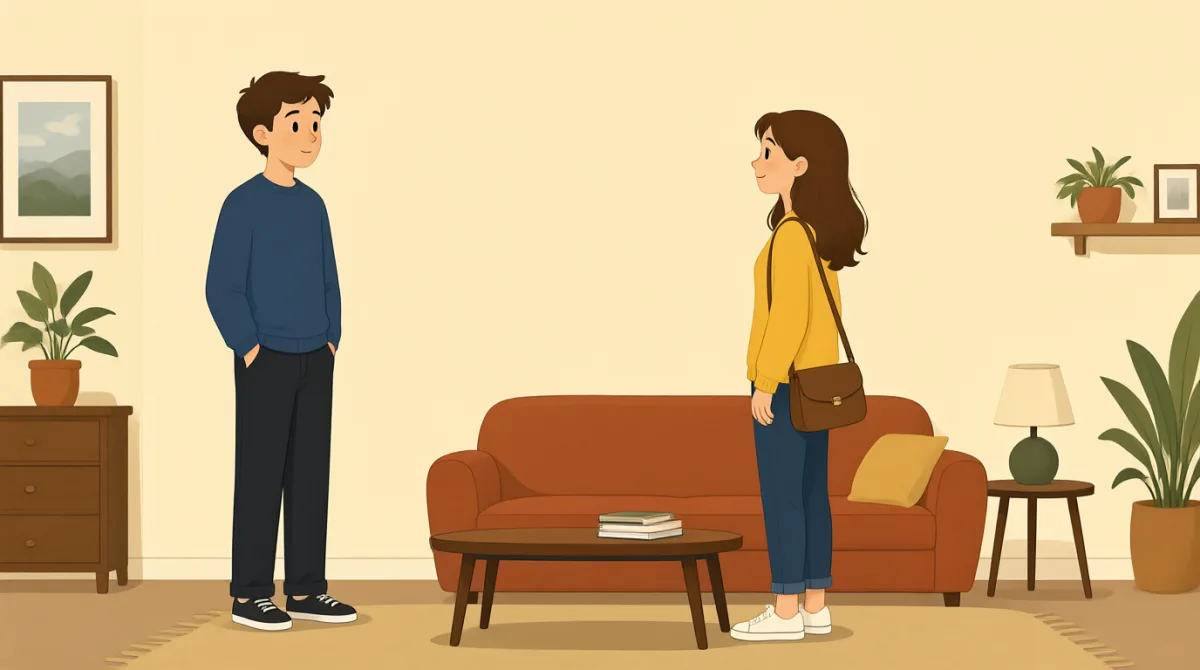

I had a terrible start to my day. I missed the bus to work.
আমার দিনটা ভীষণ খারাপভাবে শুরু হয়েছে। কাজে যাওয়ার বাসটা মিস করেছি।

Oh no! What happened? Did you get up late?
ওহ না! কী হয়েছে? দেরি করে ঘুম থেকে উঠেছিলে?
No, I got up on time, but I couldn't find my keys.
না, সময়মতোই উঠেছিলাম, কিন্তু চাবিগুলো খুঁজে পাচ্ছিলাম না।
That sounds frustrating. Where did you look?
বেশ বিরক্তিকর ব্যাপার তো। কোথায় খুঁজেছিলে?
I looked in my bag and on the kitchen table. They were by the door.
ব্যাগের ভেতর আর রান্নাঘরের টেবিলে খুঁজেছিলাম। ওগুলো দরজার পাশে ছিল।
Oh, I hate when that happens. Did you catch the next bus?
ওহ, এমন হলে আমার ভীষণ বিরক্ত লাগে। পরের বাসটা ধরতে পেরেছিলে?
No, it had already left. I had to wait twenty minutes.
না, সেটাও ততক্ষণে চলে গিয়েছিল। আমাকে বিশ মিনিট অপেক্ষা করতে হয়েছে।
I'm sorry, Leo. I hope the rest of your day goes better.
খারাপ লাগছে, লিও। আশা করি, তোমার দিনের বাকি সময়টা ভালো কাটবে।
শব্দভান্ডার7
- terrible startভীষণ খারাপ শুরু
A very bad beginning to a day or event. You can say, “I had a terrible start to my morning.”
কোনো দিন বা ঘটনার খুব খারাপ শুরু বোঝাতে এটি বলা হয়। তুমি বলতে পারো, “I had a terrible start to my morning.”
- missed the busবাস মিস করেছি
You did not get on the bus because it left before you arrived. Use “missed the bus” to explain why you are late.
তুমি বাসে উঠতে পারোনি, কারণ তুমি পৌঁছানোর আগেই বাসটি চলে গেছে। দেরি হওয়ার কারণ বোঝাতে “missed the bus” ব্যবহার করো।
- looked in my bagআমার ব্যাগের ভেতর খুঁজেছিলাম
Searched inside your bag for something. Use “looked in” when you search inside a place or container.
কোনো কিছু খুঁজতে ব্যাগের ভেতর তল্লাশি করা বোঝায়। কোনো জায়গা বা পাত্রের ভেতর খোঁজার সময় “looked in” ব্যবহার করো।
- by the doorদরজার পাশে
Next to or near the door. You can use “by” to say where something is, as in “My shoes are by the door.”
দরজার পাশে বা কাছাকাছি। কোনো জিনিস কোথায় আছে তা বলতে “by” ব্যবহার করা যায়, যেমন “My shoes are by the door.”
- catch the next busপরের বাসটা ধরা
Get on the next bus that comes. You can ask, “Can we catch the next bus?”
যে পরের বাসটি আসে, তাতে ওঠা বোঝায়। তুমি জিজ্ঞেস করতে পারো, “Can we catch the next bus?”
- had to waitঅপেক্ষা করতে হয়েছিল
Needed to stay somewhere until something happened. Use “had to” to talk about something necessary in the past.
কিছু একটা না হওয়া পর্যন্ত কোনো জায়গায় থাকতে হওয়া বোঝায়। অতীতে কোনো কাজ করা জরুরি ছিল—এমন কথা বলতে “had to” ব্যবহার করো।
- the rest of your dayতোমার দিনের বাকি সময়
The part of the day that is still left. You can wish someone, “I hope the rest of your day goes well.”
দিনের যে অংশটুকু এখনো বাকি আছে। কাউকে শুভকামনা জানিয়ে তুমি বলতে পারো, “I hope the rest of your day goes well.”
গুরুত্বপূর্ণ বাক্য8
- 1
I had a terrible start to my day.
আমার দিনটা ভীষণ খারাপভাবে শুরু হয়েছে।
Use this to say that your day began badly. You can replace “terrible” with “good” or “busy” to describe a different start.
তোমার দিনটি খারাপভাবে শুরু হয়েছে—এ কথা বলতে এটি ব্যবহার করো। ভিন্ন ধরনের শুরু বোঝাতে “terrible”-এর বদলে “good” বা “busy” বসাতে পারো।
- 2
I missed the bus to work.
কাজে যাওয়ার বাসটা মিস করেছি।
This is a simple way to explain that you did not get on your bus. Replace “the bus” with another thing you missed, such as “my train.”
তুমি বাসে উঠতে পারোনি—এ কথা বোঝানোর এটি একটি সহজ উপায়। “the bus”-এর বদলে তুমি যে অন্য কোনো যান মিস করেছ, সেটি বসাতে পারো, যেমন “my train.”
- 3
Did you get up late?
দেরি করে ঘুম থেকে উঠেছিলে?
Use this question to ask if someone woke up later than planned. You can ask, “Did you get up late for school?”
কেউ পরিকল্পনার চেয়ে দেরিতে ঘুম থেকে উঠেছে কি না জানতে এই প্রশ্নটি ব্যবহার করো। তুমি জিজ্ঞেস করতে পারো, “Did you get up late for school?”
- 4
I couldn't find my keys.
আমি আমার চাবিগুলো খুঁজে পাচ্ছিলাম না।
Use this to explain that you searched for something but did not find it. Replace “my keys” with another item, such as “my phone.”
কোনো কিছু খুঁজেও তা পাওনি—এ কথা বোঝাতে এটি ব্যবহার করো। “my keys”-এর বদলে অন্য কোনো জিনিস বসাতে পারো, যেমন “my phone.”
- 5
Where did you look?
কোথায় খুঁজেছিলে?
This question asks where someone searched for something. You can use it when helping someone find a lost item.
কেউ কোনো জিনিস কোথায় খুঁজেছে, এই প্রশ্নে তা জানতে চাওয়া হয়। কেউ হারানো জিনিস খুঁজলে তাকে সাহায্য করার সময় এটি ব্যবহার করতে পারো।
- 6
They were by the door.
ওগুলো দরজার পাশে ছিল।
Use this to say where plural items were. For one item, say, “It was by the door.”
একাধিক জিনিস কোথায় ছিল তা বলতে এটি ব্যবহার করো। একটি জিনিস হলে বলবে, “It was by the door.”
- 7
I had to wait twenty minutes.
আমাকে বিশ মিনিট অপেক্ষা করতে হয়েছে।
This tells someone how long you needed to wait. Replace “twenty minutes” with another length of time.
কতক্ষণ অপেক্ষা করতে হয়েছে, তা কাউকে জানাতে এই বাক্যটি ব্যবহার করা হয়। “twenty minutes”-এর বদলে অন্য কোনো সময়ের দৈর্ঘ্য বসাতে পারো।
- 8
I hope the rest of your day goes better.
আশা করি, তোমার দিনের বাকি সময়টা ভালো কাটবে।
This is a kind way to wish someone a better day after something went wrong. You can also say, “I hope your week goes better.”
কিছু খারাপ হওয়ার পর কাউকে তার বাকি দিনটি ভালো কাটার শুভকামনা জানাতে এটি একটি আন্তরিক উপায়। তুমি আরও বলতে পারো, “I hope your week goes better.”