Missing the Bus
バスに乗り遅れて
Leo misses his bus to work and tells his friend Emma about the rough start to his day. Emma asks what happened.
レオは通勤バスに乗り遅れ、朝からついていないことを友達のエマに話します。エマは何があったのか尋ねます。
会話8
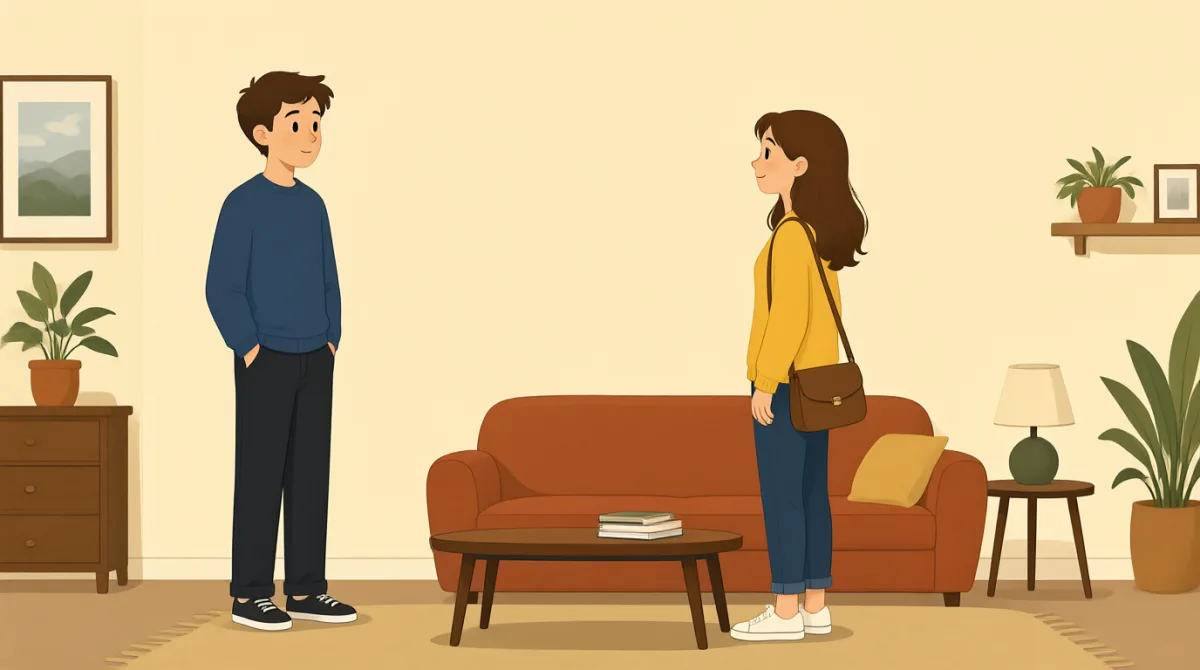

I had a terrible start to my day. I missed the bus to work.
今日は最悪のスタートだったよ。通勤バスに乗り遅れちゃった。

Oh no! What happened? Did you get up late?
うわ、それは大変!何があったの?寝坊したの?
No, I got up on time, but I couldn't find my keys.
ううん、時間どおりに起きたんだけど、鍵が見つからなかったんだ。
That sounds frustrating. Where did you look?
それはイライラするね。どこを探したの?
I looked in my bag and on the kitchen table. They were by the door.
バッグの中とキッチンのテーブルを探したよ。ドアのそばにあったんだ。
Oh, I hate when that happens. Did you catch the next bus?
ああ、そういうの嫌だよね。次のバスには乗れた?
No, it had already left. I had to wait twenty minutes.
ううん、もう出たあとだった。20分待たなきゃいけなかったよ。
I'm sorry, Leo. I hope the rest of your day goes better.
それは大変だったね、レオ。このあとはいい一日になるといいね。
語彙7
- terrible start最悪のスタート
A very bad beginning to a day or event. You can say, “I had a terrible start to my morning.”
一日や出来事の始まりがとても悪かった、という意味です。“I had a terrible start to my morning.”(朝から最悪のスタートだった)と言うこともできます。
- missed the busバスに乗り遅れた
You did not get on the bus because it left before you arrived. Use “missed the bus” to explain why you are late.
着く前にバスが出てしまい、乗れなかったという意味です。遅刻した理由を説明するときに“missed the bus”を使います。
- looked in my bagバッグの中を探した
Searched inside your bag for something. Use “looked in” when you search inside a place or container.
何かを探してバッグの中を調べた、という意味です。場所や入れ物の中を探すときは“looked in”を使います。
- by the doorドアのそばに
Next to or near the door. You can use “by” to say where something is, as in “My shoes are by the door.”
ドアの隣や近くに、という意味です。“by”は物の場所を表すときにも使えます。たとえば“My shoes are by the door.”(靴はドアのそばにあるよ)と言えます。
- catch the next bus次のバスに乗る
Get on the next bus that comes. You can ask, “Can we catch the next bus?”
次に来るバスに乗る、という意味です。“Can we catch the next bus?”(次のバスに乗れるかな?)と尋ねることもできます。
- had to wait待たなければならなかった
Needed to stay somewhere until something happened. Use “had to” to talk about something necessary in the past.
何かが起きるまで、ある場所で待つ必要があったという意味です。過去に必要だったことについて話すときは“had to”を使います。
- the rest of your day今日の残り
The part of the day that is still left. You can wish someone, “I hope the rest of your day goes well.”
その日のうち、まだ残っている時間のことです。“I hope the rest of your day goes well.”(今日の残りが順調にいくといいね)と願うこともできます。
重要な文8
- 1
I had a terrible start to my day.
今日は最悪のスタートだったよ。
Use this to say that your day began badly. You can replace “terrible” with “good” or “busy” to describe a different start.
一日の始まりがよくなかったと伝える表現です。“terrible”を“good”や“busy”に替えれば、別の始まり方を表せます。
- 2
I missed the bus to work.
通勤バスに乗り遅れちゃった。
This is a simple way to explain that you did not get on your bus. Replace “the bus” with another thing you missed, such as “my train.”
乗るはずだったバスに乗れなかったことを簡潔に伝える表現です。“the bus”を“my train”のように、乗り遅れた別の乗り物に替えられます。
- 3
Did you get up late?
寝坊したの?
Use this question to ask if someone woke up later than planned. You can ask, “Did you get up late for school?”
予定より遅く起きたかどうかを尋ねる質問です。“Did you get up late for school?”(学校に行くのに寝坊したの?)と聞くこともできます。
- 4
I couldn't find my keys.
鍵が見つからなかったんだ。
Use this to explain that you searched for something but did not find it. Replace “my keys” with another item, such as “my phone.”
何かを探したけれど見つからなかった、と伝える表現です。“my keys”を“my phone”のような別の物に替えられます。
- 5
Where did you look?
どこを探したの?
This question asks where someone searched for something. You can use it when helping someone find a lost item.
相手が何かをどこで探したのか尋ねる質問です。なくし物を探す手伝いをするときにも使えます。
- 6
They were by the door.
それはドアのそばにあったよ。
Use this to say where plural items were. For one item, say, “It was by the door.”
複数の物がどこにあったのかを伝える表現です。物が一つなら“It was by the door.”と言います。
- 7
I had to wait twenty minutes.
20分待たなきゃいけなかったよ。
This tells someone how long you needed to wait. Replace “twenty minutes” with another length of time.
どれくらい待つ必要があったのかを伝える表現です。“twenty minutes”を別の時間の長さに替えられます。
- 8
I hope the rest of your day goes better.
今日の残りはいい一日になるといいね。
This is a kind way to wish someone a better day after something went wrong. You can also say, “I hope your week goes better.”
何かうまくいかなかった相手に、このあとはよい一日になるよう願う、思いやりのある表現です。“I hope your week goes better.”(今週はこのあといい感じになるといいね)とも言えます。