Missing the Bus
Leo misses his bus to work and tells his friend Emma about the rough start to his day. Emma asks what happened.
Dialogue8
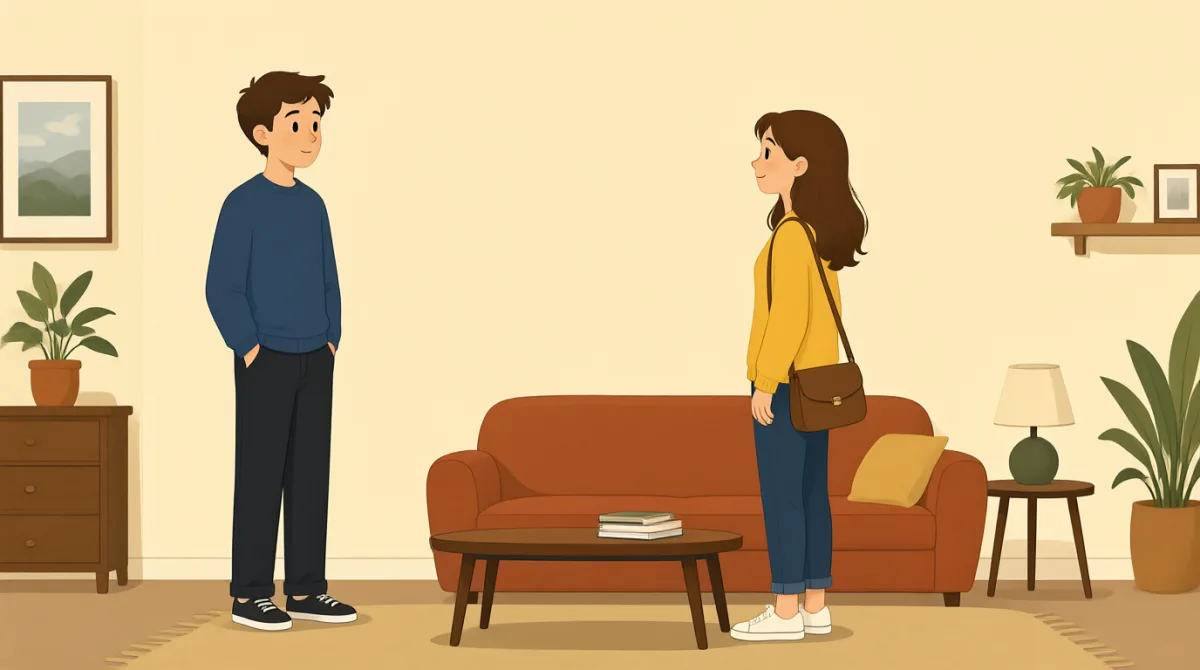

I had a terrible start to my day. I missed the bus to work.

Oh no! What happened? Did you get up late?
No, I got up on time, but I couldn't find my keys.
That sounds frustrating. Where did you look?
I looked in my bag and on the kitchen table. They were by the door.
Oh, I hate when that happens. Did you catch the next bus?
No, it had already left. I had to wait twenty minutes.
I'm sorry, Leo. I hope the rest of your day goes better.
Vocabulary7
- terrible start
A very bad beginning to a day or event. You can say, “I had a terrible start to my morning.”
- missed the bus
You did not get on the bus because it left before you arrived. Use “missed the bus” to explain why you are late.
- looked in my bag
Searched inside your bag for something. Use “looked in” when you search inside a place or container.
- by the door
Next to or near the door. You can use “by” to say where something is, as in “My shoes are by the door.”
- catch the next bus
Get on the next bus that comes. You can ask, “Can we catch the next bus?”
- had to wait
Needed to stay somewhere until something happened. Use “had to” to talk about something necessary in the past.
- the rest of your day
The part of the day that is still left. You can wish someone, “I hope the rest of your day goes well.”
Key Sentences8
- 1
I had a terrible start to my day.
Use this to say that your day began badly. You can replace “terrible” with “good” or “busy” to describe a different start.
- 2
I missed the bus to work.
This is a simple way to explain that you did not get on your bus. Replace “the bus” with another thing you missed, such as “my train.”
- 3
Did you get up late?
Use this question to ask if someone woke up later than planned. You can ask, “Did you get up late for school?”
- 4
I couldn't find my keys.
Use this to explain that you searched for something but did not find it. Replace “my keys” with another item, such as “my phone.”
- 5
Where did you look?
This question asks where someone searched for something. You can use it when helping someone find a lost item.
- 6
They were by the door.
Use this to say where plural items were. For one item, say, “It was by the door.”
- 7
I had to wait twenty minutes.
This tells someone how long you needed to wait. Replace “twenty minutes” with another length of time.
- 8
I hope the rest of your day goes better.
This is a kind way to wish someone a better day after something went wrong. You can also say, “I hope your week goes better.”