Missing the Bus
बस छूट जाना
Leo misses his bus to work and tells his friend Emma about the rough start to his day. Emma asks what happened.
लेओ की काम पर जाने वाली बस छूट जाती है और वह अपनी दोस्त एमा को अपने दिन की खराब शुरुआत के बारे में बताता है। एमा पूछती है कि क्या हुआ।
संवाद8
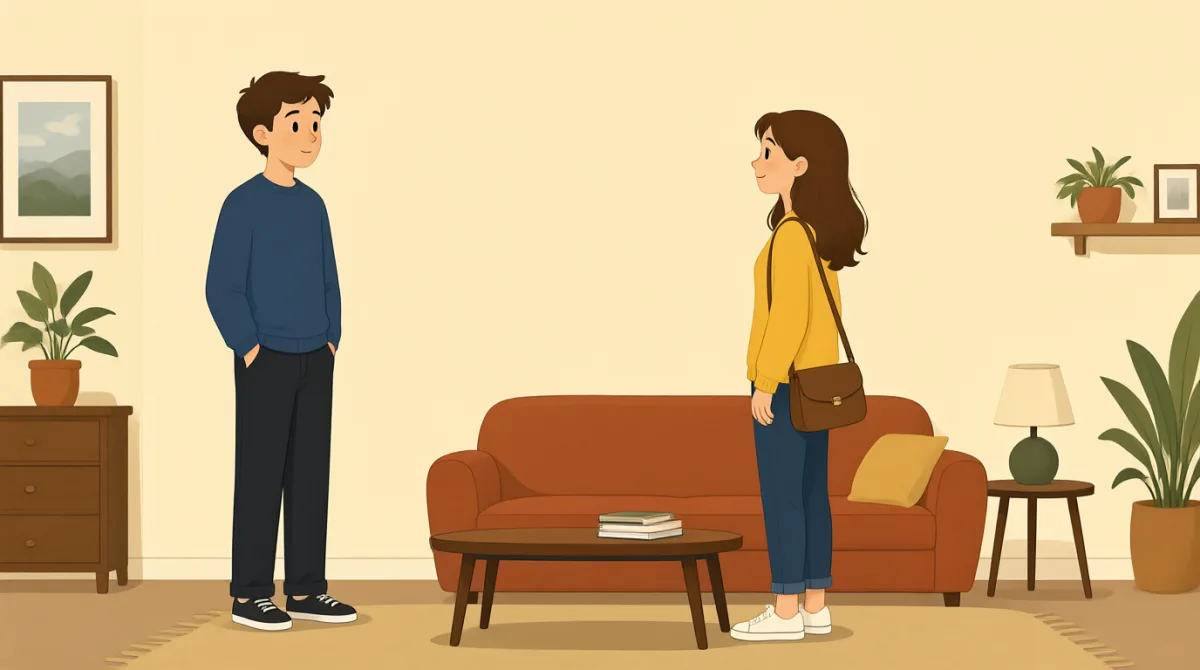

I had a terrible start to my day. I missed the bus to work.
मेरे दिन की शुरुआत बहुत खराब हुई। काम पर जाने वाली बस छूट गई।

Oh no! What happened? Did you get up late?
ओह नहीं! क्या हुआ? क्या तुम देर से उठे थे?
No, I got up on time, but I couldn't find my keys.
नहीं, मैं समय पर उठ गया था, लेकिन मुझे अपनी चाबियाँ नहीं मिल रही थीं।
That sounds frustrating. Where did you look?
यह तो बहुत परेशान करने वाली बात है। तुमने कहाँ-कहाँ देखा?
I looked in my bag and on the kitchen table. They were by the door.
मैंने अपने बैग में और रसोई की मेज़ पर देखा। वे दरवाज़े के पास थीं।
Oh, I hate when that happens. Did you catch the next bus?
ओह, जब ऐसा होता है तो मुझे बहुत बुरा लगता है। क्या तुम अगली बस पकड़ पाए?
No, it had already left. I had to wait twenty minutes.
नहीं, वह पहले ही जा चुकी थी। मुझे बीस मिनट इंतज़ार करना पड़ा।
I'm sorry, Leo. I hope the rest of your day goes better.
मुझे अफ़सोस है, लेओ। उम्मीद है कि तुम्हारे दिन का बाकी हिस्सा बेहतर रहेगा।
शब्दावली7
- terrible startterrible start
A very bad beginning to a day or event. You can say, “I had a terrible start to my morning.”
किसी दिन या घटना की बहुत खराब शुरुआत। आप कह सकते हैं, “I had a terrible start to my morning.”
- missed the busmissed the bus
You did not get on the bus because it left before you arrived. Use “missed the bus” to explain why you are late.
आप बस में नहीं चढ़ पाए क्योंकि आपके पहुँचने से पहले ही बस चली गई। देर होने का कारण बताने के लिए “missed the bus” का इस्तेमाल करें।
- looked in my baglooked in my bag
Searched inside your bag for something. Use “looked in” when you search inside a place or container.
किसी चीज़ को ढूँढ़ने के लिए अपने बैग के अंदर तलाश करना। किसी जगह या डिब्बे के अंदर खोजने के लिए “looked in” का इस्तेमाल करें।
- by the doorby the door
Next to or near the door. You can use “by” to say where something is, as in “My shoes are by the door.”
दरवाज़े के पास या उसके बगल में। किसी चीज़ की जगह बताने के लिए “by” का इस्तेमाल कर सकते हैं, जैसे “My shoes are by the door.”
- catch the next buscatch the next bus
Get on the next bus that comes. You can ask, “Can we catch the next bus?”
आने वाली अगली बस में चढ़ना। आप पूछ सकते हैं, “Can we catch the next bus?”
- had to waithad to wait
Needed to stay somewhere until something happened. Use “had to” to talk about something necessary in the past.
किसी घटना के होने तक किसी जगह पर रुके रहना ज़रूरी होना। अतीत में किसी ज़रूरी काम के बारे में बात करने के लिए “had to” का इस्तेमाल करें।
- the rest of your daythe rest of your day
The part of the day that is still left. You can wish someone, “I hope the rest of your day goes well.”
दिन का वह हिस्सा जो अभी बाकी है। आप किसी के लिए शुभकामना दे सकते हैं, “I hope the rest of your day goes well.”
मुख्य वाक्य8
- 1
I had a terrible start to my day.
मेरे दिन की शुरुआत बहुत खराब हुई।
Use this to say that your day began badly. You can replace “terrible” with “good” or “busy” to describe a different start.
इसका इस्तेमाल यह बताने के लिए करें कि आपके दिन की शुरुआत खराब हुई। अलग तरह की शुरुआत बताने के लिए “terrible” की जगह “good” या “busy” रख सकते हैं।
- 2
I missed the bus to work.
काम पर जाने वाली बस छूट गई।
This is a simple way to explain that you did not get on your bus. Replace “the bus” with another thing you missed, such as “my train.”
यह बताने का सरल तरीका है कि आप अपनी बस में नहीं चढ़ पाए। “the bus” की जगह किसी दूसरी छूटी हुई चीज़ का नाम रख सकते हैं, जैसे “my train.”
- 3
Did you get up late?
क्या तुम देर से उठे थे?
Use this question to ask if someone woke up later than planned. You can ask, “Did you get up late for school?”
इस सवाल का इस्तेमाल यह पूछने के लिए करें कि क्या कोई अपनी योजना से देर से जागा था। आप पूछ सकते हैं, “Did you get up late for school?”
- 4
I couldn't find my keys.
मुझे अपनी चाबियाँ नहीं मिल रही थीं।
Use this to explain that you searched for something but did not find it. Replace “my keys” with another item, such as “my phone.”
इसका इस्तेमाल यह बताने के लिए करें कि आपने किसी चीज़ को ढूँढ़ा, लेकिन वह नहीं मिली। “my keys” की जगह किसी दूसरी चीज़ का नाम रख सकते हैं, जैसे “my phone.”
- 5
Where did you look?
तुमने कहाँ देखा?
This question asks where someone searched for something. You can use it when helping someone find a lost item.
इस सवाल में पूछा जाता है कि किसी ने कोई चीज़ कहाँ ढूँढ़ी। किसी की खोई हुई चीज़ ढूँढ़ने में मदद करते समय इसका इस्तेमाल कर सकते हैं।
- 6
They were by the door.
वे दरवाज़े के पास थीं।
Use this to say where plural items were. For one item, say, “It was by the door.”
कई चीज़ें कहाँ थीं, यह बताने के लिए इसका इस्तेमाल करें। एक चीज़ के लिए कहें, “It was by the door.”
- 7
I had to wait twenty minutes.
मुझे बीस मिनट इंतज़ार करना पड़ा।
This tells someone how long you needed to wait. Replace “twenty minutes” with another length of time.
इससे किसी को पता चलता है कि आपको कितनी देर इंतज़ार करना पड़ा। “twenty minutes” की जगह कोई और समयावधि रख सकते हैं।
- 8
I hope the rest of your day goes better.
उम्मीद है कि तुम्हारे दिन का बाकी हिस्सा बेहतर रहेगा।
This is a kind way to wish someone a better day after something went wrong. You can also say, “I hope your week goes better.”
कुछ गलत हो जाने के बाद किसी के लिए बेहतर दिन की शुभकामना देने का यह एक स्नेहपूर्ण तरीका है। आप यह भी कह सकते हैं, “I hope your week goes better.”