Calling for an Appointment
Ligando para marcar uma consulta
Mia calls the clinic to make an appointment for her sick child. The receptionist asks about the symptoms and offers a time.
Mia liga para a clínica para marcar uma consulta para a filha, que está doente. A recepcionista pergunta sobre os sintomas e oferece um horário.
Diálogo9
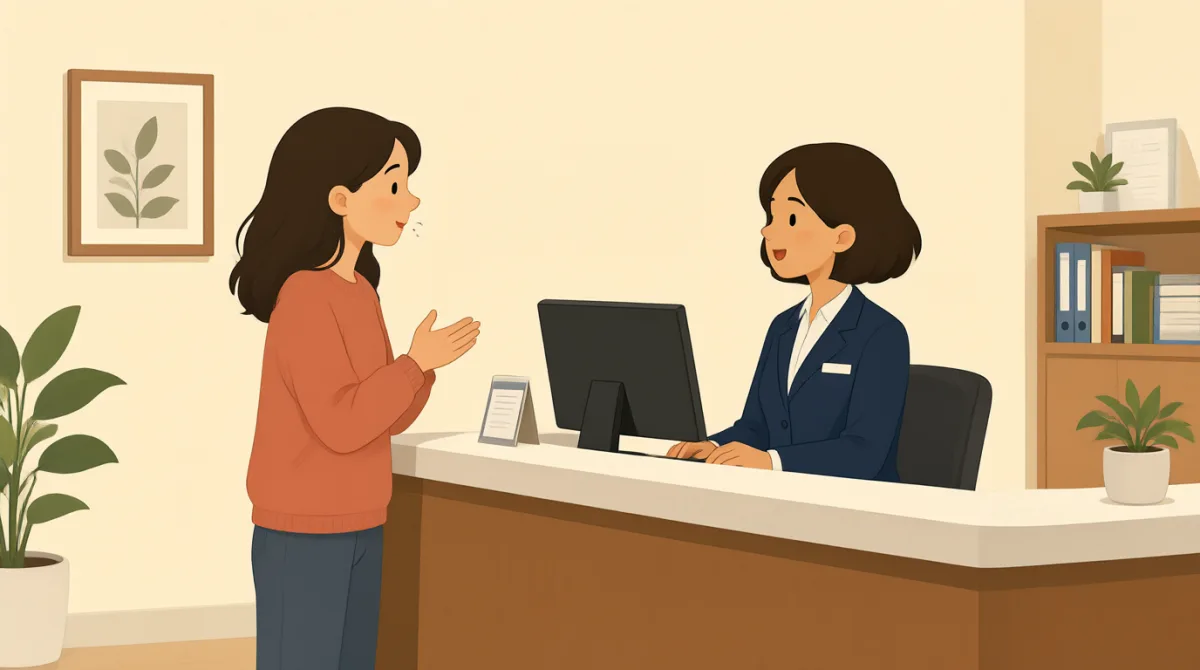

Hello, I’d like to make an appointment for my child, please.
Olá, gostaria de marcar uma consulta para minha filha, por favor.

Of course. What seems to be the problem?
Claro. O que ela está sentindo?
She has a fever and a sore throat. She started feeling sick last night.
Ela está com febre e dor de garganta. Começou a se sentir mal ontem à noite.
I’m sorry to hear that. Does she have a cough or a rash?
Sinto muito. Ela está tossindo ou com alguma erupção na pele?
She has a little cough, but no rash. Can she see the doctor today?
Ela está tossindo um pouco, mas não tem nenhuma erupção. Ela pode consultar o médico hoje?
Let me check. We have an opening at two thirty this afternoon.
Deixe-me verificar. Temos um horário disponível hoje à tarde, às duas e meia.
That works for us. Should I bring anything with me?
Esse horário serve para nós. Preciso levar alguma coisa?
Please bring her health card and a list of any medicine she takes.
Por favor, traga o cartão de saúde dela e uma lista dos medicamentos que ela toma.
Okay, thank you. We’ll be there a little early.
Está bem, obrigada. Vamos chegar um pouquinho mais cedo.
Vocabulário7
- make an appointmentmarcar uma consulta
To arrange a time to see a doctor. You can also use this phrase when booking other services.
Organizar um horário para consultar um médico. Você também pode usar essa expressão ao agendar outros serviços.
- What seems to be the problem?O que ela está sentindo?
A polite way to ask what is wrong. A receptionist or doctor may use it to ask about someone’s health.
Uma maneira educada de perguntar o que está acontecendo. Uma recepcionista ou um médico pode usar essa pergunta para saber como alguém está se sentindo.
- sore throatdor de garganta
Pain or discomfort in your throat. You can say, “I have a sore throat” when describing a symptom.
Dor ou desconforto na garganta. Você pode dizer “I have a sore throat” (Estou com dor de garganta) ao descrever um sintoma.
- rasherupção na pele
A patch of irritated or red skin. A doctor may ask if someone has a rash as well as other symptoms.
Uma área da pele irritada ou avermelhada. Além de perguntar sobre outros sintomas, o médico pode perguntar se alguém está com uma erupção na pele.
- openinghorário disponível
A free time in a schedule. You can ask, “Do you have an opening today?” when booking an appointment.
Um horário livre na agenda. Ao marcar uma consulta, você pode perguntar: “Do you have an opening today?” (Vocês têm algum horário disponível hoje?).
- health cardcartão de saúde
A card with health-care information that you may need to bring to a clinic.
Um cartão com informações sobre a assistência médica, que talvez você precise levar à clínica.
- a list of any medicine she takesuma lista dos medicamentos que ela toma
A written record of the medicines she uses. This information can help the doctor understand her health needs.
Um registro por escrito dos medicamentos que ela usa. Essas informações podem ajudar o médico a entender as necessidades de saúde dela.
Frases-chave8
- 1
I’d like to make an appointment for my child, please.
Gostaria de marcar uma consulta para minha filha, por favor.
Use this polite sentence to ask for a visit with a doctor. You can replace “my child” with “myself” or another person.
Use esta frase educada para pedir uma consulta com um médico. Você pode substituir “my child” por “myself” ou por outra pessoa.
- 2
She has a fever and a sore throat.
Ela está com febre e dor de garganta.
Use this sentence to describe someone’s symptoms. Replace the symptoms with the ones the person has.
Use esta frase para descrever os sintomas de alguém. Substitua os sintomas pelos que a pessoa está sentindo.
- 3
She started feeling sick last night.
Ela começou a se sentir mal ontem à noite.
This tells someone when the illness began. You can change “last night” to another time, such as “this morning.”
Esta frase informa quando a doença começou. Você pode trocar “last night” por outro momento, como “this morning.”
- 4
Does she have a cough or a rash?
Ela está tossindo ou com alguma erupção na pele?
Use this question to ask about possible symptoms. Replace “she” and the symptoms to ask about someone else.
Use esta pergunta para saber se alguém está com possíveis sintomas. Troque “she” e os sintomas para perguntar sobre outra pessoa.
- 5
Can she see the doctor today?
Ela pode consultar o médico hoje?
Use this question to ask if a doctor’s visit is possible today. You can change “today” to another day or time.
Use esta pergunta para saber se é possível consultar um médico hoje. Você pode trocar “today” por outro dia ou horário.
- 6
We have an opening at two thirty this afternoon.
Temos um horário disponível hoje à tarde, às duas e meia.
This is a way to offer an available appointment time. You can use the same pattern with a different time.
Esta é uma maneira de oferecer um horário disponível para uma consulta. Você pode usar a mesma estrutura com outro horário.
- 7
Should I bring anything with me?
Preciso levar alguma coisa?
Use this question to ask what you need to take to an appointment. It is also useful before meetings or visits.
Use esta pergunta para saber o que você precisa levar a uma consulta. Ela também é útil antes de reuniões ou visitas.
- 8
We’ll be there a little early.
Vamos chegar um pouquinho mais cedo.
Use this sentence to say that you plan to arrive before the scheduled time. You can replace “a little early” with “on time.”
Use esta frase para dizer que pretende chegar antes do horário marcado. Você pode substituir “a little early” por “on time.”