Meeting Your Manager at Reception
Conhecendo sua gerente na recepção
On her first day, Emma meets her manager, Grace, at reception. Grace welcomes her and explains where to go.
No primeiro dia de trabalho, Emma conhece sua gerente, Grace, na recepção. Grace dá as boas-vindas a ela e explica para onde ir.
Diálogo8
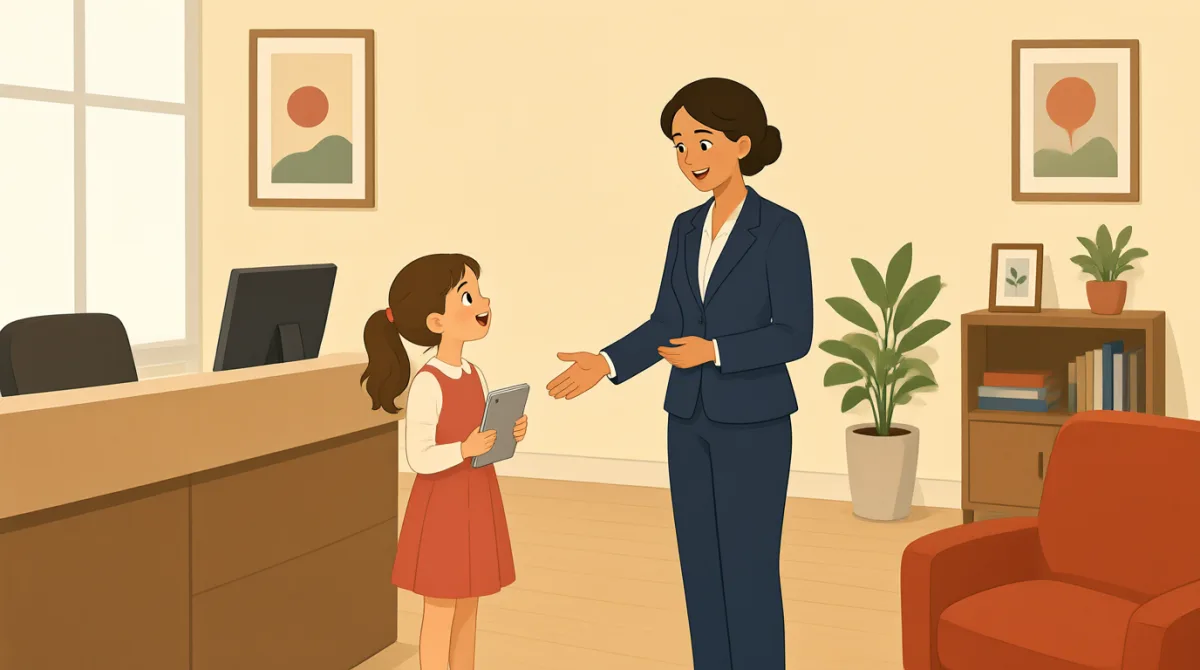

Good morning! You must be Emma. Welcome to your first day.
Bom dia! Você deve ser a Emma. Seja bem-vinda ao seu primeiro dia.

Good morning, Grace. Yes, I’m Emma. It’s nice to meet you.
Bom dia, Grace. Sim, sou a Emma. É um prazer conhecer você.
Nice to meet you too. I’m your manager. How was your trip here?
Prazer em conhecer você também. Sou sua gerente. Como foi o caminho até aqui?
It was good, thanks. I found the building, but I wasn’t sure where to go.
Foi bom, obrigada. Encontrei o prédio, mas não sabia bem para onde ir.
You’re in the right place. Please sign in at the desk, and I’ll get your badge.
Você está no lugar certo. Por favor, faça seu registro na recepção, e vou pegar seu crachá.
Sure. Should I wait here after I sign in?
Claro. Devo esperar aqui depois de fazer meu registro?
Yes, please. Then we’ll go upstairs to your desk and meet the team.
Sim, por favor. Depois vamos subir até sua mesa e conhecer a equipe.
That sounds great. Thanks for making my first day easy.
Parece ótimo. Obrigada por tornar meu primeiro dia mais fácil.
Vocabulário8
- first dayprimeiro dia
This is the first day someone works at a new job. Use it to talk about starting a new role.
É o primeiro dia em que alguém trabalha em um novo emprego. Use essa expressão para falar sobre o início de uma nova função.
- managergerente
A manager is a person who leads or helps a team at work. You can say, “I’m your manager” when introducing yourself.
Uma gerente é alguém que lidera ou apoia uma equipe no trabalho. Você pode dizer “I’m your manager” (“Sou sua gerente”) ao se apresentar.
- trip herecaminho até aqui
This means the journey to the place where you are now. You can ask, “How was your trip here?” to welcome someone.
Essa expressão se refere ao trajeto até o lugar onde você está. Você pode perguntar “How was your trip here?” (“Como foi o caminho até aqui?”) para dar as boas-vindas a alguém.
- sign infazer o registro
To sign in is to write your name or details when you arrive. At work, you may need to sign in at reception.
“To sign in” significa registrar seu nome ou seus dados quando você chega. No trabalho, talvez você precise fazer seu registro na recepção.
- deskmesa de trabalho
A desk is a table where someone works. You can ask where your desk is on your first day.
Uma mesa de trabalho é onde alguém trabalha. No seu primeiro dia, você pode perguntar onde fica a sua.
- badgecrachá
A badge is a card or sign that shows who you are at work. You may need to wear it in the building.
Um crachá é um cartão ou identificação que mostra quem você é no trabalho. Talvez você precise usá-lo dentro do prédio.
- upstairsno andar de cima
Upstairs means to a higher floor in a building. Use it to explain where someone needs to go.
“Upstairs” significa ir para um andar mais alto de um prédio. Use essa palavra para explicar para onde alguém precisa ir.
- meet the teamconhecer a equipe
This means to be introduced to the people you will work with. You can use this phrase when welcoming a new colleague.
“Meet the team” significa ser apresentada às pessoas com quem você vai trabalhar. Você pode usar essa expressão ao dar as boas-vindas a uma nova colega.
Frases-chave8
- 1
Welcome to your first day.
Seja bem-vinda ao seu primeiro dia.
Use this warm phrase to greet someone who is starting a new job or activity. You can change “your first day” to name another occasion.
Use essa expressão acolhedora para cumprimentar alguém que está começando um novo emprego ou atividade. Você pode trocar “your first day” por outra ocasião.
- 2
It’s nice to meet you.
É um prazer conhecer você.
This is a polite way to greet someone for the first time. You can say it after introducing yourself.
Essa é uma forma educada de cumprimentar alguém pela primeira vez. Você pode dizê-la depois de se apresentar.
- 3
How was your trip here?
Como foi o caminho até aqui?
This is a friendly question about someone’s journey. Replace “trip” with “flight” or “drive” to ask about a specific part of the journey.
Essa é uma pergunta simpática sobre o trajeto de alguém. Troque “trip” por “flight” ou “drive” para perguntar sobre uma parte específica da viagem.
- 4
I found the building, but I wasn’t sure where to go.
Encontrei o prédio, mas não sabia bem para onde ir.
Use this sentence to explain that you reached a place but need directions. You can change “the building” to another place, such as “the office.”
Use essa frase para explicar que você chegou a um lugar, mas precisa de orientação. Você pode trocar “the building” por outro lugar, como “the office”.
- 5
Please sign in at the desk, and I’ll get your badge.
Por favor, faça seu registro na recepção, e vou pegar seu crachá.
This sentence gives two clear instructions and offers help. You can use “I’ll get your…” to say you will bring something for someone.
Essa frase dá duas instruções claras e oferece ajuda. Você pode usar “I’ll get your…” para dizer que vai buscar algo para alguém.
- 6
Should I wait here after I sign in?
Devo esperar aqui depois de fazer meu registro?
Use this polite question to check what to do next. Replace “wait here” with another action to ask about your next step.
Use essa pergunta educada para confirmar o que fazer em seguida. Troque “wait here” por outra ação para perguntar qual é o próximo passo.
- 7
Then we’ll go upstairs to your desk and meet the team.
Depois vamos subir até sua mesa e conhecer a equipe.
This explains what will happen next using “we’ll” for a future plan. You can replace the places or activities to describe another plan.
Essa frase explica o que vai acontecer em seguida. “We’ll” indica um plano futuro. Você pode trocar os lugares ou as atividades para descrever outro plano.
- 8
Thanks for making my first day easy.
Obrigada por tornar meu primeiro dia mais fácil.
This is a kind way to thank someone for helping you. Use “Thanks for making…” before describing what someone made easier or better.
Essa é uma forma gentil de agradecer a alguém pela ajuda. Use “Thanks for making…” antes de dizer o que essa pessoa tornou mais fácil ou melhor.