Meeting Your Manager at Reception
受付で上司に会う
On her first day, Emma meets her manager, Grace, at reception. Grace welcomes her and explains where to go.
初出勤の日、エマは受付で上司のグレースに会います。グレースはエマを歓迎し、どこへ行けばよいか説明します。
会話8
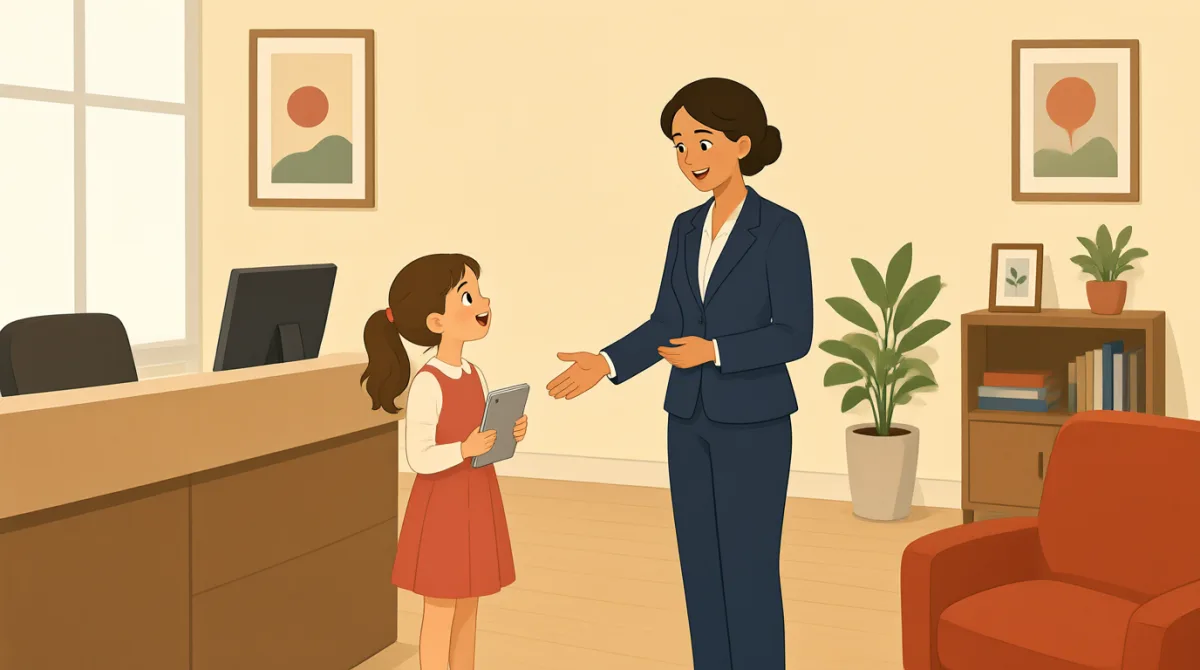

Good morning! You must be Emma. Welcome to your first day.
おはようございます!エマさんですね。初出勤の日ですね。ようこそ。

Good morning, Grace. Yes, I’m Emma. It’s nice to meet you.
おはようございます、グレースさん。はい、エマです。お会いできてうれしいです。
Nice to meet you too. I’m your manager. How was your trip here?
こちらこそ、お会いできてうれしいです。私はあなたの上司です。ここまでの道のりはいかがでしたか?
It was good, thanks. I found the building, but I wasn’t sure where to go.
順調でした、ありがとうございます。建物には着けたんですが、どこへ行けばいいのか分からなくて。
You’re in the right place. Please sign in at the desk, and I’ll get your badge.
ここで合っていますよ。受付で記入をお願いします。社員証を取ってきますね。
Sure. Should I wait here after I sign in?
分かりました。記入したら、ここで待っていればいいですか?
Yes, please. Then we’ll go upstairs to your desk and meet the team.
はい、お願いします。そのあと上の階にあるあなたの席へ行って、チームのみんなに会いましょう。
That sounds great. Thanks for making my first day easy.
いいですね。初日を過ごしやすくしてくださって、ありがとうございます。
語彙8
- first day初出勤の日
This is the first day someone works at a new job. Use it to talk about starting a new role.
新しい仕事を始める最初の日のことです。新しい仕事や役職に就くときに使えます。
- manager上司
A manager is a person who leads or helps a team at work. You can say, “I’m your manager” when introducing yourself.
職場でチームをまとめたり、サポートしたりする人のことです。自己紹介では「I’m your manager」(あなたの上司です)と言えます。
- trip hereここまでの道のり
This means the journey to the place where you are now. You can ask, “How was your trip here?” to welcome someone.
今いる場所まで来る道のりのことです。相手を迎えるときに「How was your trip here?」(ここまでの道のりはいかがでしたか?)と尋ねられます。
- sign in受付で記入する
To sign in is to write your name or details when you arrive. At work, you may need to sign in at reception.
到着したときに名前や必要事項を記入することです。職場では受付で記入する必要がある場合があります。
- desk机、デスク
A desk is a table where someone works. You can ask where your desk is on your first day.
仕事をするための机のことです。初出勤の日に自分の席がどこか尋ねるときにも使えます。
- badge社員証
A badge is a card or sign that shows who you are at work. You may need to wear it in the building.
職場で身元を示すカードや表示のことです。建物の中では身につける必要がある場合があります。
- upstairs上の階へ
Upstairs means to a higher floor in a building. Use it to explain where someone needs to go.
建物の中で、今いる場所より高い階へ行くことです。相手がどこへ行けばよいか説明するときに使えます。
- meet the teamチームの人たちに会う
This means to be introduced to the people you will work with. You can use this phrase when welcoming a new colleague.
一緒に働く人たちを紹介してもらうことです。新しい同僚を歓迎するときに使える表現です。
重要な文8
- 1
Welcome to your first day.
初出勤の日ですね。ようこそ。
Use this warm phrase to greet someone who is starting a new job or activity. You can change “your first day” to name another occasion.
新しい仕事や活動を始める人を温かく迎える表現です。「your first day」の部分を別の機会に変えて使うこともできます。
- 2
It’s nice to meet you.
お会いできてうれしいです。
This is a polite way to greet someone for the first time. You can say it after introducing yourself.
初めて会う人に挨拶するときの丁寧な表現です。自己紹介のあとに言えます。
- 3
How was your trip here?
ここまでの道のりはいかがでしたか?
This is a friendly question about someone’s journey. Replace “trip” with “flight” or “drive” to ask about a specific part of the journey.
相手の移動について尋ねる親しみのある質問です。「trip」を「flight」や「drive」に変えると、移動の具体的な部分について尋ねられます。
- 4
I found the building, but I wasn’t sure where to go.
建物には着けたんですが、どこへ行けばいいのか分からなくて。
Use this sentence to explain that you reached a place but need directions. You can change “the building” to another place, such as “the office.”
目的地には着いたものの、行き先を教えてほしいときに使える文です。「the building」を「the office」など別の場所に変えられます。
- 5
Please sign in at the desk, and I’ll get your badge.
受付で記入をお願いします。社員証を取ってきますね。
This sentence gives two clear instructions and offers help. You can use “I’ll get your…” to say you will bring something for someone.
分かりやすく二つの指示を伝えながら、手助けを申し出る文です。「I’ll get your…」を使うと、相手のために何かを持ってくると言えます。
- 6
Should I wait here after I sign in?
記入したら、ここで待っていればいいですか?
Use this polite question to check what to do next. Replace “wait here” with another action to ask about your next step.
次に何をすればよいか確認する丁寧な質問です。「wait here」を別の行動に変えると、次にすることについて尋ねられます。
- 7
Then we’ll go upstairs to your desk and meet the team.
そのあと上の階にあるあなたの席へ行って、チームのみんなに会いましょう。
This explains what will happen next using “we’ll” for a future plan. You can replace the places or activities to describe another plan.
未来の予定を表す「we’ll」を使って、次にすることを説明しています。場所や活動を変えれば、別の予定についても話せます。
- 8
Thanks for making my first day easy.
初日を過ごしやすくしてくださって、ありがとうございます。
This is a kind way to thank someone for helping you. Use “Thanks for making…” before describing what someone made easier or better.
助けてくれた人に感謝を伝える、温かい表現です。「Thanks for making…」のあとに、相手のおかげで何が楽になったか、よくなったかを続けます。