Meeting Your Manager at Reception
พบผู้จัดการที่แผนกต้อนรับ
On her first day, Emma meets her manager, Grace, at reception. Grace welcomes her and explains where to go.
วันแรกของการทำงาน เอ็มมาพบเกรซ ผู้จัดการของเธอที่แผนกต้อนรับ เกรซต้อนรับเธอและอธิบายว่าต้องไปที่ไหน
บทสนทนา8
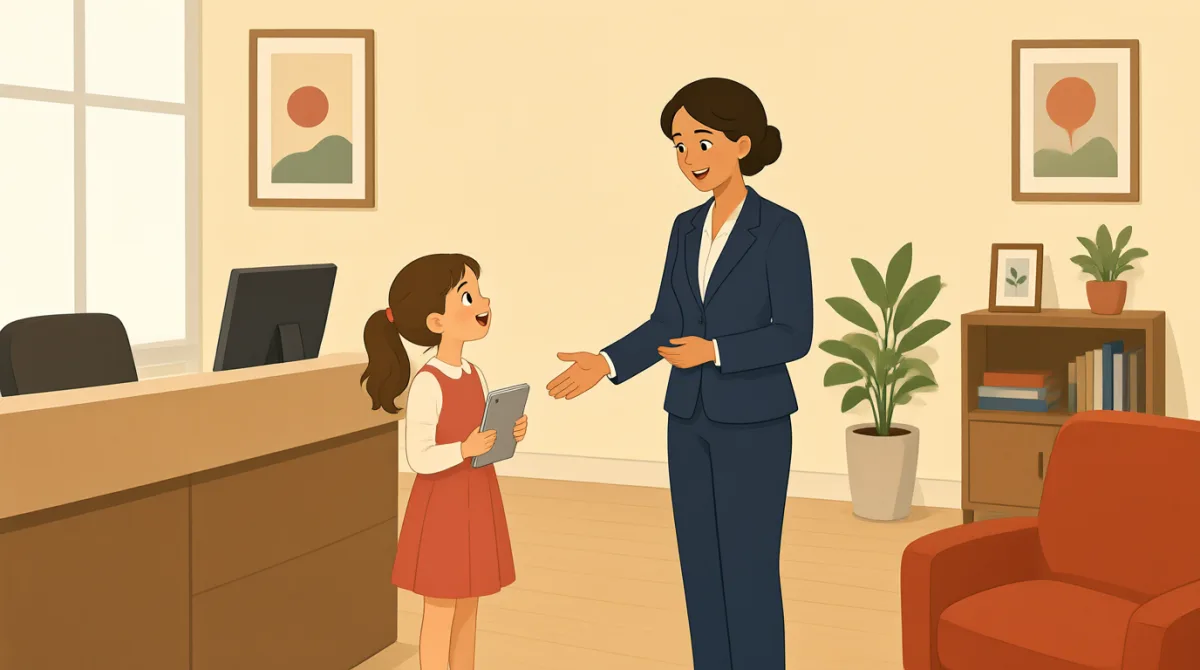

Good morning! You must be Emma. Welcome to your first day.
สวัสดีตอนเช้าค่ะ คุณคงเป็นเอ็มมานะคะ ยินดีต้อนรับสู่วันแรกของการทำงานค่ะ

Good morning, Grace. Yes, I’m Emma. It’s nice to meet you.
สวัสดีตอนเช้าค่ะ เกรซ ใช่ค่ะ ฉันชื่อเอ็มมา ยินดีที่ได้รู้จักค่ะ
Nice to meet you too. I’m your manager. How was your trip here?
ยินดีที่ได้รู้จักเช่นกันค่ะ ฉันเป็นผู้จัดการของคุณ เดินทางมาที่นี่เป็นอย่างไรบ้างคะ
It was good, thanks. I found the building, but I wasn’t sure where to go.
เดินทางดีค่ะ ขอบคุณ ฉันหาตึกเจอแล้ว แต่ไม่แน่ใจว่าต้องไปทางไหนค่ะ
You’re in the right place. Please sign in at the desk, and I’ll get your badge.
คุณมาถูกที่แล้วค่ะ กรุณาลงชื่อที่เคาน์เตอร์นะคะ แล้วฉันจะไปรับบัตรประจำตัวให้ค่ะ
Sure. Should I wait here after I sign in?
ได้ค่ะ หลังจากลงชื่อแล้ว ฉันควรรอตรงนี้ไหมคะ
Yes, please. Then we’ll go upstairs to your desk and meet the team.
ใช่ค่ะ รอตรงนี้นะคะ แล้วเราจะขึ้นไปที่โต๊ะทำงานของคุณและไปพบทีมกันค่ะ
That sounds great. Thanks for making my first day easy.
ฟังดูดีมากเลยค่ะ ขอบคุณที่ช่วยให้วันแรกของฉันเป็นไปอย่างราบรื่นนะคะ
คำศัพท์8
- first dayวันแรก
This is the first day someone works at a new job. Use it to talk about starting a new role.
คำนี้หมายถึงวันแรกที่ใครสักคนเริ่มทำงานในงานใหม่ ใช้พูดถึงการเริ่มต้นบทบาทใหม่ได้ค่ะ
- managerผู้จัดการ
A manager is a person who leads or helps a team at work. You can say, “I’m your manager” when introducing yourself.
ผู้จัดการคือคนที่เป็นผู้นำหรือคอยช่วยเหลือทีมในที่ทำงาน คุณพูดว่า “I’m your manager” (ฉันเป็นผู้จัดการของคุณ) ได้ตอนแนะนำตัวค่ะ
- trip hereการเดินทางมาที่นี่
This means the journey to the place where you are now. You can ask, “How was your trip here?” to welcome someone.
หมายถึงการเดินทางมายังสถานที่ที่คุณอยู่ตอนนี้ คุณถามว่า “How was your trip here?” (เดินทางมาที่นี่เป็นอย่างไรบ้าง) เพื่อต้อนรับใครสักคนได้ค่ะ
- sign inลงชื่อเข้าใช้
To sign in is to write your name or details when you arrive. At work, you may need to sign in at reception.
sign in คือการเขียนชื่อหรือกรอกรายละเอียดเมื่อเดินทางมาถึง ที่ทำงาน คุณอาจต้องลงชื่อที่แผนกต้อนรับค่ะ
- deskโต๊ะทำงาน
A desk is a table where someone works. You can ask where your desk is on your first day.
โต๊ะทำงานคือโต๊ะที่คนใช้ทำงาน วันแรกคุณถามได้ว่าโต๊ะทำงานของคุณอยู่ที่ไหนค่ะ
- badgeบัตรประจำตัว
A badge is a card or sign that shows who you are at work. You may need to wear it in the building.
badge คือบัตรหรือป้ายที่แสดงว่าคุณเป็นใครในที่ทำงาน คุณอาจต้องติดหรือคล้องไว้เมื่ออยู่ในอาคารค่ะ
- upstairsขึ้นไปชั้นบน
Upstairs means to a higher floor in a building. Use it to explain where someone needs to go.
upstairs หมายถึงไปยังชั้นที่สูงขึ้นในอาคาร ใช้บอกว่าต้องไปที่ไหนได้ค่ะ
- meet the teamพบทีม
This means to be introduced to the people you will work with. You can use this phrase when welcoming a new colleague.
meet the team หมายถึงได้รับการแนะนำให้รู้จักกับคนที่คุณจะทำงานด้วย ใช้สำนวนนี้ต้อนรับเพื่อนร่วมงานใหม่ได้ค่ะ
ประโยคสำคัญ8
- 1
Welcome to your first day.
ยินดีต้อนรับสู่วันแรกของการทำงานค่ะ
Use this warm phrase to greet someone who is starting a new job or activity. You can change “your first day” to name another occasion.
ใช้ประโยคอบอุ่นนี้ทักทายคนที่กำลังเริ่มงานหรือเริ่มทำกิจกรรมใหม่ คุณเปลี่ยน “your first day” เป็นโอกาสอื่นได้ค่ะ
- 2
It’s nice to meet you.
ยินดีที่ได้รู้จักค่ะ
This is a polite way to greet someone for the first time. You can say it after introducing yourself.
นี่เป็นวิธีทักทายอย่างสุภาพเมื่อพบใครเป็นครั้งแรก คุณพูดประโยคนี้หลังจากแนะนำตัวได้ค่ะ
- 3
How was your trip here?
เดินทางมาที่นี่เป็นอย่างไรบ้างคะ
This is a friendly question about someone’s journey. Replace “trip” with “flight” or “drive” to ask about a specific part of the journey.
นี่เป็นคำถามเป็นกันเองเกี่ยวกับการเดินทางของใครสักคน คุณเปลี่ยน “trip” เป็น “flight” หรือ “drive” เพื่อถามเจาะจงถึงการเดินทางด้วยเครื่องบินหรือรถยนต์ได้ค่ะ
- 4
I found the building, but I wasn’t sure where to go.
ฉันหาตึกเจอแล้ว แต่ไม่แน่ใจว่าต้องไปทางไหนค่ะ
Use this sentence to explain that you reached a place but need directions. You can change “the building” to another place, such as “the office.”
ใช้ประโยคนี้อธิบายว่าคุณมาถึงสถานที่แล้ว แต่ต้องการคำบอกทาง คุณเปลี่ยน “the building” เป็นสถานที่อื่น เช่น “the office” ได้ค่ะ
- 5
Please sign in at the desk, and I’ll get your badge.
กรุณาลงชื่อที่เคาน์เตอร์นะคะ แล้วฉันจะไปรับบัตรประจำตัวให้ค่ะ
This sentence gives two clear instructions and offers help. You can use “I’ll get your…” to say you will bring something for someone.
ประโยคนี้ให้คำแนะนำสองอย่างชัดเจนและเสนอตัวช่วย คุณใช้ “I’ll get your…” เพื่อบอกว่าจะนำบางอย่างมาให้ใครได้ค่ะ
- 6
Should I wait here after I sign in?
หลังจากลงชื่อแล้ว ฉันควรรอตรงนี้ไหมคะ
Use this polite question to check what to do next. Replace “wait here” with another action to ask about your next step.
ใช้คำถามสุภาพนี้เพื่อเช็กว่าควรทำอะไรต่อ คุณเปลี่ยน “wait here” เป็นการกระทำอื่นเพื่อถามถึงขั้นตอนต่อไปได้ค่ะ
- 7
Then we’ll go upstairs to your desk and meet the team.
แล้วเราจะขึ้นไปที่โต๊ะทำงานของคุณและไปพบทีมกันค่ะ
This explains what will happen next using “we’ll” for a future plan. You can replace the places or activities to describe another plan.
ประโยคนี้อธิบายว่าจะทำอะไรต่อ โดยใช้ “we’ll” พูดถึงแผนในอนาคต คุณเปลี่ยนสถานที่หรือกิจกรรมเพื่ออธิบายแผนอื่นได้ค่ะ
- 8
Thanks for making my first day easy.
ขอบคุณที่ช่วยให้วันแรกของฉันเป็นไปอย่างราบรื่นนะคะ
This is a kind way to thank someone for helping you. Use “Thanks for making…” before describing what someone made easier or better.
นี่เป็นวิธีขอบคุณอย่างน่ารักเมื่อมีคนช่วยเหลือคุณ ใช้ “Thanks for making…” ก่อนบอกว่าสิ่งที่อีกฝ่ายทำช่วยให้เรื่องใดง่ายขึ้นหรือดีขึ้นค่ะ