Meeting Your Manager at Reception
Conoce a tu gerente en recepción
On her first day, Emma meets her manager, Grace, at reception. Grace welcomes her and explains where to go.
En su primer día, Emma conoce a su gerente, Grace, en recepción. Grace le da la bienvenida y le explica adónde ir.
Diálogo8
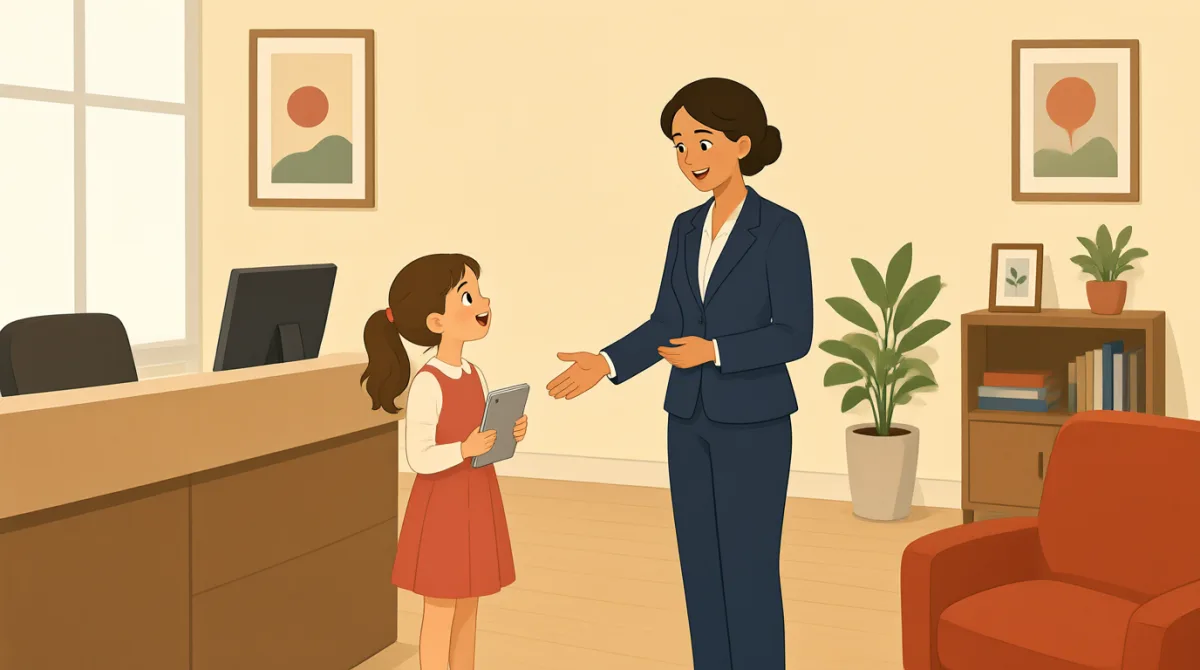

Good morning! You must be Emma. Welcome to your first day.
¡Buenos días! Debes de ser Emma. Bienvenida a tu primer día.

Good morning, Grace. Yes, I’m Emma. It’s nice to meet you.
Buenos días, Grace. Sí, soy Emma. Encantada de conocerla.
Nice to meet you too. I’m your manager. How was your trip here?
Igualmente. Soy tu gerente. ¿Qué tal el viaje hasta aquí?
It was good, thanks. I found the building, but I wasn’t sure where to go.
Bien, gracias. Encontré el edificio, pero no sabía muy bien adónde ir.
You’re in the right place. Please sign in at the desk, and I’ll get your badge.
Estás en el lugar indicado. Por favor, regístrate en recepción y te traeré tu credencial.
Sure. Should I wait here after I sign in?
Claro. ¿Espero aquí después de registrarme?
Yes, please. Then we’ll go upstairs to your desk and meet the team.
Sí, por favor. Después subiremos a tu escritorio y conocerás al equipo.
That sounds great. Thanks for making my first day easy.
¡Qué bien! Gracias por hacer que mi primer día sea fácil.
Vocabulario8
- first dayprimer día
This is the first day someone works at a new job. Use it to talk about starting a new role.
Es el primer día que alguien trabaja en un empleo nuevo. Usa esta expresión para hablar del comienzo en un nuevo puesto.
- managergerente
A manager is a person who leads or helps a team at work. You can say, “I’m your manager” when introducing yourself.
Un gerente es alguien que dirige o ayuda a un equipo en el trabajo. Puedes decir “I’m your manager” (Soy tu gerente) al presentarte.
- trip hereviaje hasta aquí
This means the journey to the place where you are now. You can ask, “How was your trip here?” to welcome someone.
Se refiere al trayecto hasta el lugar donde estás ahora. Puedes preguntar “How was your trip here?” (¿Qué tal el viaje hasta aquí?) para darle la bienvenida a alguien.
- sign inregistrarse
To sign in is to write your name or details when you arrive. At work, you may need to sign in at reception.
“To sign in” significa escribir tu nombre o tus datos al llegar. En el trabajo, puede que tengas que registrarte en recepción.
- deskescritorio
A desk is a table where someone works. You can ask where your desk is on your first day.
Un escritorio es una mesa donde alguien trabaja. Puedes preguntar dónde está tu escritorio el primer día.
- badgecredencial
A badge is a card or sign that shows who you are at work. You may need to wear it in the building.
Una credencial es una tarjeta o identificación que indica quién eres en el trabajo. Puede que tengas que llevarla puesta dentro del edificio.
- upstairsarriba
Upstairs means to a higher floor in a building. Use it to explain where someone needs to go.
“Upstairs” significa ir a un piso más alto de un edificio. Usa esta palabra para explicar adónde tiene que ir alguien.
- meet the teamconocer al equipo
This means to be introduced to the people you will work with. You can use this phrase when welcoming a new colleague.
Significa que te presenten a las personas con las que trabajarás. Puedes usar esta expresión al darle la bienvenida a un nuevo compañero.
Frases clave8
- 1
Welcome to your first day.
Bienvenida a tu primer día.
Use this warm phrase to greet someone who is starting a new job or activity. You can change “your first day” to name another occasion.
Usa esta frase cálida para saludar a alguien que empieza un nuevo trabajo o actividad. Puedes cambiar “your first day” por el nombre de otra ocasión.
- 2
It’s nice to meet you.
Encantada de conocerla.
This is a polite way to greet someone for the first time. You can say it after introducing yourself.
Es una forma cortés de saludar a alguien por primera vez. Puedes decirla después de presentarte.
- 3
How was your trip here?
¿Qué tal el viaje hasta aquí?
This is a friendly question about someone’s journey. Replace “trip” with “flight” or “drive” to ask about a specific part of the journey.
Es una pregunta amable sobre el trayecto de alguien. Cambia “trip” por “flight” o “drive” para preguntar por una parte específica del viaje.
- 4
I found the building, but I wasn’t sure where to go.
Encontré el edificio, pero no sabía muy bien adónde ir.
Use this sentence to explain that you reached a place but need directions. You can change “the building” to another place, such as “the office.”
Usa esta frase para explicar que llegaste a un lugar, pero necesitas indicaciones. Puedes cambiar “the building” por otro lugar, como “the office”.
- 5
Please sign in at the desk, and I’ll get your badge.
Por favor, regístrate en recepción y te traeré tu credencial.
This sentence gives two clear instructions and offers help. You can use “I’ll get your…” to say you will bring something for someone.
Esta frase da dos instrucciones claras y ofrece ayuda. Puedes usar “I’ll get your…” para decir que le traerás algo a alguien.
- 6
Should I wait here after I sign in?
¿Espero aquí después de registrarme?
Use this polite question to check what to do next. Replace “wait here” with another action to ask about your next step.
Usa esta pregunta cortés para confirmar qué hacer después. Cambia “wait here” por otra acción para preguntar cuál es el siguiente paso.
- 7
Then we’ll go upstairs to your desk and meet the team.
Después subiremos a tu escritorio y conocerás al equipo.
This explains what will happen next using “we’ll” for a future plan. You can replace the places or activities to describe another plan.
Esta frase explica qué ocurrirá después y usa “we’ll” para hablar de un plan futuro. Puedes cambiar los lugares o las actividades para describir otro plan.
- 8
Thanks for making my first day easy.
Gracias por hacer que mi primer día sea fácil.
This is a kind way to thank someone for helping you. Use “Thanks for making…” before describing what someone made easier or better.
Es una forma amable de agradecerle a alguien por ayudarte. Usa “Thanks for making…” antes de describir lo que esa persona hizo más fácil o mejor.