Meeting Your Manager at Reception
रिसेप्शन पर अपनी मैनेजर से मुलाकात
On her first day, Emma meets her manager, Grace, at reception. Grace welcomes her and explains where to go.
नौकरी के पहले दिन एमा रिसेप्शन पर अपनी मैनेजर, ग्रेस से मिलती है। ग्रेस उसका स्वागत करती है और बताती है कि उसे कहाँ जाना है।
संवाद8
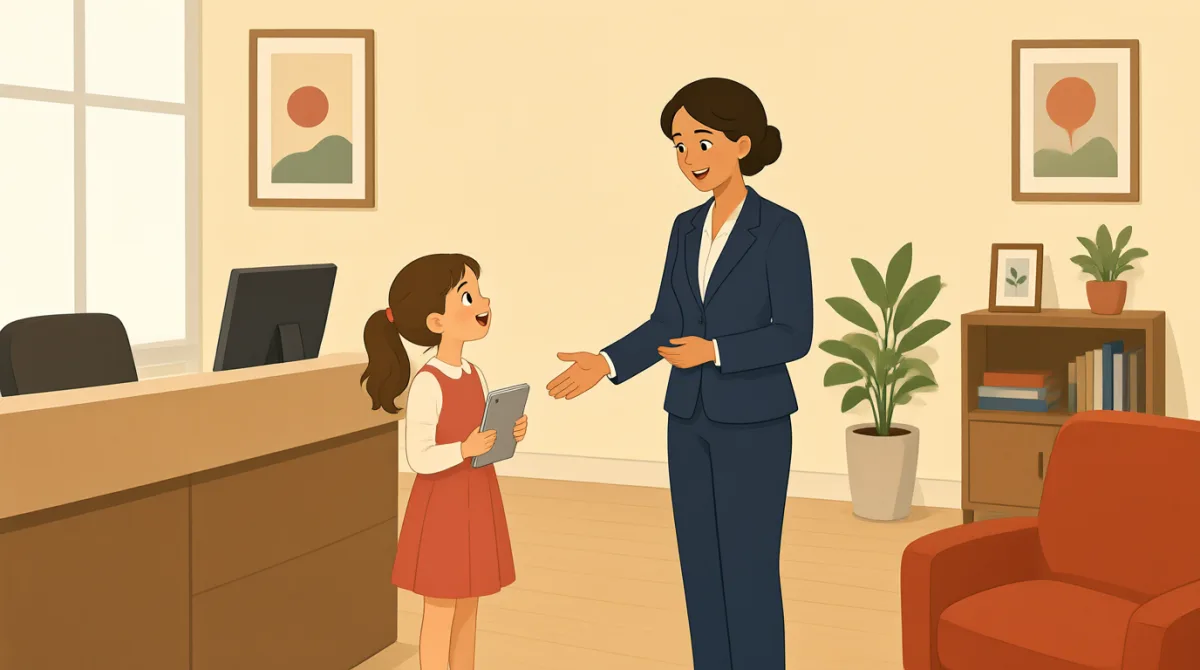

Good morning! You must be Emma. Welcome to your first day.
सुप्रभात! आप एमा ही होंगी। आपके पहले दिन पर आपका स्वागत है।

Good morning, Grace. Yes, I’m Emma. It’s nice to meet you.
सुप्रभात, ग्रेस। जी, मैं एमा हूँ। आपसे मिलकर अच्छा लगा।
Nice to meet you too. I’m your manager. How was your trip here?
मुझे भी आपसे मिलकर अच्छा लगा। मैं आपकी मैनेजर हूँ। यहाँ तक का सफ़र कैसा रहा?
It was good, thanks. I found the building, but I wasn’t sure where to go.
अच्छा रहा, शुक्रिया। मुझे इमारत तो मिल गई, लेकिन समझ नहीं आ रहा था कि कहाँ जाना है।
You’re in the right place. Please sign in at the desk, and I’ll get your badge.
आप सही जगह पर हैं। कृपया डेस्क पर अपना नाम दर्ज कर दीजिए, मैं आपका पहचान-पत्र ले आती हूँ।
Sure. Should I wait here after I sign in?
ज़रूर। नाम दर्ज करने के बाद क्या मुझे यहीं इंतज़ार करना चाहिए?
Yes, please. Then we’ll go upstairs to your desk and meet the team.
जी, कृपया। फिर हम ऊपर आपकी डेस्क पर चलेंगे और आपकी टीम से मिलेंगे।
That sounds great. Thanks for making my first day easy.
बहुत अच्छा। मेरा पहला दिन आसान बनाने के लिए शुक्रिया।
शब्दावली8
- first dayपहला दिन
This is the first day someone works at a new job. Use it to talk about starting a new role.
यह किसी नई नौकरी में काम शुरू करने वाले व्यक्ति का पहला दिन होता है। नई भूमिका में शुरुआत के बारे में बात करते समय इसका इस्तेमाल करें।
- managerमैनेजर
A manager is a person who leads or helps a team at work. You can say, “I’m your manager” when introducing yourself.
मैनेजर वह व्यक्ति होता है जो काम पर किसी टीम का नेतृत्व करता है या उसकी मदद करता है। अपना परिचय देते समय आप “I’m your manager” कह सकते हैं।
- trip hereयहाँ तक का सफ़र
This means the journey to the place where you are now. You can ask, “How was your trip here?” to welcome someone.
इसका मतलब है उस जगह तक की यात्रा जहाँ आप अभी हैं। किसी का स्वागत करते हुए आप पूछ सकते हैं, “How was your trip here?”
- sign inनाम दर्ज करना
To sign in is to write your name or details when you arrive. At work, you may need to sign in at reception.
“Sign in” का मतलब है पहुँचने पर अपना नाम या जानकारी लिखना। काम की जगह पर आपको रिसेप्शन पर “sign in” करना पड़ सकता है।
- deskडेस्क
A desk is a table where someone works. You can ask where your desk is on your first day.
डेस्क वह मेज़ होती है जहाँ कोई काम करता है। नौकरी के पहले दिन आप पूछ सकते हैं कि आपकी डेस्क कहाँ है।
- badgeपहचान-पत्र
A badge is a card or sign that shows who you are at work. You may need to wear it in the building.
“Badge” एक कार्ड या चिह्न होता है जिससे काम की जगह पर आपकी पहचान होती है। इमारत में आपको इसे पहनना पड़ सकता है।
- upstairsऊपर की मंज़िल पर
Upstairs means to a higher floor in a building. Use it to explain where someone needs to go.
“Upstairs” का मतलब है इमारत की किसी ऊपरी मंज़िल पर जाना। किसी को यह बताने के लिए इस शब्द का इस्तेमाल करें कि उसे कहाँ जाना है।
- meet the teamटीम से मिलना
This means to be introduced to the people you will work with. You can use this phrase when welcoming a new colleague.
इसका मतलब है उन लोगों से परिचय करवाया जाना जिनके साथ आप काम करेंगे। नए सहकर्मी का स्वागत करते समय आप इस वाक्यांश का इस्तेमाल कर सकते हैं।
मुख्य वाक्य8
- 1
Welcome to your first day.
आपके पहले दिन पर आपका स्वागत है।
Use this warm phrase to greet someone who is starting a new job or activity. You can change “your first day” to name another occasion.
नई नौकरी या गतिविधि शुरू करने वाले व्यक्ति का गर्मजोशी से स्वागत करने के लिए इस वाक्यांश का इस्तेमाल करें। आप किसी दूसरे अवसर का नाम बताने के लिए “your first day” की जगह उसका नाम रख सकते हैं।
- 2
It’s nice to meet you.
आपसे मिलकर अच्छा लगा।
This is a polite way to greet someone for the first time. You can say it after introducing yourself.
पहली बार किसी से मिलने पर अभिवादन करने का यह एक विनम्र तरीका है। अपना परिचय देने के बाद आप यह कह सकते हैं।
- 3
How was your trip here?
यहाँ तक का आपका सफ़र कैसा रहा?
This is a friendly question about someone’s journey. Replace “trip” with “flight” or “drive” to ask about a specific part of the journey.
यह किसी की यात्रा के बारे में पूछने का दोस्ताना सवाल है। यात्रा के किसी खास हिस्से के बारे में पूछने के लिए “trip” की जगह “flight” या “drive” कहें।
- 4
I found the building, but I wasn’t sure where to go.
मुझे इमारत तो मिल गई, लेकिन समझ नहीं आ रहा था कि कहाँ जाना है।
Use this sentence to explain that you reached a place but need directions. You can change “the building” to another place, such as “the office.”
किसी जगह पहुँच जाने पर भी रास्ता पूछने की ज़रूरत हो, तो यह वाक्य इस्तेमाल करें। आप “the building” की जगह किसी दूसरी जगह का नाम, जैसे “the office,” रख सकते हैं।
- 5
Please sign in at the desk, and I’ll get your badge.
कृपया डेस्क पर अपना नाम दर्ज कर दीजिए, मैं आपका पहचान-पत्र ले आती हूँ।
This sentence gives two clear instructions and offers help. You can use “I’ll get your…” to say you will bring something for someone.
इस वाक्य में दो साफ़ निर्देश दिए गए हैं और मदद की पेशकश भी की गई है। किसी के लिए कुछ लाकर देने की बात कहने के लिए “I’ll get your…” का इस्तेमाल करें।
- 6
Should I wait here after I sign in?
नाम दर्ज करने के बाद क्या मुझे यहीं इंतज़ार करना चाहिए?
Use this polite question to check what to do next. Replace “wait here” with another action to ask about your next step.
आगे क्या करना है, यह विनम्रता से पूछने के लिए इस सवाल का इस्तेमाल करें। अपने अगले कदम के बारे में पूछने के लिए “wait here” की जगह कोई दूसरी गतिविधि रख सकते हैं।
- 7
Then we’ll go upstairs to your desk and meet the team.
फिर हम ऊपर आपकी डेस्क पर चलेंगे और आपकी टीम से मिलेंगे।
This explains what will happen next using “we’ll” for a future plan. You can replace the places or activities to describe another plan.
यह वाक्य “we’ll” का इस्तेमाल करके बताता है कि आगे क्या होगा। किसी दूसरी योजना के बारे में बताने के लिए जगहों या गतिविधियों के नाम बदल सकते हैं।
- 8
Thanks for making my first day easy.
मेरा पहला दिन आसान बनाने के लिए शुक्रिया।
This is a kind way to thank someone for helping you. Use “Thanks for making…” before describing what someone made easier or better.
किसी की मदद के लिए उसे धन्यवाद देने का यह एक अच्छा तरीका है। किसी ने क्या आसान या बेहतर बनाया, यह बताने से पहले “Thanks for making…” का इस्तेमाल करें।