Making the Request
Emma meets with David, her landlord, and asks him to make an exception to the lease. She presents her proposal and carefully suggests that they could agree on reasonable conditions.
Dialogue11
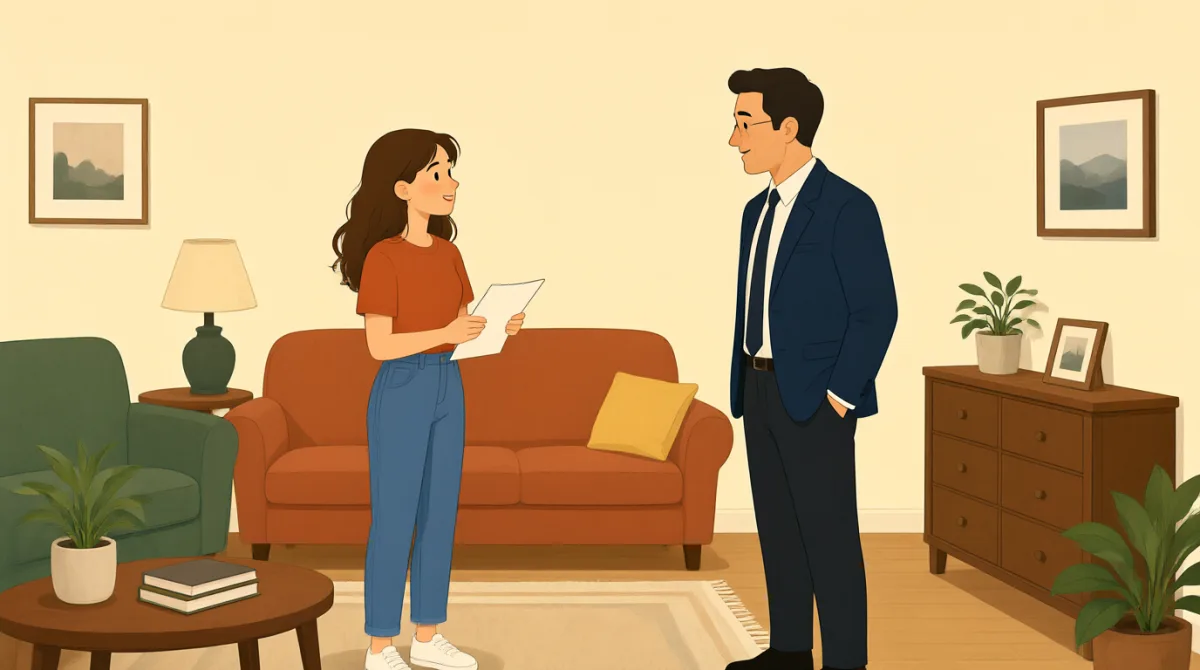

Thanks for meeting with me, David. I wanted to talk about the no-pets clause in my lease before I make any plans. Would you consider making an exception?

I’m willing to hear you out, Emma, though I generally try to apply the lease consistently. What kind of pet are you thinking about?
I’m hoping to adopt a small, well-trained dog. I understand that’s a significant request, so I’ve put together a proposal that addresses the practical concerns.
All right. Before we get into the details, what makes you confident this would work in the apartment?
The dog would be house-trained, and I’d arrange regular walks and training. I also have references and training records available if you’d like to review them.
Those details help. My main concern is protecting the apartment, particularly the floors and doors. Would you be prepared to cover any damage beyond normal wear and tear?
Absolutely. I’d take responsibility for any damage the dog caused, beyond ordinary wear. I’m also open to reasonable conditions, as long as we agree on them in writing.
That seems fair. We may also need to address noise or complaints from neighbors. Have you thought about how you’d handle those issues?
Yes. I’d make sure the dog gets enough exercise and attention, and I’d respond promptly if any concerns came up. I don’t want this to become a problem for anyone.
I appreciate that you’ve thought this through. I can’t give you a definite answer today, but I’m open to considering your proposal and discussing specific conditions.
Thank you. I’d be happy to work out terms that protect the apartment and respect the other tenants. I’ll wait for your written approval before bringing a dog home.
Vocabulary6
- hear you out
To listen to someone’s ideas or reasons before deciding. It shows that David is willing to consider Emma’s request.
- put together a proposal
To prepare a plan or suggestion for someone to consider. Emma has organized practical details to support her request.
- beyond normal wear and tear
Refers to damage that goes further than the ordinary deterioration caused by everyday use. It helps define what damage Emma would be responsible for.
- open to reasonable conditions
Willing to accept fair requirements or rules. This phrase shows flexibility while leaving room to discuss the details.
- work out terms
To agree on the details or conditions of an arrangement. Emma uses it to suggest negotiating a solution that works for both sides.
- written approval
Permission given in a written form rather than only verbally. Emma wants to have David’s clear consent before bringing a dog home.
Key Sentences7
- 1
Would you consider making an exception?
A polite way to ask someone to reconsider a rule. You can reuse “Would you consider…?” when making a respectful request.
- 2
I understand that’s a significant request, so I’ve put together a proposal that addresses the practical concerns.
This acknowledges that a request may be difficult while showing that you have prepared a solution. Use it when you want to make a thoughtful case in a negotiation.
- 3
Would you be prepared to cover any damage beyond normal wear and tear?
A tactful way to ask whether someone will accept responsibility for possible costs. The structure “Would you be prepared to…?” is useful when discussing obligations.
- 4
I’m also open to reasonable conditions, as long as we agree on them in writing.
This shows flexibility while setting a clear condition for agreement. You can use “I’m open to…, as long as…” to negotiate while protecting your interests.
- 5
I can’t give you a definite answer today, but I’m open to considering your proposal and discussing specific conditions.
This is a diplomatic way to delay a decision without rejecting the idea. It is useful when you need more time but want to keep a discussion moving.
- 6
I’d be happy to work out terms that protect the apartment and respect the other tenants.
This offers cooperation and highlights the interests of everyone involved. Reuse “I’d be happy to work out terms…” when suggesting a practical compromise.
- 7
I’ll wait for your written approval before bringing a dog home.
This clearly confirms that you will wait for formal permission before acting. It is useful when an agreement needs to be documented first.