Reading the No-Pets Clause
Emma reviews her lease with Jack and notices a clause that prohibits pets without the landlord’s written permission. They discuss what the wording allows and decide to ask before making any plans.
Dialogue10
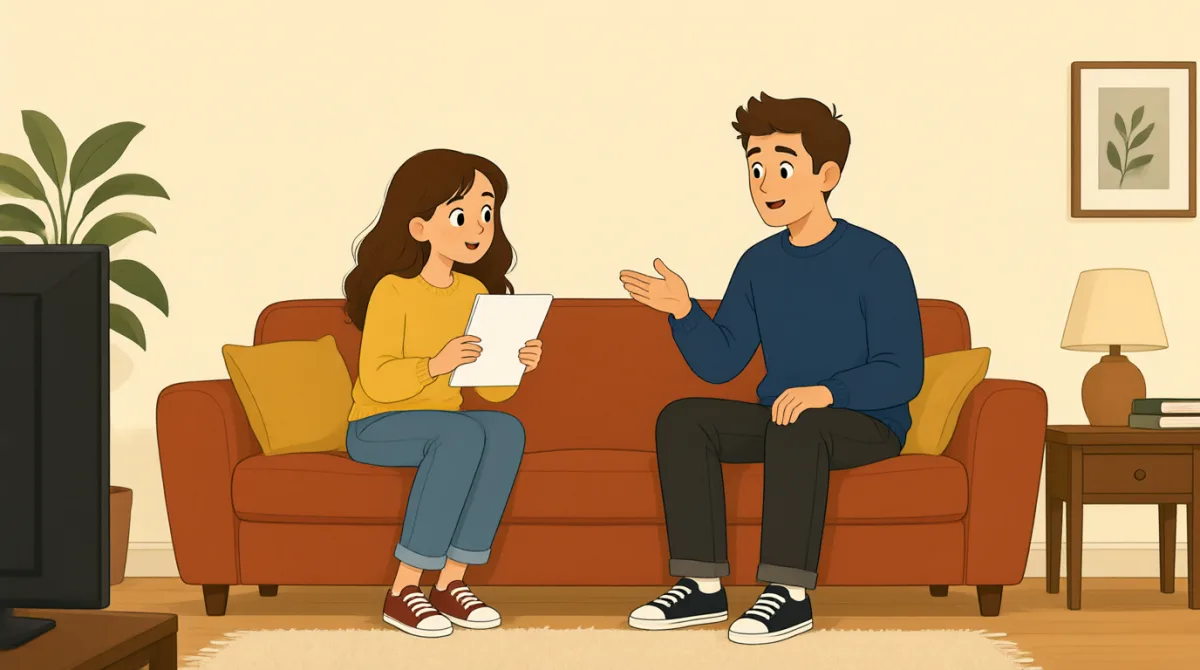

Jack, could you take a look at this section of my lease? I want to make sure I understand the pet policy before I even think about adopting a dog.

Sure. It says, “Pets are not permitted without the landlord’s prior written permission.” That sounds strict, but it doesn’t rule out asking for an exception.
That’s how I read it, too. The key phrase seems to be “without written permission,” rather than a blanket ban that gives the landlord no choice.
Right, although I wouldn’t assume it means approval is guaranteed. It just leaves the door open for you to make a request and see what the landlord says.
I’m not planning to bring a dog home first and ask questions later. I’d rather find out exactly what the lease allows and get approval in writing.
That’s sensible. Also check whether there’s another section about deposits, damage, or building rules; the pet clause may not be the whole story.
There’s a paragraph saying tenants are responsible for any damage caused by guests or animals. I suppose that means I’d have to cover repairs if the dog scratched the floors.
That’s how it reads. Before you sign up for anything, you could ask whether the landlord has conditions in mind, such as a pet deposit or limits on the dog’s size.
Good point. I’ll review the rest of the lease tonight and send a polite message asking what information the landlord would need to consider an exception.
And until you get clear written approval, hold off on making any commitments. It’s better to get everything sorted out up front than untangle a mess later.
Vocabulary7
- prior written permission
Approval given in writing before you do something. In this lease, the landlord must approve a pet in writing first.
- rule out
To say that something is not possible or will not happen. Here, the clause does not completely rule out getting a pet.
- a blanket ban
A complete prohibition that applies in every case. Emma contrasts this with a rule that may allow exceptions.
- the whole story
All the relevant information about a situation. Jack advises checking other lease sections, since the pet clause may not include every rule.
- hold off on
To wait before doing or deciding something. Jack suggests waiting to make commitments until Emma has written approval.
- up front
Before something happens or at the beginning of a process. Here, it means settling the details in advance.
- untangle a mess
To sort out a confusing or difficult problem. Jack means that getting approval early can prevent complications later.
Key Sentences8
- 1
That sounds strict, but it doesn’t rule out asking for an exception.
This sentence acknowledges a restriction while pointing out a possible next step. Use “doesn’t rule out + -ing” to say that something remains possible.
- 2
The key phrase seems to be “without written permission,” rather than a blanket ban that gives the landlord no choice.
This is useful for explaining how you interpret a rule while using cautious language. “The key phrase seems to be…” introduces your reading without sounding overly certain.
- 3
It just leaves the door open for you to make a request and see what the landlord says.
This phrase describes a possibility without promising an outcome. Reuse “leaves the door open” when a rule or situation allows for a potential option.
- 4
I’d rather find out exactly what the lease allows and get approval in writing.
This clearly expresses a careful preference and identifies a practical action. The pattern “I’d rather…” is useful when explaining what you prefer to do.
- 5
Before you sign up for anything, you could ask whether the landlord has conditions in mind, such as a pet deposit or limits on the dog’s size.
This offers a tactful suggestion and gives examples of details to clarify. Use “you could ask whether…” to make a polite recommendation.
- 6
I’ll review the rest of the lease tonight and send a polite message asking what information the landlord would need to consider an exception.
This sentence lays out a concrete plan and politely asks about requirements. It is useful when describing next steps in a negotiation.
- 7
And until you get clear written approval, hold off on making any commitments.
This gives direct but sensible advice about waiting for confirmation. “Until…” sets a condition, and “hold off on” means to postpone an action.
- 8
It’s better to get everything sorted out up front than untangle a mess later.
This compares preventing a problem with dealing with it afterward. The structure “It’s better to… than…” is useful for explaining why planning ahead matters.