Checking In and Using Insurance
At the clinic, Leo checks in with the front desk and provides his insurance information. Emma helps him understand what the staff needs.
Dialogue10
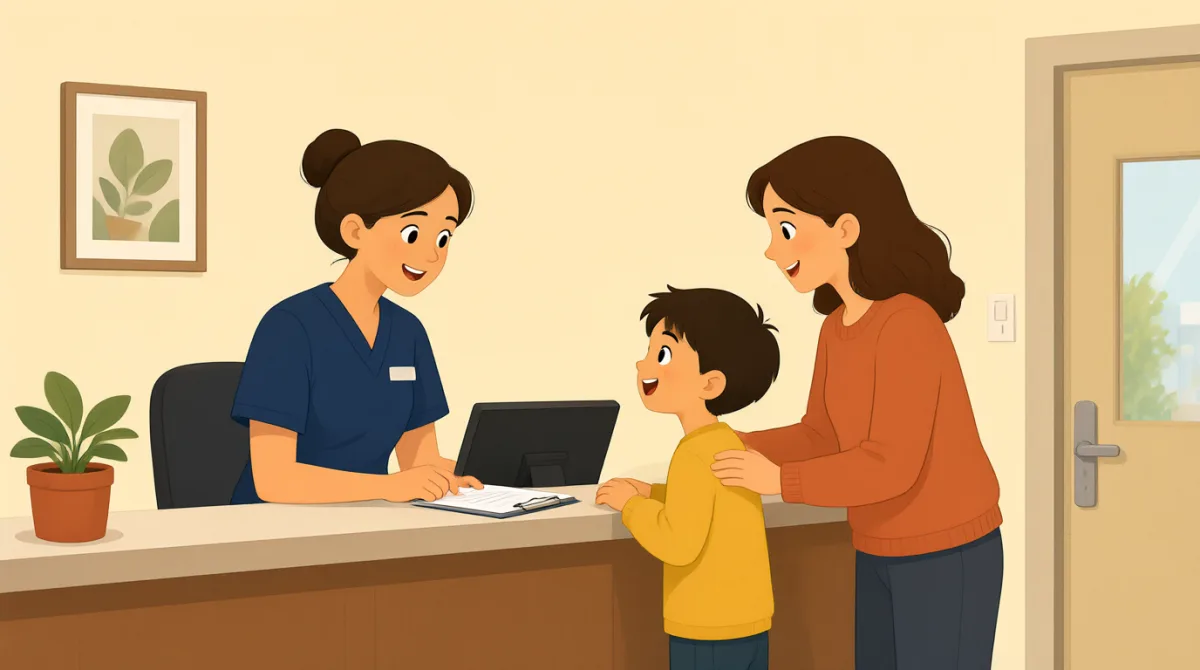

Hi there. Are you checking in for an appointment, or do you need to be seen today?

I twisted my ankle, and it’s pretty swollen. I don’t have an appointment, so I’m hoping to see someone soon.
Of course. Could I see your photo ID and insurance card? I’ll get your information into our system.
Sure. Here’s my ID. I have a digital insurance card on my phone—is that okay?
That works. Please open the card so I can check the member ID and the name on the plan.

Leo, your insurance card is in the app under “My Documents.” I saved it there when we set up your account.
Found it. Do you need my group number too, or is the member ID enough?
I can see both, thanks. Please fill out this form with your address, date of birth, and a contact number.
All set. Will my insurance cover the visit, or should I expect to pay something today?
Your plan may have a copay, but the exact amount depends on your coverage. We’ll check it and let you know before you leave.
Vocabulary7
- twisted my ankle
This means you injured your ankle by turning it suddenly. Use it to explain how an injury happened.
- pretty swollen
This means quite swollen, or larger than usual because of an injury. “Pretty” makes the description sound natural and conversational.
- be seen today
In a clinic, this means to have a medical professional examine you today. You can use it when asking for care without an appointment.
- insurance card
This is a card with information about your health insurance. Clinics often ask to see it when you check in.
- member ID
This is the identification number for a person covered by an insurance plan. Staff may need it to check your coverage.
- group number
This number identifies a particular insurance plan or group. It may appear on your insurance card alongside your member ID.
- copay
A copay is a set amount you may need to pay for a medical visit. The amount depends on your insurance plan.
Key Sentences7
- 1
I twisted my ankle, and it’s pretty swollen.
Use this sentence to briefly describe an injury and one of its symptoms. You can replace “my ankle” with another injured body part.
- 2
I don’t have an appointment, so I’m hoping to see someone soon.
This is a polite way to explain that you need care without a scheduled appointment. Replace “see someone” with the kind of help you need.
- 3
I have a digital insurance card on my phone—is that okay?
Use this when you have an electronic document instead of a physical card. You can adapt it for other digital forms of identification.
- 4
Do you need my group number too, or is the member ID enough?
This is a useful way to check which details someone needs. The pattern “Do you need X, or is Y enough?” works in many service situations.
- 5
Please fill out this form with your address, date of birth, and a contact number.
This sentence shows how staff may ask you to complete a form and lists common information they need. Listen for each detail so you can provide it accurately.
- 6
Will my insurance cover the visit, or should I expect to pay something today?
Use this to ask whether insurance will pay and whether you may owe money. “Should I expect to…” is a natural way to ask what is likely to happen.
- 7
Your plan may have a copay, but the exact amount depends on your coverage.
This explains that a copay is possible but the amount varies by plan. It is useful language for discussing costs that are not yet confirmed.