Declaring Food at Customs
세관에 식품 신고하기
At customs, Mia tells the officer she has packaged food in her bag and asks whether she needs to declare it. The officer explains what can be brought into the country.
세관에서 미아는 가방에 포장 식품이 있다고 알리고 신고해야 하는지 묻습니다. 세관 직원은 어떤 물품을 국내로 반입할 수 있는지 설명합니다.
대화10
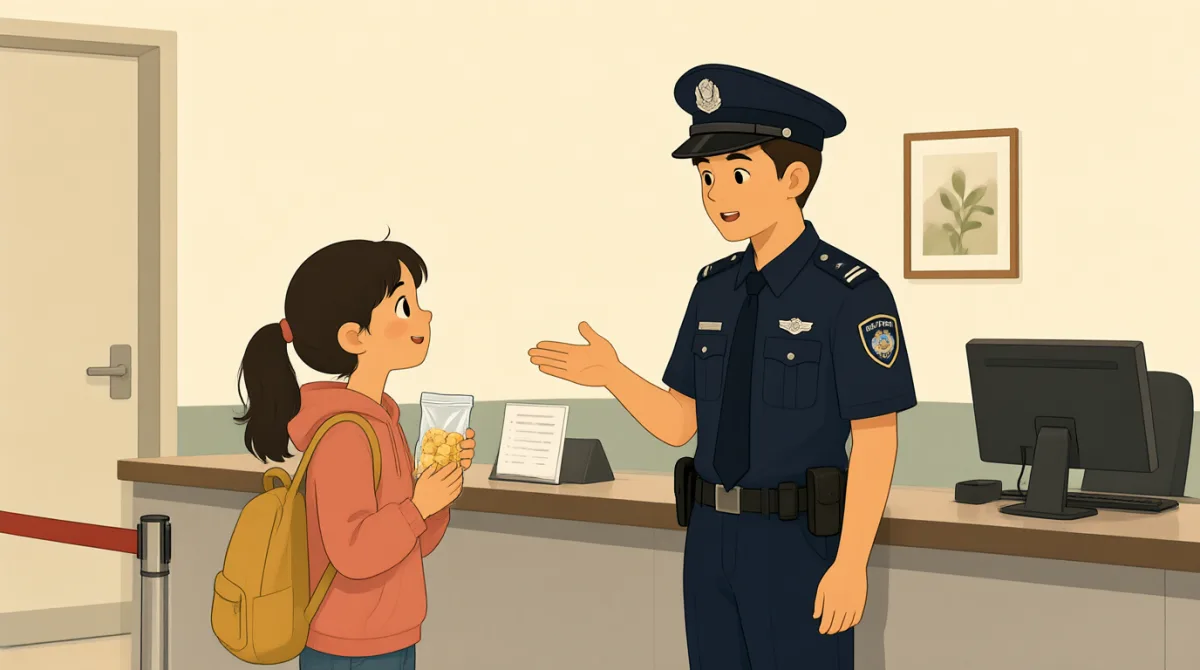

Hi. I have some packaged food in my bag. Do I need to declare it?
안녕하세요. 가방에 포장 식품이 좀 있는데요. 신고해야 하나요?

What kind of food is it? Some items, like fresh fruit, meat, and seeds, may be restricted.
어떤 식품인가요? 신선한 과일이나 고기, 씨앗 같은 일부 품목은 반입이 제한될 수 있습니다.
I have sealed tea, crackers, and a few chocolate bars. They’re all for my own use.
밀봉된 차와 크래커, 초콜릿 바 몇 개예요. 전부 제가 먹으려고 가져온 거예요.
Packaged snacks are usually fine, but you should still declare them so an officer can check.
포장된 간식은 보통 괜찮지만, 직원이 확인할 수 있도록 그래도 신고하셔야 해요.
Okay, I’d rather be safe than sorry. Should I take them out of my bag?
알겠습니다. 나중에 후회하는 것보다 조심하는 게 낫겠죠. 가방에서 꺼내야 하나요?
Yes, please. Keep the labels visible, and don’t open anything unless the officer asks you to.
네, 부탁드려요. 포장에 적힌 내용이 보이게 두시고, 직원이 요청하지 않는 한 아무것도 열지 마세요.
Here they are. The tea is from home, and I bought the crackers and chocolate at the airport.
여기 있습니다. 차는 집에서 가져왔고, 크래커와 초콜릿은 공항에서 샀어요.
Thanks. These are allowed. Just remember to declare any food, even if it’s sealed or store-bought.
감사합니다. 이건 반입이 허용됩니다. 밀봉된 식품이나 매장에서 산 식품이라도 모두 신고해야 한다는 점만 기억해 주세요.
Got it. I’m glad I asked before going through. Is there anything else I need to do?
알겠습니다. 통과하기 전에 물어보길 잘했네요. 제가 또 해야 할 일이 있나요?
You’re all set. Put everything back in your bag, and you can continue through customs.
이제 다 됐습니다. 모두 가방에 다시 넣으시면 세관을 통과하셔도 됩니다.
어휘7
- declare it신고하다
To tell a customs officer that you are bringing something into the country. Use this when asking whether you need to report an item.
세관 직원에게 물건을 국내로 가져온다고 알리는 거예요. 어떤 물건을 신고해야 하는지 물을 때 쓰세요.
- restricted반입이 제한되는
Limited or not allowed under certain rules. Customs may restrict items such as fresh fruit, meat, and seeds.
특정 규정에 따라 제한되거나 허용되지 않는다는 뜻이에요. 세관에서는 신선한 과일이나 고기, 씨앗 같은 물품의 반입을 제한할 수 있어요.
- for my own use제가 쓰려고
For yourself rather than for sale or for someone else. You can use this phrase to explain why you are carrying something.
판매하거나 다른 사람에게 주려는 것이 아니라 자신이 쓰려고 한다는 뜻이에요. 물건을 왜 가지고 있는지 설명할 때 쓸 수 있어요.
- sealed밀봉된
Closed securely, usually in its original packaging. A sealed item has not been opened.
보통 원래 포장 그대로 단단히 닫혀 있다는 뜻이에요. 밀봉된 물건은 개봉하지 않은 상태예요.
- I’d rather be safe than sorry.안전하게 하는 게 나중에 후회하는 것보다 낫죠.
A way to say you prefer to be cautious so you do not have problems later. Use it when taking a careful option.
나중에 문제가 생기지 않도록 조심하는 편을 택한다는 말이에요. 신중한 선택을 할 때 쓰세요.
- labels visible라벨이 잘 보이게
Easy to see the information printed on the packages. This helps an officer identify what the items are.
포장에 인쇄된 정보가 쉽게 보이는 상태를 말해요. 직원이 어떤 물건인지 확인하는 데 도움이 돼요.
- You’re all set.이제 다 됐습니다.
A friendly way to say that everything is finished and there is nothing else you need to do.
모든 절차가 끝났고 더 할 일이 없다는 뜻으로 친근하게 알려 주는 표현이에요.
핵심 문장8
- 1
Do I need to declare it?
신고해야 하나요?
Use this to ask whether you must report an item to an official. Replace “it” with the thing you are carrying.
물건을 공무원에게 신고해야 하는지 물을 때 쓰세요. “it”을 가지고 있는 물건으로 바꾸면 돼요.
- 2
Some items, like fresh fruit, meat, and seeds, may be restricted.
신선한 과일이나 고기, 씨앗 같은 일부 품목은 반입이 제한될 수 있습니다.
This sentence explains that rules can limit certain items. You can use “Some items, like [examples], may be restricted” to give examples of possible restrictions.
규정에 따라 특정 물품이 제한될 수 있다는 점을 설명하는 문장이에요. “Some items, like [examples], may be restricted”라는 표현을 사용해 제한될 수 있는 물품의 예를 들 수 있어요.
- 3
They’re all for my own use.
전부 제가 쓰려고 가져온 거예요.
Use this to explain that items are for you, not for selling. Replace “they” with the items you are carrying.
물건을 판매하려는 게 아니라 자신이 쓰려고 가져왔다고 설명할 때 쓰세요. “they”를 가지고 있는 물건으로 바꾸면 돼요.
- 4
Packaged snacks are usually fine, but you should still declare them so an officer can check.
포장된 간식은 보통 괜찮지만, 직원이 확인할 수 있도록 그래도 신고하셔야 해요.
This gives reassurance while explaining a necessary step. Use “usually fine, but you should still…” to describe something generally allowed that still needs attention.
안심시키면서도 필요한 절차를 알려 주는 문장이에요. 대체로 허용되지만 그래도 주의가 필요한 일을 말할 때 “usually fine, but you should still…”을 쓰세요.
- 5
I’d rather be safe than sorry.
안전하게 하는 게 나중에 후회하는 것보다 낫죠.
Use this when you choose the cautious option to avoid a possible problem. It works in many everyday situations, not just at customs.
문제가 생길 가능성을 피하려고 더 신중한 쪽을 선택할 때 쓰세요. 세관뿐 아니라 일상생활의 여러 상황에서도 쓸 수 있어요.
- 6
Keep the labels visible, and don’t open anything unless the officer asks you to.
포장에 적힌 내용이 보이게 두시고, 직원이 요청하지 않는 한 아무것도 열지 마세요.
This gives clear instructions about what to do with packaged items. “Don’t… unless…” means you should avoid doing something except when a condition is met.
포장된 물품을 어떻게 다뤄야 하는지 명확하게 알려 주는 표현이에요. “Don’t… unless…”는 어떤 조건이 충족되는 경우가 아니라면 특정 행동을 하지 말라는 뜻이에요.
- 7
Just remember to declare any food, even if it’s sealed or store-bought.
밀봉된 식품이나 매장에서 산 식품이라도 모두 신고해야 한다는 점을 기억해 주세요.
This is a useful reminder that a rule applies to all food, including packaged items. Use “even if…” to emphasize that a condition does not change the requirement.
포장 식품을 포함해 모든 식품에 규정이 적용된다는 점을 상기시켜 주는 유용한 표현이에요. “even if…”는 어떤 조건이 있어도 요구사항은 달라지지 않는다는 점을 강조할 때 쓰세요.
- 8
You’re all set.
이제 다 됐습니다.
Use this friendly phrase to tell someone they have finished everything required. It is common in service situations.
필요한 절차를 모두 마쳤다고 친근하게 알려 줄 때 쓰세요. 서비스 상황에서 흔히 들을 수 있는 표현이에요.