Declaring Food at Customs
在海关申报食品
At customs, Mia tells the officer she has packaged food in her bag and asks whether she needs to declare it. The officer explains what can be brought into the country.
在海关,米娅告诉工作人员包里带了包装食品,并询问是否需要申报。工作人员解释了哪些食品可以带入境。
对话10
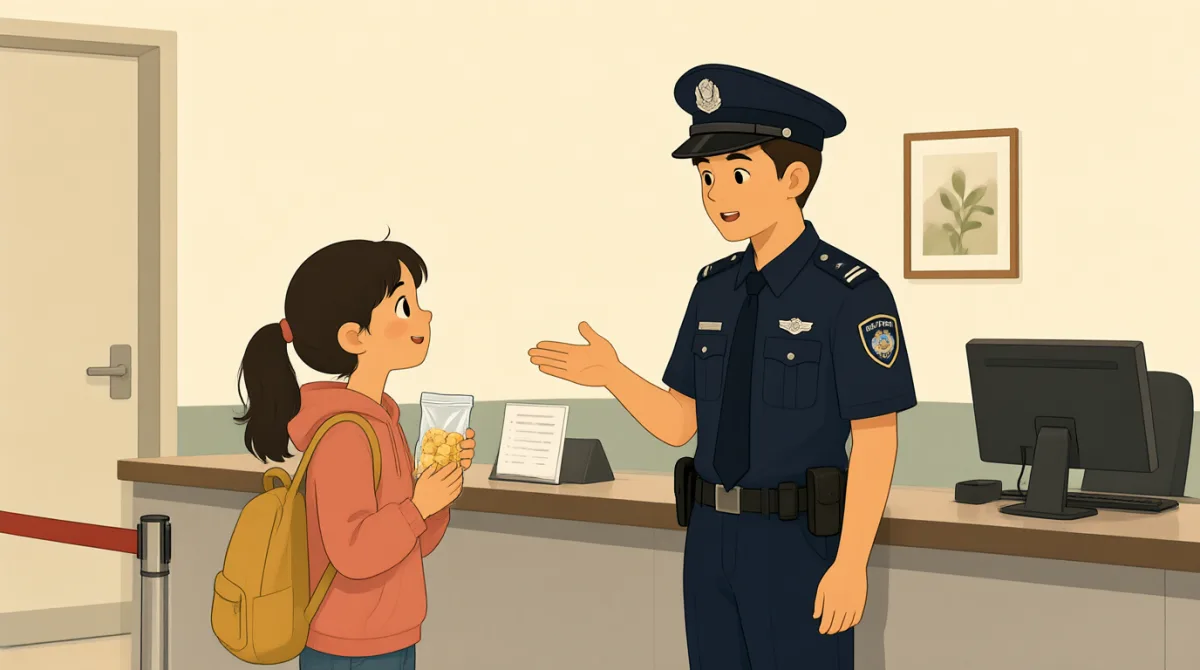

Hi. I have some packaged food in my bag. Do I need to declare it?
您好,我包里有一些包装食品。需要申报吗?

What kind of food is it? Some items, like fresh fruit, meat, and seeds, may be restricted.
是什么食品?有些东西,比如新鲜水果、肉类和种子,可能受到限制。
I have sealed tea, crackers, and a few chocolate bars. They’re all for my own use.
我带了密封包装的茶、饼干和几块巧克力,都是自己吃的。
Packaged snacks are usually fine, but you should still declare them so an officer can check.
包装零食通常没问题,但你还是应该申报,让工作人员检查一下。
Okay, I’d rather be safe than sorry. Should I take them out of my bag?
好的,小心一点总没错。我需要把它们从包里拿出来吗?
Yes, please. Keep the labels visible, and don’t open anything unless the officer asks you to.
好的,请拿出来,把标签露出来。除非工作人员要求,否则不要打开包装。
Here they are. The tea is from home, and I bought the crackers and chocolate at the airport.
给您。茶是从家里带来的,饼干和巧克力是在机场买的。
Thanks. These are allowed. Just remember to declare any food, even if it’s sealed or store-bought.
谢谢。这些都可以带。记得有食品就要申报,即使是密封包装或商店买的也一样。
Got it. I’m glad I asked before going through. Is there anything else I need to do?
明白了。幸好我过关前问了一下。我还需要做什么吗?
You’re all set. Put everything back in your bag, and you can continue through customs.
都办好了。把东西放回包里,就可以继续通过海关了。
词汇7
- declare it申报
To tell a customs officer that you are bringing something into the country. Use this when asking whether you need to report an item.
向海关工作人员说明你带了东西入境。询问某件物品是否需要申报时,可以用这个说法。
- restricted受限制的
Limited or not allowed under certain rules. Customs may restrict items such as fresh fruit, meat, and seeds.
根据某些规定受到限制或不允许入境。海关可能会限制新鲜水果、肉类和种子等物品。
- for my own use自己用
For yourself rather than for sale or for someone else. You can use this phrase to explain why you are carrying something.
供自己使用,而不是拿去出售或给别人。你可以用这个说法解释为什么带着某样东西。
- sealed密封的
Closed securely, usually in its original packaging. A sealed item has not been opened.
牢牢封好的,通常指保留原包装。密封的物品还没有被打开。
- I’d rather be safe than sorry.谨慎一点总比惹上麻烦好。
A way to say you prefer to be cautious so you do not have problems later. Use it when taking a careful option.
表示你宁愿谨慎一些,以免之后遇到麻烦。选择稳妥的做法时可以用这句话。
- labels visible标签清晰可见
Easy to see the information printed on the packages. This helps an officer identify what the items are.
包装上印的信息容易看清。这样工作人员就能辨认物品是什么。
- You’re all set.都办好了。
A friendly way to say that everything is finished and there is nothing else you need to do.
一种友好的说法,表示事情都办完了,你不需要再做什么。
重点句子8
- 1
Do I need to declare it?
我需要申报吗?
Use this to ask whether you must report an item to an official. Replace “it” with the thing you are carrying.
用这句话询问是否必须向工作人员申报某件物品。把“it”换成你带的东西就可以了。
- 2
Some items, like fresh fruit, meat, and seeds, may be restricted.
有些物品,比如新鲜水果、肉类和种子,可能受到限制。
This sentence explains that rules can limit certain items. You can use “Some items, like [examples], may be restricted” to give examples of possible restrictions.
这句话说明某些物品可能受到规定限制。你可以用“Some items, like [examples], may be restricted”来举例说明可能受限的物品。
- 3
They’re all for my own use.
这些都是我自己用的。
Use this to explain that items are for you, not for selling. Replace “they” with the items you are carrying.
用这句话说明这些东西是给自己用的,不是拿去卖的。把“they”换成你带的物品就可以了。
- 4
Packaged snacks are usually fine, but you should still declare them so an officer can check.
包装零食通常没问题,但你还是应该申报,让工作人员检查一下。
This gives reassurance while explaining a necessary step. Use “usually fine, but you should still…” to describe something generally allowed that still needs attention.
这句话既让人放心,也说明了必须采取的步骤。你可以用“usually fine, but you should still…”来描述通常没问题、但仍需要留意的情况。
- 5
I’d rather be safe than sorry.
谨慎一点总比惹上麻烦好。
Use this when you choose the cautious option to avoid a possible problem. It works in many everyday situations, not just at customs.
当你选择谨慎的做法,以免遇到问题时,可以用这句话。它适用于许多日常场合,不只是过海关时。
- 6
Keep the labels visible, and don’t open anything unless the officer asks you to.
让标签保持清晰可见,除非工作人员要求,否则不要打开任何东西。
This gives clear instructions about what to do with packaged items. “Don’t… unless…” means you should avoid doing something except when a condition is met.
这句话清楚地说明了如何处理包装物品。“Don’t… unless…”的意思是,除非满足某个条件,否则不要做某事。
- 7
Just remember to declare any food, even if it’s sealed or store-bought.
记得任何食品都要申报,即使是密封包装或商店买的也一样。
This is a useful reminder that a rule applies to all food, including packaged items. Use “even if…” to emphasize that a condition does not change the requirement.
这句话提醒你,规定适用于所有食品,包括包装食品。用“even if…”可以强调,即使某种情况成立,要求也不会改变。
- 8
You’re all set.
都办好了。
Use this friendly phrase to tell someone they have finished everything required. It is common in service situations.
用这句友好的说法告诉对方,所有需要做的事都已经完成。在服务场合很常见。