A Random Bag Inspection
무작위 가방 검사
Mia’s bag is selected for a random inspection. She calmly answers questions while the officer checks its contents.
미아의 가방이 무작위 검사 대상으로 선정돼요. 직원이 가방 안을 확인하는 동안 미아는 차분하게 질문에 답해요.
대화9
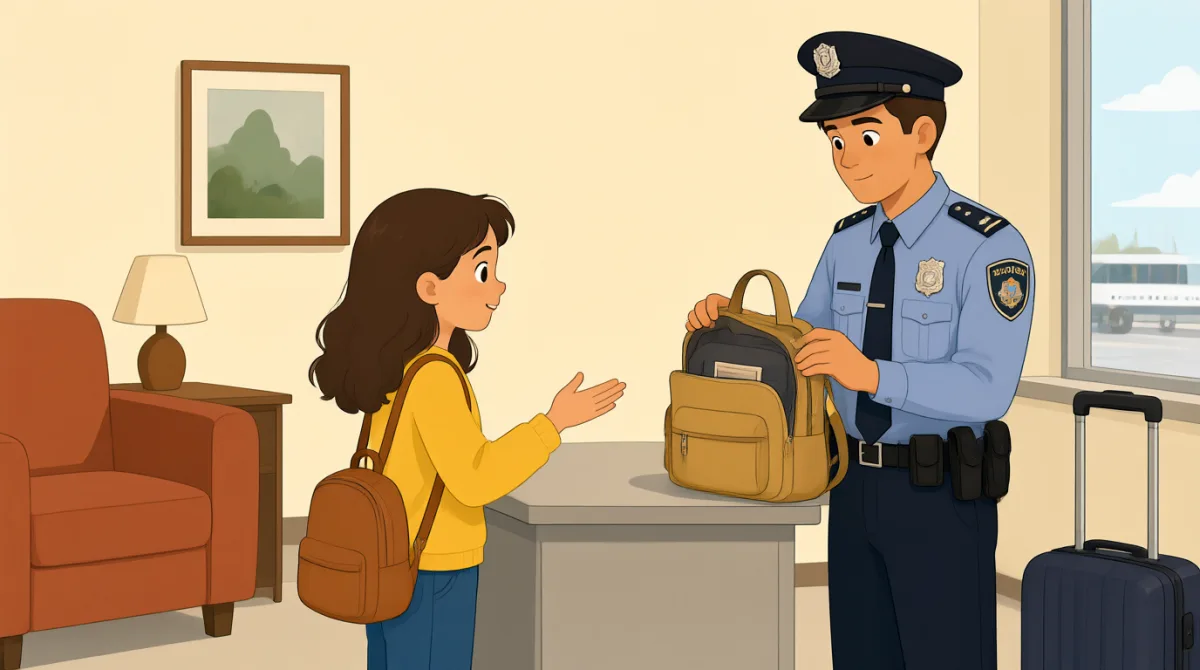

Good afternoon. I was told my bag was selected for a random inspection. What would you like me to do?
안녕하세요. 제 가방이 무작위 검사 대상으로 선정됐다고 들었어요. 어떻게 하면 될까요?

Please place it on the table and open it for me. Do you have any sharp objects or restricted items inside?
가방을 테이블 위에 올려놓고 열어 주세요. 안에 날카로운 물건이나 반입 제한 물품이 있나요?
No, I don’t think so. I have clothes, toiletries, and a small bottle of medicine for my allergies.
아니요, 없는 것 같아요. 옷이랑 세면도구, 알레르기 때문에 먹는 작은 약병이 있어요.
Thanks. I’ll take a quick look. Is this medicine prescribed, or can you tell me what it’s for?
감사합니다. 잠깐 살펴볼게요. 이 약은 처방받은 건가요, 아니면 어디에 쓰는 약인지 말씀해 주실 수 있나요?
It’s an over-the-counter allergy medicine. I keep it in the original package, and it’s just for my personal use.
처방전 없이 살 수 있는 알레르기약이에요. 원래 포장에 넣어 두었고, 제가 쓰려고 가져온 거예요.
That’s fine. I also see a power bank here. Do you have any batteries packed in your checked luggage?
괜찮습니다. 여기 보조 배터리도 있네요. 부치는 짐에 배터리를 넣으셨나요?
No, all my batteries are in my carry-on. I wasn’t sure about the rules, so I checked before I packed.
아니요, 배터리는 전부 기내에 가지고 타는 가방에 넣었어요. 규정을 잘 몰라서 짐을 싸기 전에 확인했어요.
Good call. Everything looks fine, and we’re done. You can repack your bag and continue to the exit.
잘하셨어요. 모두 괜찮아 보이고, 검사는 끝났습니다. 가방을 다시 싸고 출구로 가시면 돼요.
Thank you for explaining everything. I was a little nervous, but it was no big deal after all.
설명해 주셔서 감사합니다. 조금 긴장했는데, 막상 해 보니 별일 아니었네요.
어휘8
- random inspection무작위 검사
A check chosen by chance rather than because someone suspects a problem. Here, an officer checks Mia’s bag.
누군가 문제가 있다고 의심해서가 아니라, 우연히 선택해 확인하는 검사예요. 여기서는 직원이 미아의 가방을 확인해요.
- restricted items반입 제한 물품
Things that travelers are not allowed to bring, or may only bring under certain conditions. You can ask whether your bag contains any restricted items.
여행자가 가져갈 수 없거나, 특정 조건에서만 가져갈 수 있는 물건이에요. 가방에 반입 제한 물품이 있는지 물어볼 때 쓸 수 있어요.
- take a quick look잠깐 살펴보다
To examine something briefly. An officer might use this phrase to explain that a bag check will not take long.
무언가를 짧은 시간 동안 확인한다는 뜻이에요. 직원은 가방 검사가 오래 걸리지 않을 거라고 설명할 때 이 표현을 쓸 수 있어요.
- over-the-counter처방전 없이 살 수 있는
Available to buy without a prescription from a doctor. Use this phrase to describe common medicines.
의사의 처방전 없이 살 수 있다는 뜻이에요. 흔히 쓰는 약을 설명할 때 이 표현을 사용해요.
- personal use개인 사용
Use by you, rather than for sale or for someone else. You can explain that a small amount of medicine is for your personal use.
판매하거나 다른 사람에게 주려는 게 아니라 본인이 쓰는 것을 말해요. 약을 조금 가져왔고 개인적으로 사용할 거라고 설명할 때 쓸 수 있어요.
- checked luggage부치는 짐
Bags that you hand over to the airline before boarding, rather than carry onto the plane. You may be asked whether certain items are packed in your checked luggage.
비행기에 들고 타는 대신 탑승 전에 항공사에 맡기는 짐이에요. 특정 물건을 부치는 짐에 넣었는지 질문을 받을 수 있어요.
- Good call.잘하셨어요.
A casual way to say that someone made a sensible decision. Here, the officer approves of Mia checking the battery rules before packing.
누군가 현명한 결정을 했다고 말하는 편한 표현이에요. 여기서는 짐을 싸기 전에 배터리 규정을 확인한 미아를 직원이 칭찬해요.
- no big deal별일 아니다
An informal phrase meaning that something was not difficult or serious. You can use it to say that a situation turned out to be easier than expected.
어떤 일이 어렵거나 심각하지 않다는 뜻의 편한 표현이에요. 예상보다 상황이 쉽게 끝났다고 말할 때 쓸 수 있어요.
핵심 문장7
- 1
What would you like me to do?
어떻게 하면 될까요?
Use this polite question when you need instructions. It works well in service situations, such as a security check or a visit to an office.
안내가 필요할 때 쓰는 정중한 질문이에요. 보안 검사나 사무실 방문처럼 서비스를 받는 상황에서 잘 어울려요.
- 2
Do you have any sharp objects or restricted items inside?
안에 날카로운 물건이나 반입 제한 물품이 있나요?
This is a direct question about what is in a bag or container. You can change the item names to ask about other things, such as food or liquids.
가방이나 용기 안에 무엇이 있는지 직접 물어보는 질문이에요. 음식이나 액체처럼 다른 물건 이름을 넣어 물어볼 수도 있어요.
- 3
I keep it in the original package, and it’s just for my personal use.
원래 포장에 넣어 두었고, 제가 쓰려고 가져온 거예요.
This sentence explains how an item is packed and why you have it. You can reuse the structure to describe other belongings you are carrying.
물건을 어떻게 포장했는지, 왜 가지고 있는지 설명하는 문장이에요. 이 구조를 활용해 가져온 다른 소지품도 설명할 수 있어요.
- 4
I wasn’t sure about the rules, so I checked before I packed.
규정을 잘 몰라서 짐을 싸기 전에 확인했어요.
Use this sentence to explain that you looked up instructions because you were uncertain. The pattern “I wasn’t sure about X, so I...” is useful for giving a reason.
확실하지 않아서 안내 사항을 찾아봤다고 설명할 때 쓰는 문장이에요. “I wasn’t sure about X, so I...”라는 패턴은 이유를 말할 때 유용해요.
- 5
Everything looks fine, and we’re done.
모두 괜찮아 보이고, 검사는 끝났습니다.
This is a reassuring way to tell someone that a check or task is complete. You can use “Everything looks fine” when reviewing something for problems.
검사나 작업이 끝났다고 안심시키며 알려주는 표현이에요. 문제가 있는지 살펴본 뒤 “Everything looks fine”이라고 말할 수 있어요.
- 6
You can repack your bag and continue to the exit.
가방을 다시 싸고 출구로 가시면 돼요.
This gives clear instructions about what to do next. You can replace “repack your bag” and “the exit” with other actions and destinations.
다음에 할 일을 분명하게 안내하는 문장이에요. “repack your bag”과 “the exit”을 다른 행동이나 목적지로 바꿔 쓸 수 있어요.
- 7
I was a little nervous, but it was no big deal after all.
처음엔 조금 긴장했는데, 막상 해 보니 별일 아니었어요.
Use this sentence to describe feeling worried at first and then finding that something was easy. “After all” emphasizes that the final result was different from what you expected.
처음에는 걱정했지만 나중에는 일이 쉬웠다고 느꼈을 때 쓰는 문장이에요. “After all”은 결과가 예상과 달랐다는 점을 강조해요.