Reading the No-Pets Clause
ペット禁止条項を読む
Emma reviews her lease with Jack and notices a clause that prohibits pets without the landlord’s written permission. They discuss what the wording allows and decide to ask before making any plans.
エマはジャックと賃貸契約書を確認し、大家の書面による許可がない限りペットを飼えないという条項に気づく。二人はその文言が何を認めているのか話し合い、計画を立てる前に大家に尋ねることにする。
会話10
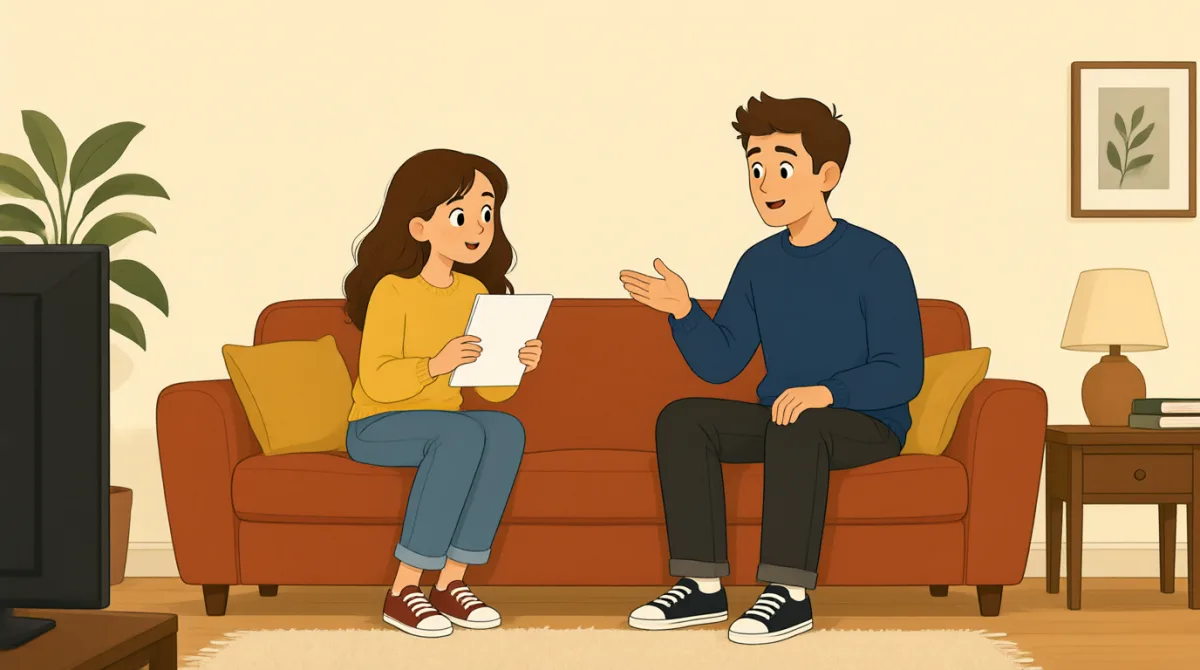

Jack, could you take a look at this section of my lease? I want to make sure I understand the pet policy before I even think about adopting a dog.
ジャック、この賃貸契約書のこの部分を見てくれる?犬を飼うことを考える前に、ペットに関する規則をちゃんと理解してるか確認したいんだ。

Sure. It says, “Pets are not permitted without the landlord’s prior written permission.” That sounds strict, but it doesn’t rule out asking for an exception.
いいよ。「大家の事前の書面による許可がない限り、ペットを飼うことは認められません」って書いてあるね。厳しそうだけど、例外をお願いすることまで禁止してるわけじゃないよ。
That’s how I read it, too. The key phrase seems to be “without written permission,” rather than a blanket ban that gives the landlord no choice.
私もそう読んだよ。大事なのは「書面による許可がない限り」ってところみたい。大家に選択の余地がない全面禁止とは違うよね。
Right, although I wouldn’t assume it means approval is guaranteed. It just leaves the door open for you to make a request and see what the landlord says.
そうだね。ただ、許可が必ずもらえるとは思わないほうがいいよ。お願いして、大家がどう言うか聞いてみる余地があるってだけだから。
I’m not planning to bring a dog home first and ask questions later. I’d rather find out exactly what the lease allows and get approval in writing.
犬を先に連れて帰って、あとから聞くつもりはないよ。契約で何が認められているのか正確に確認して、書面で許可をもらいたいな。
That’s sensible. Also check whether there’s another section about deposits, damage, or building rules; the pet clause may not be the whole story.
それが賢明だね。敷金や損傷、建物の規則について別の条項がないかも確認してみて。ペットに関する条項だけですべてとは限らないから。
There’s a paragraph saying tenants are responsible for any damage caused by guests or animals. I suppose that means I’d have to cover repairs if the dog scratched the floors.
入居者は、来客や動物が起こした損傷について責任を負うっていう段落があるよ。犬が床にひっかき傷をつけたら、修理費を私が負担するってことかな。
That’s how it reads. Before you sign up for anything, you could ask whether the landlord has conditions in mind, such as a pet deposit or limits on the dog’s size.
そう読めるね。何かを決める前に、大家がどんな条件を考えているか聞いてみてもいいよ。たとえばペットの敷金が必要かとか、犬の大きさに制限があるかとかね。
Good point. I’ll review the rest of the lease tonight and send a polite message asking what information the landlord would need to consider an exception.
そうだね。今夜、契約書の残りを確認して、例外を検討するためにどんな情報が必要か丁寧に尋ねるメッセージを送るよ。
And until you get clear written approval, hold off on making any commitments. It’s better to get everything sorted out up front than untangle a mess later.
はっきりした書面での許可をもらうまでは、何かを決めるのは待ってね。最初に全部きちんと確認しておくほうが、あとで面倒なことを解決するよりいいよ。
語彙7
- prior written permission事前の書面による許可
Approval given in writing before you do something. In this lease, the landlord must approve a pet in writing first.
何かをする前に、書面で得る許可のことです。この契約では、大家からペットを飼う許可を事前に書面でもらう必要があります。
- rule out除外する、可能性を否定する
To say that something is not possible or will not happen. Here, the clause does not completely rule out getting a pet.
何かが不可能だ、または起こらないと言うことです。ここでは、この条項はペットを飼う可能性を完全に否定しているわけではありません。
- a blanket ban全面禁止
A complete prohibition that applies in every case. Emma contrasts this with a rule that may allow exceptions.
どんな場合にも適用される完全な禁止のことです。エマは、例外が認められるかもしれない規則と対比しています。
- the whole storyすべてではない
All the relevant information about a situation. Jack advises checking other lease sections, since the pet clause may not include every rule.
状況に関係する情報のすべてという意味です。ペットの条項にすべての規則が含まれているとは限らないので、ジャックは契約書のほかの部分も確認するよう勧めています。
- hold off on〜を見合わせる
To wait before doing or deciding something. Jack suggests waiting to make commitments until Emma has written approval.
何かをしたり決めたりするのを待つことです。ジャックは、エマが書面で許可を得るまで、約束や決定をしないよう勧めています。
- up frontあらかじめ
Before something happens or at the beginning of a process. Here, it means settling the details in advance.
何かが起こる前、または手続きの最初に、という意味です。ここでは、詳細を前もって決めておくことを指します。
- untangle a mess面倒な問題を解決する
To sort out a confusing or difficult problem. Jack means that getting approval early can prevent complications later.
複雑だったり困難だったりする問題を整理して解決することです。ジャックは、早めに許可を得ておけば、あとで面倒なことになるのを防げると言っています。
重要な文8
- 1
That sounds strict, but it doesn’t rule out asking for an exception.
厳しそうだけど、例外をお願いすることまで禁止してるわけじゃないよ。
This sentence acknowledges a restriction while pointing out a possible next step. Use “doesn’t rule out + -ing” to say that something remains possible.
この文は、制限があることを認めつつ、次にできることを示しています。“doesn’t rule out + -ing” は、何かがまだ可能だと伝える表現です。
- 2
The key phrase seems to be “without written permission,” rather than a blanket ban that gives the landlord no choice.
大事なのは「書面による許可がない限り」ってところみたい。大家に選択の余地がない全面禁止とは違うよね。
This is useful for explaining how you interpret a rule while using cautious language. “The key phrase seems to be…” introduces your reading without sounding overly certain.
慎重な言い方をしながら、規則をどう解釈するか説明するときに便利な表現です。“The key phrase seems to be…” は、断定しすぎずに自分の読み方を示せます。
- 3
It just leaves the door open for you to make a request and see what the landlord says.
お願いして、大家がどう言うか聞いてみる余地があるってだけだから。
This phrase describes a possibility without promising an outcome. Reuse “leaves the door open” when a rule or situation allows for a potential option.
結果を約束せずに、可能性があることを表すフレーズです。規則や状況によって選択肢が残されているときは、“leaves the door open” を使えます。
- 4
I’d rather find out exactly what the lease allows and get approval in writing.
契約で何が認められているのか正確に確認して、書面で許可をもらいたいな。
This clearly expresses a careful preference and identifies a practical action. The pattern “I’d rather…” is useful when explaining what you prefer to do.
慎重な希望をはっきり伝え、実際に取る行動も示す文です。“I’d rather…” は、自分がどちらをしたいか説明するときに便利です。
- 5
Before you sign up for anything, you could ask whether the landlord has conditions in mind, such as a pet deposit or limits on the dog’s size.
何かを決める前に、大家がどんな条件を考えているか聞いてみてもいいよ。たとえばペットの敷金が必要かとか、犬の大きさに制限があるかとかね。
This offers a tactful suggestion and gives examples of details to clarify. Use “you could ask whether…” to make a polite recommendation.
配慮のある提案をし、確認すべき内容の例を挙げています。“you could ask whether…” を使うと、丁寧に提案できます。
- 6
I’ll review the rest of the lease tonight and send a polite message asking what information the landlord would need to consider an exception.
今夜、契約書の残りを確認して、例外を検討するためにどんな情報が必要か丁寧に尋ねるメッセージを送るよ。
This sentence lays out a concrete plan and politely asks about requirements. It is useful when describing next steps in a negotiation.
具体的な計画を示し、必要事項を丁寧に尋ねる文です。交渉で次に何をするか説明するときに便利です。
- 7
And until you get clear written approval, hold off on making any commitments.
はっきりした書面での許可をもらうまでは、何かを決めるのは待ってね。
This gives direct but sensible advice about waiting for confirmation. “Until…” sets a condition, and “hold off on” means to postpone an action.
確認が取れるまで待つよう、率直で妥当な助言をしています。“Until…” は条件を示し、“hold off on” は行動を先延ばしにするという意味です。
- 8
It’s better to get everything sorted out up front than untangle a mess later.
最初に全部きちんと確認しておくほうが、あとで面倒なことを解決するよりいいよ。
This compares preventing a problem with dealing with it afterward. The structure “It’s better to… than…” is useful for explaining why planning ahead matters.
問題を未然に防ぐことと、あとから対処することを比べています。“It’s better to… than…” は、前もって計画することが大切な理由を説明するのに便利な形です。