Reading the No-Pets Clause
阅读禁止养宠物条款
Emma reviews her lease with Jack and notices a clause that prohibits pets without the landlord’s written permission. They discuss what the wording allows and decide to ask before making any plans.
艾玛和杰克一起查看租约,发现其中有一条规定,未经房东书面许可不得养宠物。他们讨论条款的含义,并决定先征求房东同意,再做打算。
对话10
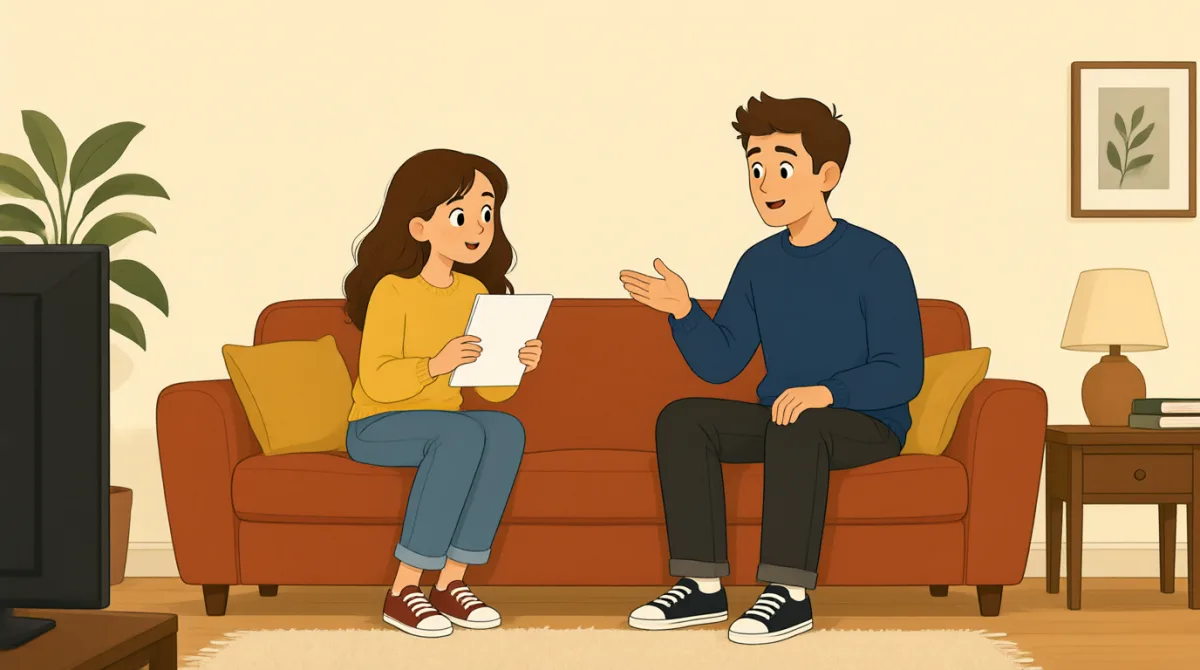

Jack, could you take a look at this section of my lease? I want to make sure I understand the pet policy before I even think about adopting a dog.
杰克,你能帮我看看租约里的这一条吗?我想先弄清楚宠物规定,再考虑领养狗。

Sure. It says, “Pets are not permitted without the landlord’s prior written permission.” That sounds strict, but it doesn’t rule out asking for an exception.
当然。上面写着:“未经房东事先书面许可,不得饲养宠物。”听起来挺严格,但并没有排除申请例外的可能。
That’s how I read it, too. The key phrase seems to be “without written permission,” rather than a blanket ban that gives the landlord no choice.
我也是这么理解的。关键似乎是“未经书面许可”,而不是完全禁止、不给房东任何决定余地。
Right, although I wouldn’t assume it means approval is guaranteed. It just leaves the door open for you to make a request and see what the landlord says.
没错,不过我不会认为这就意味着房东一定会同意。它只是留了个申请的余地,你可以问问房东的意见。
I’m not planning to bring a dog home first and ask questions later. I’d rather find out exactly what the lease allows and get approval in writing.
我可不打算先把狗带回家,再事后问东问西。我宁愿先弄清租约到底允许什么,并取得书面批准。
That’s sensible. Also check whether there’s another section about deposits, damage, or building rules; the pet clause may not be the whole story.
这样做很稳妥。另外也看看有没有关于押金、损坏赔偿或楼宇规定的其他条款;宠物条款可能不是全部内容。
There’s a paragraph saying tenants are responsible for any damage caused by guests or animals. I suppose that means I’d have to cover repairs if the dog scratched the floors.
这里还有一段,说租客要为访客或动物造成的任何损坏负责。我想这意味着如果狗把地板抓坏了,维修费用得由我承担。
That’s how it reads. Before you sign up for anything, you could ask whether the landlord has conditions in mind, such as a pet deposit or limits on the dog’s size.
看起来确实是这个意思。在你做任何决定之前,可以问问房东是否有附加条件,比如宠物押金或对狗的体型限制。
Good point. I’ll review the rest of the lease tonight and send a polite message asking what information the landlord would need to consider an exception.
说得好。我今晚会把租约其余部分也看一遍,然后礼貌地发消息询问,房东需要哪些资料才能考虑批准例外。
And until you get clear written approval, hold off on making any commitments. It’s better to get everything sorted out up front than untangle a mess later.
在拿到明确的书面批准之前,先别做任何承诺。提前把事情安排妥当,总比之后收拾烂摊子要好。
词汇7
- prior written permission事先书面许可
Approval given in writing before you do something. In this lease, the landlord must approve a pet in writing first.
在做某事之前以书面形式获得的批准。在这份租约中,房东必须先书面批准养宠物。
- rule out排除……的可能
To say that something is not possible or will not happen. Here, the clause does not completely rule out getting a pet.
表示某事不可能发生或不会发生。这里指的是,这条款并没有完全排除养宠物的可能。
- a blanket ban一律禁止
A complete prohibition that applies in every case. Emma contrasts this with a rule that may allow exceptions.
适用于所有情况的全面禁令。艾玛用这个说法与可能允许例外的规定作对比。
- the whole story全部情况
All the relevant information about a situation. Jack advises checking other lease sections, since the pet clause may not include every rule.
关于某件事的所有相关信息。杰克建议查看租约的其他部分,因为宠物条款可能没有涵盖所有规定。
- hold off on暂缓……
To wait before doing or deciding something. Jack suggests waiting to make commitments until Emma has written approval.
先等待一段时间,再采取行动或做决定。杰克建议艾玛等拿到书面批准后再做出承诺。
- up front提前
Before something happens or at the beginning of a process. Here, it means settling the details in advance.
在某事发生之前,或在某个过程开始时。这里指的是预先把细节安排妥当。
- untangle a mess理清一团乱麻
To sort out a confusing or difficult problem. Jack means that getting approval early can prevent complications later.
解决复杂或令人困惑的问题。杰克的意思是,提前获得批准可以避免之后遇到麻烦。
重点句子8
- 1
That sounds strict, but it doesn’t rule out asking for an exception.
听起来挺严格,但并没有排除申请例外的可能。
This sentence acknowledges a restriction while pointing out a possible next step. Use “doesn’t rule out + -ing” to say that something remains possible.
这句话承认规定有所限制,同时指出还有一个可能的下一步。用“doesn’t rule out + -ing”表示某件事仍有可能。
- 2
The key phrase seems to be “without written permission,” rather than a blanket ban that gives the landlord no choice.
关键似乎是“未经书面许可”,而不是一律禁止、不给房东任何选择。
This is useful for explaining how you interpret a rule while using cautious language. “The key phrase seems to be…” introduces your reading without sounding overly certain.
这句话适合用谨慎的语气说明你对某条规定的理解。“The key phrase seems to be…”用来引出你的解读,听起来不会过于肯定。
- 3
It just leaves the door open for you to make a request and see what the landlord says.
这只是给你留了提出申请、看看房东怎么说的余地。
This phrase describes a possibility without promising an outcome. Reuse “leaves the door open” when a rule or situation allows for a potential option.
这个说法表示存在一种可能,但不保证结果。某条规定或某种情况留有潜在选择时,可以用“leaves the door open”。
- 4
I’d rather find out exactly what the lease allows and get approval in writing.
我宁愿先弄清租约到底允许什么,并取得书面批准。
This clearly expresses a careful preference and identifies a practical action. The pattern “I’d rather…” is useful when explaining what you prefer to do.
这句话清楚地表达了谨慎的偏好,也指出了实际可行的做法。解释自己更愿意怎么做时,可以用“I’d rather…”。
- 5
Before you sign up for anything, you could ask whether the landlord has conditions in mind, such as a pet deposit or limits on the dog’s size.
在你做任何承诺之前,可以问问房东是否有意提出什么条件,比如宠物押金或对狗的体型限制。
This offers a tactful suggestion and gives examples of details to clarify. Use “you could ask whether…” to make a polite recommendation.
这句话委婉地提出建议,并举例说明需要确认哪些细节。可以用“you could ask whether…”来礼貌地提出建议。
- 6
I’ll review the rest of the lease tonight and send a polite message asking what information the landlord would need to consider an exception.
我今晚会看完租约其余部分,然后礼貌地发消息询问房东需要哪些资料,才能考虑批准例外。
This sentence lays out a concrete plan and politely asks about requirements. It is useful when describing next steps in a negotiation.
这句话说明了具体计划,并礼貌地询问相关要求。协商时,可以用它来说明接下来的打算。
- 7
And until you get clear written approval, hold off on making any commitments.
在拿到明确的书面批准之前,先别做任何承诺。
This gives direct but sensible advice about waiting for confirmation. “Until…” sets a condition, and “hold off on” means to postpone an action.
这句话给出了直接而稳妥的建议,提醒对方先等到确认。“Until…”表示某个条件持续到何时,“hold off on”则表示暂缓某个行动。
- 8
It’s better to get everything sorted out up front than untangle a mess later.
提前把事情安排妥当,总比之后再收拾烂摊子要好。
This compares preventing a problem with dealing with it afterward. The structure “It’s better to… than…” is useful for explaining why planning ahead matters.
这句话比较了预防问题和事后处理问题。可以用“It’s better to… than…”来说明为什么提前计划很重要。