Telling Her Parents About the Idea
両親に考えを話す
Emma shares the possibility of moving with her mother, Grace, and father, David. Her parents raise practical concerns while encouraging her to make a choice that fits her own goals.
エマは母のグレースと父のデイビッドに、引っ越しを考えていることを話す。両親は現実的な懸念を伝えながらも、エマ自身の目標に合った選択をするよう励ます。
会話12
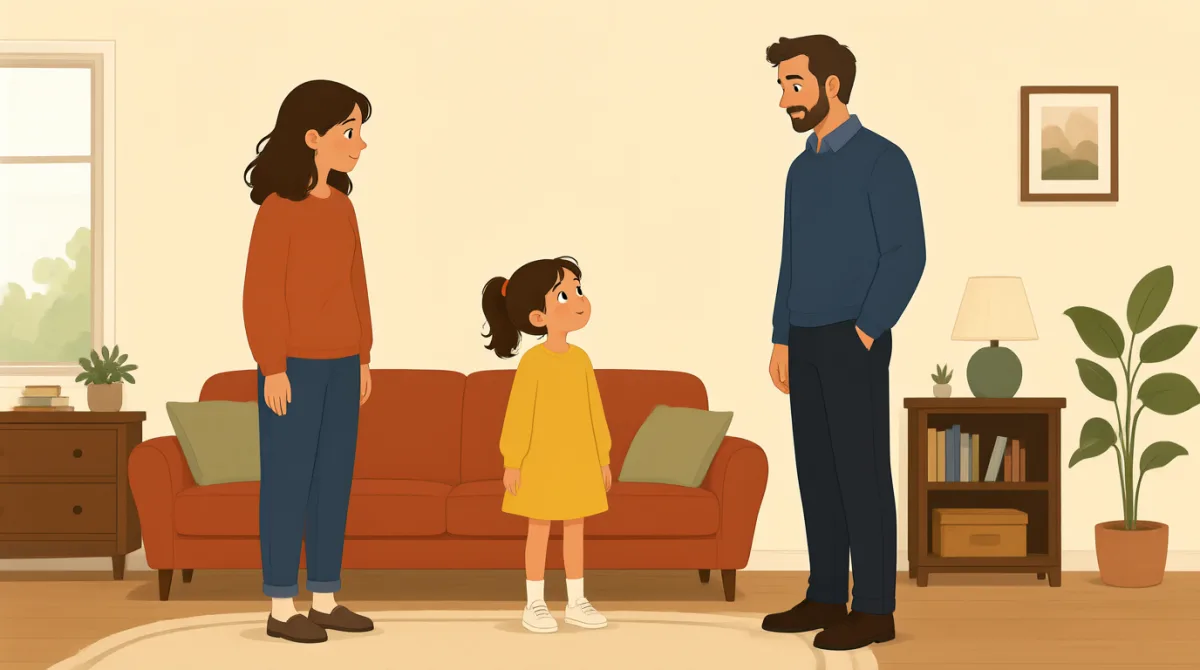

I wanted to talk to you both about something before I make any decisions. I’ve been offered a job in another city, and I’m seriously considering it.
何か決める前に、二人に話しておきたいことがあるんだ。別の街の仕事を紹介されて、真剣に考えてるの。

That’s big news, Emma. What is it about the job that’s drawing you in? And have they given you much time to think it over?
それは大きな話ね、エマ。その仕事のどんなところに惹かれてるの?それに、考える時間は十分にもらえたの?
It’s a step up in responsibility, and the work sounds much closer to what I want to do long term. They’ve asked for an answer by the end of next week.
責任の範囲が広がる仕事だし、長い目で見てやりたいことにずっと近い内容なの。来週末までに返事がほしいって言われてる。

A week isn’t much time for a move like that. Have you looked into the practical side—the salary, housing, and whether they’ll help with relocation costs?
あんな引っ越しをするには、一週間じゃあまり時間がないね。現実的なことは調べてみた?給料や住まい、それに引っ越し費用を会社が負担してくれるかどうかとか。
I’ve started comparing expenses, but I still need to get a clearer picture of rent and commuting costs. The salary is higher, though I’m not sure how far it would go there.
出費の比較は始めたけど、家賃や通勤費はもっとはっきり把握しないとね。給料は上がるけど、あっちでどれくらい余裕があるかはまだ分からないの。
That’s sensible. A higher salary can look impressive on paper, but the real question is what you’d have left after the bills. Would you be moving on your own?
それは堅実ね。給料が上がると書類の上では魅力的に見えるけど、本当に大事なのは、支払いを済ませたあとにいくら残るかよ。一人で引っ越すことになるの?
Jack and I would need to work that out together. I don’t want to assume he’ll come with me, or expect him to put his own plans on hold.
ジャックと一緒に考えなきゃいけないね。彼も一緒に来るって決めつけたくないし、自分の予定を後回しにしてほしいとも思ってないの。
Good. It’s better to be honest about what each of you might have to give up. But don’t let concern for everyone else drown out what you want for yourself.
それはいいね。お互いに何を諦めることになるか、正直に話したほうがいい。でも、みんなのことを心配しすぎて、自分が望んでることを見失わないようにね。
And what would you miss most if you left? Not to talk you out of it—I just want you to think beyond the job title and picture an ordinary Tuesday there.
もし引っ越したら、いちばん恋しくなるのは何かしら?思いとどまらせたいわけじゃないのよ。ただ、仕事の肩書きだけじゃなくて、向こうで過ごすいつもの火曜日を想像してみてほしいの。
I’d miss being near family and the friends I’ve built a life with here. At the same time, I worry I’ll regret it if I don’t at least explore this opportunity.
家族の近くにいられることと、ここで一緒に暮らしを築いてきた友達が恋しくなると思う。でも、この機会を少なくとも検討しなかったら、あとで後悔するんじゃないかって心配なの。
Then gather the facts you can, talk it through with Jack, and give yourself room to choose. If you go, it doesn’t mean you love us any less.
じゃあ、調べられることを調べて、ジャックとよく話し合って、自分で選ぶ時間をとりなさい。行くことになっても、私たちを前より大切に思わなくなるわけじゃないよ。
Exactly. We’ll miss you, of course, but we want you to build a life that fits your goals. Whatever you decide, we’ll figure out how to stay close.
そうよ。もちろん寂しくなるけど、あなたの目標に合った人生を築いてほしいの。どんな答えを出しても、どうやって近くにいられるか一緒に考えましょう。
語彙8
- think it overよく考える
To consider something carefully before making a decision. Here, Grace asks whether Emma has had enough time to consider the job offer.
決断する前に、何かを慎重に検討することです。ここではグレースが、エマに仕事のオファーを考える時間が十分あったか尋ねています。
- a step up in responsibility責任の範囲が広がる
A move to a role with greater duties or authority. Emma uses this phrase to explain how the new job could advance her career.
より多くの責任や権限を持つ役職に移ることです。エマはこの表現を使って、新しい仕事がキャリアアップにつながる可能性を説明しています。
- looked into調べる
To investigate or find out more about something. David asks whether Emma has researched the practical details of moving.
何かについて調査したり、詳しく知ろうとしたりすることです。デイビッドは、引っ越しに関わる現実的な詳細をエマが調べたか尋ねています。
- get a clearer pictureよりはっきり把握する
To understand a situation more fully. Emma needs more information about rent and commuting costs before judging the offer.
状況をよりよく理解することです。エマはオファーを判断する前に、家賃や通勤費についてもっと情報が必要です。
- put his own plans on hold自分の予定を後回しにする
To delay or set aside plans in order to accommodate someone else. Emma does not want to assume Jack would do this for her.
誰かに合わせるために、自分の計画を延期したり脇に置いたりすることです。エマはジャックが自分のためにそうしてくれると決めつけたくありません。
- drown outかき消す
To make something difficult to hear or pay attention to. David advises Emma not to let other people’s needs overpower her own wishes.
何かが聞こえにくくなったり、注意を向けにくくなったりすることです。デイビッドは、周りの人への気遣いで自分の望みを見失わないよう、エマに助言しています。
- talk you out of it思いとどまらせる
To persuade someone not to do something. Grace clarifies that she is asking about what Emma would miss, not trying to discourage her.
誰かに何かをしないよう説得することです。グレースは、エマが失うものについて尋ねているのであって、引っ越しを諦めさせようとしているのではないと説明しています。
- stay close親しい関係を保つ
To maintain a strong relationship despite distance or change. Grace reassures Emma that the family can remain connected if she moves.
距離や環境の変化があっても、親しい関係を保つことです。グレースは、エマが引っ越しても家族のつながりを保てると安心させています。
重要な文8
- 1
I wanted to talk to you both about something before I make any decisions.
何か決める前に、二人に話しておきたいことがあるんだ。
This is a considerate way to open a serious conversation before reaching a conclusion. You can adapt it when you want to discuss an important choice with more than one person.
結論を出す前に、大切な話を切り出すときの思いやりのある言い方です。複数の人と重要な選択について話し合いたいときに応用できます。
- 2
It’s a step up in responsibility, and the work sounds much closer to what I want to do long term.
責任の範囲が広がる仕事だし、長い目で見てやりたいことにずっと近い内容なの。
This sentence explains why an opportunity appeals to you by linking career growth with future goals. Reuse the pattern “closer to what I want to do” to describe a job or project that fits your ambitions.
キャリアの成長と将来の目標を結びつけて、その機会に惹かれる理由を説明する文です。“closer to what I want to do” という形は、自分の目標に合う仕事やプロジェクトを表すときに使えます。
- 3
Have you looked into the practical side—the salary, housing, and whether they’ll help with relocation costs?
現実的なことは調べてみた?給料や住まい、それに引っ越し費用を会社が負担してくれるかどうかとか。
This is a useful way to raise concrete considerations while evaluating a major decision. You can name specific factors after “the practical side” to focus the discussion.
大きな決断を検討するとき、具体的な点を取り上げるのに便利な言い方です。“the practical side” のあとに具体的な要素を挙げると、話し合う内容を絞れます。
- 4
I don’t want to assume he’ll come with me, or expect him to put his own plans on hold.
彼も一緒に来るって決めつけたくないし、自分の予定を後回しにしてほしいとも思ってないの。
This expresses consideration for another person’s choices and priorities. Reuse “I don’t want to assume…” when you want to avoid making decisions on someone else’s behalf.
相手の選択や優先事項を尊重する気持ちを表しています。誰かに代わって決めることを避けたいときは、“I don’t want to assume…” を応用できます。
- 5
But don’t let concern for everyone else drown out what you want for yourself.
でも、みんなのことを心配しすぎて、自分が望んでることを見失わないようにね。
This offers supportive advice while recognizing that other people’s needs can affect a decision. The phrase “drown out” can describe anything that overshadows an important thought or feeling.
周りの人の必要や気持ちが決断に影響することを認めながら、相手を支える助言です。“drown out” は、大切な考えや気持ちが何かに覆い隠されることにも使えます。
- 6
Not to talk you out of it—I just want you to think beyond the job title and picture an ordinary Tuesday there.
思いとどまらせたいわけじゃないのよ。ただ、仕事の肩書きだけじゃなくて、向こうで過ごすいつもの火曜日を想像してみてほしいの。
This gently clarifies your intention before asking someone to consider everyday realities. You can use “Not to [do something]—I just want…” to soften a potentially sensitive question.
日々の現実について考えてもらう前に、自分の意図をやわらかく伝える言い方です。“Not to [do something]—I just want…” を使うと、少し答えにくい質問を穏やかに切り出せます。
- 7
If you go, it doesn’t mean you love us any less.
行くことになっても、私たちを前より大切に思わなくなるわけじゃないよ。
This reassures someone that a personal choice does not weaken an important relationship. The structure “If you…, it doesn’t mean…” is useful for separating an action from what others might assume it means.
自分の選択をしても、大切な人との関係が弱まるわけではないと伝えて安心させる表現です。“If you…, it doesn’t mean…” は、ある行動と、周りの人がそこから想像する意味を切り分けるのに役立ちます。
- 8
Whatever you decide, we’ll figure out how to stay close.
どんな答えを出しても、どうやって近くにいられるか一緒に考えましょう。
This offers support without pressuring someone toward a particular choice. “Whatever you decide” is a warm way to show acceptance when someone is facing a difficult decision.
特定の選択をするよう圧力をかけずに、相手を支える言い方です。“Whatever you decide” は、難しい決断を前にしている人の選択を受け入れる、温かい表現です。