Explaining a Broken Taillight
壊れたテールライトについて説明する
While checking the car, Officer David notices a broken taillight. Emma explains when she noticed it and asks what she should do to get it fixed.
車を確認していたデイビッド警官は、テールライトが壊れていることに気づきます。エマはいつ気づいたかを説明し、修理するにはどうすればいいか尋ねます。
会話9
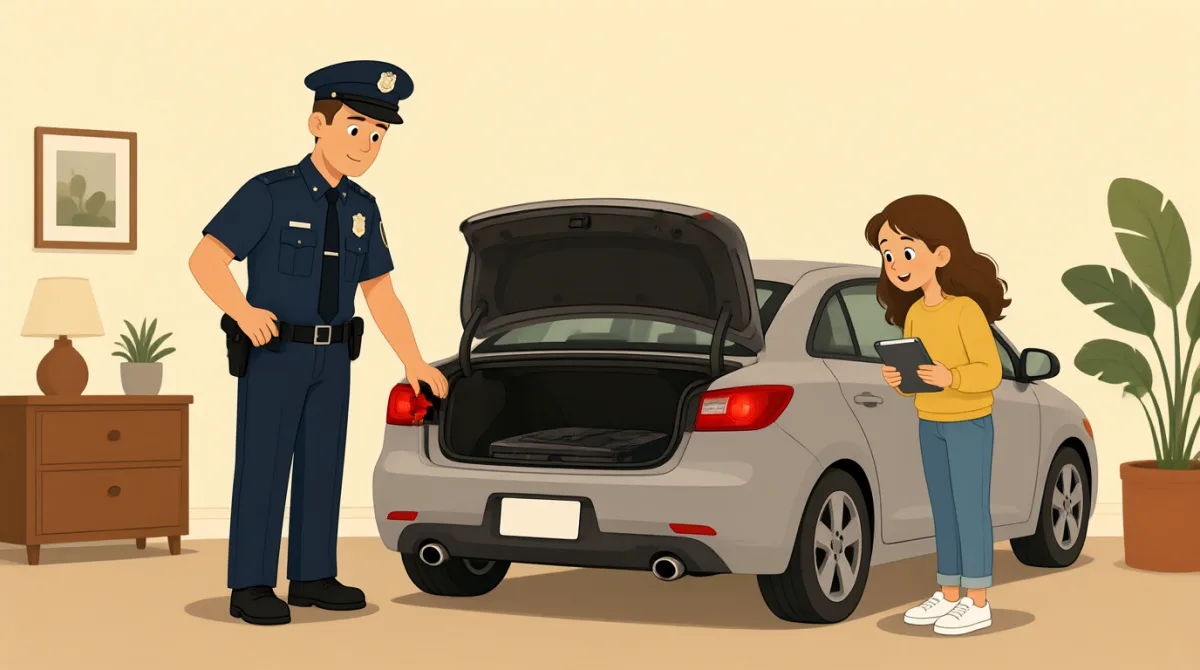

I noticed your right taillight is cracked, and part of the lens is missing. Do you know when that happened?
右のテールライトにひびが入っていて、レンズの一部がなくなっていますね。いつそうなったか分かりますか?

I saw it yesterday evening when I got home. I’m not sure how it happened, but I haven’t driven much since then.
昨日の夕方、家に着いたときに気づきました。どうしてこうなったのかは分かりませんが、それ以来あまり運転していません。
All right. A broken taillight can be hard for other drivers to see, especially at night or in bad weather.
分かりました。テールライトが壊れていると、ほかのドライバーから見えにくくなることがあります。特に夜や天気の悪いときはそうです。
I understand. Is it safe to drive to a repair shop, or should I have the car towed?
分かりました。修理工場まで運転しても大丈夫でしょうか?それとも車をレッカー移動してもらったほうがいいですか?
If the light still works and the car is safe to drive, you can go straight to a nearby shop. Avoid driving after dark.
ライトがまだ点灯して、車も安全に運転できる状態なら、近くの修理工場へそのまま行って大丈夫です。日が暮れてからの運転は避けてください。
The light does come on, but the cover is broken. I’ll call a shop and see if they can fix it today.
ライトは点きますが、カバーが壊れています。修理工場に電話して、今日直せるか聞いてみます。
That’s a good plan. Keep the repair receipt, and make sure the replacement light works before you leave the shop.
それがいいですね。修理の領収書は保管しておいてください。それから、修理工場を出る前に交換したライトが点くか確認してください。
Should I show proof of the repair to the police, or is keeping the receipt enough?
修理したことを証明する書類を警察に見せる必要がありますか?それとも領収書を保管しておけば十分ですか?
You don’t need to bring it to me, but keep the receipt in case you’re asked about the repair later.
私のところに持ってくる必要はありませんが、後で修理について聞かれたときのために領収書を保管しておいてください。
語彙8
- taillightテールライト
A taillight is a red light at the back of a vehicle. It helps other drivers see the car, especially in the dark.
「taillight」は、車両の後部にある赤いライトのことです。特に暗いときに、ほかのドライバーが車を見つけやすくする役割があります。
- crackedひびが入った
Cracked means damaged with a line or split in the surface. Here, it describes the broken cover of the taillight.
「cracked」は、表面に線状の割れや裂け目ができて傷んでいるという意味です。ここでは、テールライトの壊れたカバーを表しています。
- lensレンズ
The lens is the clear or colored cover over a light. In this dialogue, part of the taillight lens is missing.
「lens」は、ライトを覆っている透明または色付きのカバーです。この会話では、テールライトのレンズの一部がなくなっています。
- towedレッカー移動された
Towed means pulled by another vehicle, usually because a car cannot be driven safely. You can ask whether a car needs to be towed to a repair shop.
「towed」は、別の車両に引っ張って移動させられるという意味です。通常、車を安全に運転できない場合に使います。修理工場までレッカー移動が必要かどうか尋ねるときにも使えます。
- straight toそのまま〜へ
“Go straight to” means go directly to a place without stopping somewhere else. You can use it to give simple directions or explain what to do next.
「Go straight to」は、ほかの場所に立ち寄らず、目的地へ直接行くという意味です。簡単な道案内や、次にすべきことを伝えるときに使えます。
- after dark日が暮れてから
“After dark” means in the evening or at night, when it is dark outside. It is often used when discussing visibility or safety.
「After dark」は、外が暗くなる夕方や夜のことです。見通しや安全について話すときによく使われます。
- repair receipt修理の領収書
A repair receipt is a document showing that you paid for a repair. Keep it as proof of the work in case someone asks about it later.
「repair receipt」は、修理代を支払ったことを示す書類です。後で修理について尋ねられたときに作業の証明として使えるので、保管しておきましょう。
- proof of the repair修理したことの証明
This means evidence that a repair has been completed, such as a receipt. You can use the phrase when asking what documents you need to show.
「proof of the repair」は、領収書など、修理が完了したことを示す証拠のことです。どの書類を見せる必要があるか尋ねるときに使えます。
重要な文7
- 1
Do you know when that happened?
いつそうなったか分かりますか?
This is a polite way to ask when something occurred. You can reuse it when asking about damage, a problem, or a change.
何かがいつ起きたのかを尋ねる丁寧な言い方です。損傷や問題、変化がいつ起きたのか聞くときにも使えます。
- 2
I’m not sure how it happened, but I haven’t driven much since then.
どうしてこうなったのかは分かりませんが、それ以来あまり運転していません。
This sentence explains that you do not know the cause while adding relevant information. Reuse “I’m not sure how..., but...” to give an honest answer with context.
原因が分からないことを伝えつつ、関係する情報も付け加える文です。「I’m not sure how..., but...」を使うと、事情を添えて正直に答えられます。
- 3
Is it safe to drive to a repair shop, or should I have the car towed?
修理工場まで運転しても大丈夫でしょうか?それとも車をレッカー移動してもらったほうがいいですか?
This asks someone to compare two options and recommend the safer one. You can reuse “Is it safe to..., or should I...?” when making a practical decision.
2つの選択肢を挙げ、どちらがより安全か相手に尋ねています。実際的な判断をするときは、「Is it safe to..., or should I...?」を使ってみましょう。
- 4
If the light still works and the car is safe to drive, you can go straight to a nearby shop.
ライトがまだ点灯して、車も安全に運転できる状態なら、近くの修理工場へそのまま行って大丈夫です。
This gives advice that depends on two conditions. The pattern “If..., you can...” is useful for explaining what someone may do in a particular situation.
2つの条件が満たされる場合のアドバイスを伝えています。「If..., you can...」は、特定の状況で何ができるか説明するときに便利な形です。
- 5
I’ll call a shop and see if they can fix it today.
修理工場に電話して、今日直せるか聞いてみます。
This explains a plan and checks whether it is possible. Reuse “I’ll [action] and see if...” when you intend to find out what someone can do.
予定を伝え、可能かどうかを確認する表現です。何かをして、相手にできるかどうか確かめるつもりなら、「I’ll [action] and see if...」を使えます。
- 6
Keep the repair receipt, and make sure the replacement light works before you leave the shop.
修理の領収書は保管しておいてください。それから、修理工場を出る前に交換したライトが点くか確認してください。
This gives two clear instructions using “keep” and “make sure.” You can use the same pattern to remind someone to save a document and check something before leaving.
「keep」と「make sure」を使って、2つのことをはっきり指示しています。同じ形で、書類を保管することや、出発前に何かを確認することを伝えられます。
- 7
You don’t need to bring it to me, but keep the receipt in case you’re asked about the repair later.
私のところに持ってくる必要はありませんが、後で修理について聞かれたときのために領収書を保管しておいてください。
This tells someone what is unnecessary and what they should do instead. “In case” introduces something to prepare for, such as a future question or problem.
何をする必要がないかを伝え、代わりに何をすべきかを説明しています。「In case」は、後で質問されたり問題が起きたりする可能性に備えることを表します。