Explaining a Broken Taillight
깨진 후미등 설명하기
While checking the car, Officer David notices a broken taillight. Emma explains when she noticed it and asks what she should do to get it fixed.
차량을 살펴보던 데이비드 경관이 후미등이 깨진 것을 발견합니다. 에마는 언제 그 사실을 알았는지 설명하고, 수리하려면 어떻게 해야 하는지 묻습니다.
대화9
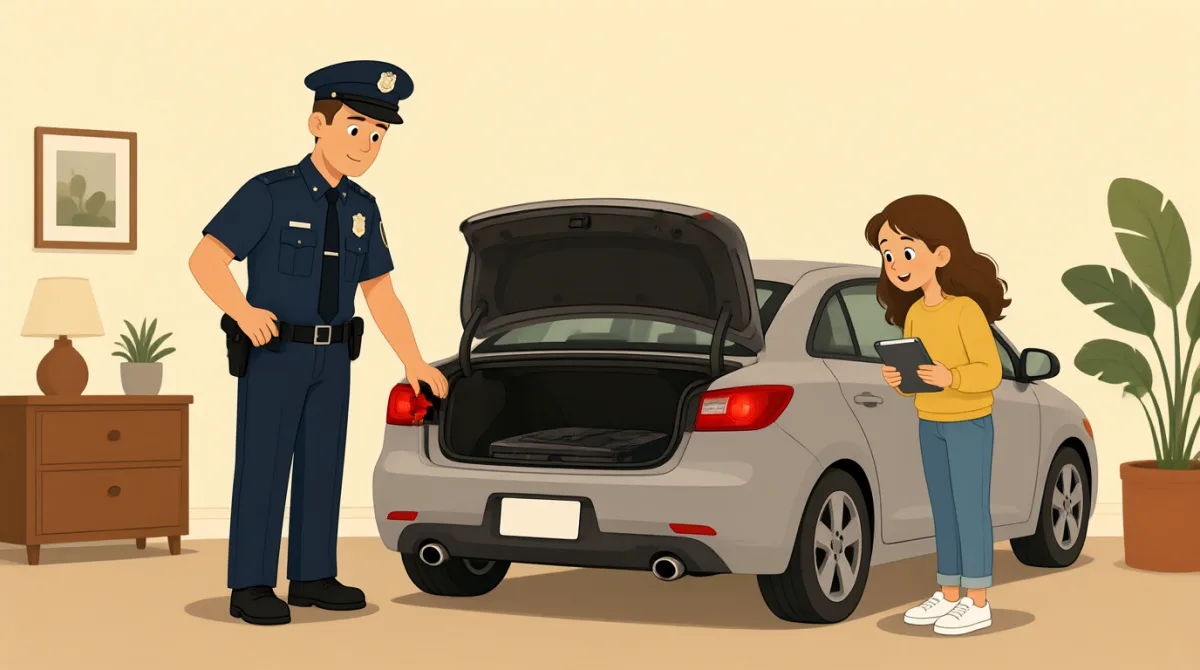

I noticed your right taillight is cracked, and part of the lens is missing. Do you know when that happened?
오른쪽 후미등에 금이 갔고 렌즈 일부가 없어졌네요. 언제 이렇게 됐는지 아세요?

I saw it yesterday evening when I got home. I’m not sure how it happened, but I haven’t driven much since then.
어제 저녁에 집에 도착했을 때 봤어요. 어떻게 그렇게 됐는지는 잘 모르겠지만, 그 뒤로는 차를 많이 운전하지 않았어요.
All right. A broken taillight can be hard for other drivers to see, especially at night or in bad weather.
알겠습니다. 후미등이 깨지면 다른 운전자들이 알아보기 어려울 수 있어요. 특히 밤이나 날씨가 안 좋을 때요.
I understand. Is it safe to drive to a repair shop, or should I have the car towed?
알겠습니다. 정비소까지 운전해도 괜찮을까요, 아니면 차를 견인해야 할까요?
If the light still works and the car is safe to drive, you can go straight to a nearby shop. Avoid driving after dark.
등이 아직 켜지고 차를 운전해도 안전하다면, 가까운 정비소로 바로 가셔도 됩니다. 어두워진 뒤에는 운전하지 마세요.
The light does come on, but the cover is broken. I’ll call a shop and see if they can fix it today.
불은 켜지긴 하는데 덮개가 깨졌어요. 정비소에 전화해서 오늘 수리할 수 있는지 알아볼게요.
That’s a good plan. Keep the repair receipt, and make sure the replacement light works before you leave the shop.
좋은 생각입니다. 수리 영수증을 보관하시고, 정비소를 떠나기 전에 교체한 등이 제대로 작동하는지 확인하세요.
Should I show proof of the repair to the police, or is keeping the receipt enough?
수리했다는 증거를 경찰에 보여 드려야 하나요, 아니면 영수증만 가지고 있으면 되나요?
You don’t need to bring it to me, but keep the receipt in case you’re asked about the repair later.
저한테 가져오실 필요는 없지만, 나중에 수리에 관해 질문을 받을 경우를 대비해 영수증을 보관해 두세요.
어휘8
- taillight후미등
A taillight is a red light at the back of a vehicle. It helps other drivers see the car, especially in the dark.
후미등은 차량 뒤쪽에 있는 빨간색 등이에요. 특히 어두울 때 다른 운전자들이 차를 알아볼 수 있게 해 줘요.
- cracked금이 간
Cracked means damaged with a line or split in the surface. Here, it describes the broken cover of the taillight.
cracked는 표면에 선이 생기거나 갈라져 손상된 상태를 뜻해요. 여기서는 후미등의 깨진 덮개를 설명해요.
- lens렌즈
The lens is the clear or colored cover over a light. In this dialogue, part of the taillight lens is missing.
lens는 전등을 덮고 있는 투명하거나 색이 있는 부분이에요. 이 대화에서는 후미등 렌즈 일부가 없어졌어요.
- towed견인된
Towed means pulled by another vehicle, usually because a car cannot be driven safely. You can ask whether a car needs to be towed to a repair shop.
towed는 보통 차를 안전하게 운전할 수 없어서 다른 차량에 끌려가는 것을 뜻해요. 차를 정비소까지 견인해야 하는지 물어볼 때 쓸 수 있어요.
- straight to바로 ~로
“Go straight to” means go directly to a place without stopping somewhere else. You can use it to give simple directions or explain what to do next.
“Go straight to”는 다른 곳에 들르지 않고 어떤 장소로 곧장 가라는 뜻이에요. 간단한 길 안내를 하거나 다음에 무엇을 해야 하는지 말할 때 쓸 수 있어요.
- after dark어두워진 뒤에
“After dark” means in the evening or at night, when it is dark outside. It is often used when discussing visibility or safety.
“After dark”는 바깥이 어두워지는 저녁이나 밤을 뜻해요. 시야나 안전에 관해 이야기할 때 자주 쓰여요.
- repair receipt수리 영수증
A repair receipt is a document showing that you paid for a repair. Keep it as proof of the work in case someone asks about it later.
수리 영수증은 수리 비용을 지불했다는 것을 보여 주는 서류예요. 나중에 누군가 수리에 관해 물어볼 때를 대비해 수리 증빙으로 보관해 두세요.
- proof of the repair수리 증빙
This means evidence that a repair has been completed, such as a receipt. You can use the phrase when asking what documents you need to show.
수리가 완료되었다는 증거를 뜻하며, 영수증이 그 예예요. 어떤 서류를 보여 줘야 하는지 물을 때 쓸 수 있는 표현이에요.
핵심 문장7
- 1
Do you know when that happened?
언제 그렇게 됐는지 아세요?
This is a polite way to ask when something occurred. You can reuse it when asking about damage, a problem, or a change.
무슨 일이 언제 일어났는지 정중하게 물어보는 표현이에요. 손상이나 문제, 변화가 언제 생겼는지 물을 때 활용할 수 있어요.
- 2
I’m not sure how it happened, but I haven’t driven much since then.
어떻게 그렇게 됐는지는 잘 모르겠지만, 그 뒤로는 차를 많이 운전하지 않았어요.
This sentence explains that you do not know the cause while adding relevant information. Reuse “I’m not sure how..., but...” to give an honest answer with context.
원인은 모르지만 관련 있는 정보를 덧붙여 설명하는 문장이에요. 솔직하게 답하면서 상황을 함께 설명할 때 “I’m not sure how..., but...”을 활용해 보세요.
- 3
Is it safe to drive to a repair shop, or should I have the car towed?
정비소까지 운전해도 괜찮을까요, 아니면 차를 견인해야 할까요?
This asks someone to compare two options and recommend the safer one. You can reuse “Is it safe to..., or should I...?” when making a practical decision.
두 가지 선택지를 비교해 보고 더 안전한 쪽을 추천해 달라고 묻는 표현이에요. 실용적인 결정을 내릴 때 “Is it safe to..., or should I...?”를 활용할 수 있어요.
- 4
If the light still works and the car is safe to drive, you can go straight to a nearby shop.
등이 아직 켜지고 차를 운전해도 안전하다면, 가까운 정비소로 바로 가셔도 됩니다.
This gives advice that depends on two conditions. The pattern “If..., you can...” is useful for explaining what someone may do in a particular situation.
두 가지 조건에 따라 조언하는 문장이에요. “If..., you can...”은 특정 상황에서 무엇을 해도 되는지 설명할 때 유용해요.
- 5
I’ll call a shop and see if they can fix it today.
정비소에 전화해서 오늘 수리할 수 있는지 알아볼게요.
This explains a plan and checks whether it is possible. Reuse “I’ll [action] and see if...” when you intend to find out what someone can do.
계획을 말하면서 가능한지도 확인하는 표현이에요. 어떤 사람이 무엇을 할 수 있는지 알아보려 할 때 “I’ll [action] and see if...”을 활용해 보세요.
- 6
Keep the repair receipt, and make sure the replacement light works before you leave the shop.
수리 영수증을 보관하시고, 정비소를 떠나기 전에 교체한 등이 제대로 작동하는지 확인하세요.
This gives two clear instructions using “keep” and “make sure.” You can use the same pattern to remind someone to save a document and check something before leaving.
“keep”과 “make sure”를 사용해 두 가지를 분명하게 지시하는 문장이에요. 누군가에게 서류를 보관하고 떠나기 전에 확인하라고 알려 줄 때 같은 표현 방식을 쓸 수 있어요.
- 7
You don’t need to bring it to me, but keep the receipt in case you’re asked about the repair later.
저한테 가져오실 필요는 없지만, 나중에 수리에 관해 질문을 받을 경우를 대비해 영수증을 보관해 두세요.
This tells someone what is unnecessary and what they should do instead. “In case” introduces something to prepare for, such as a future question or problem.
필요하지 않은 일과 대신 해야 할 일을 알려 주는 표현이에요. “In case”는 나중에 생길 수 있는 질문이나 문제에 대비한다는 뜻을 나타내요.