Explaining a Broken Taillight
ভাঙা পেছনের বাতির ব্যাখ্যা
While checking the car, Officer David notices a broken taillight. Emma explains when she noticed it and asks what she should do to get it fixed.
গাড়ি পরীক্ষা করার সময় অফিসার ডেভিড একটি ভাঙা পেছনের বাতি দেখতে পান। এমা ব্যাখ্যা করেন, তিনি কখন এটি প্রথম লক্ষ করেছেন, এবং এটি মেরামত করাতে তাঁর কী করা উচিত তা জানতে চান।
সংলাপ9
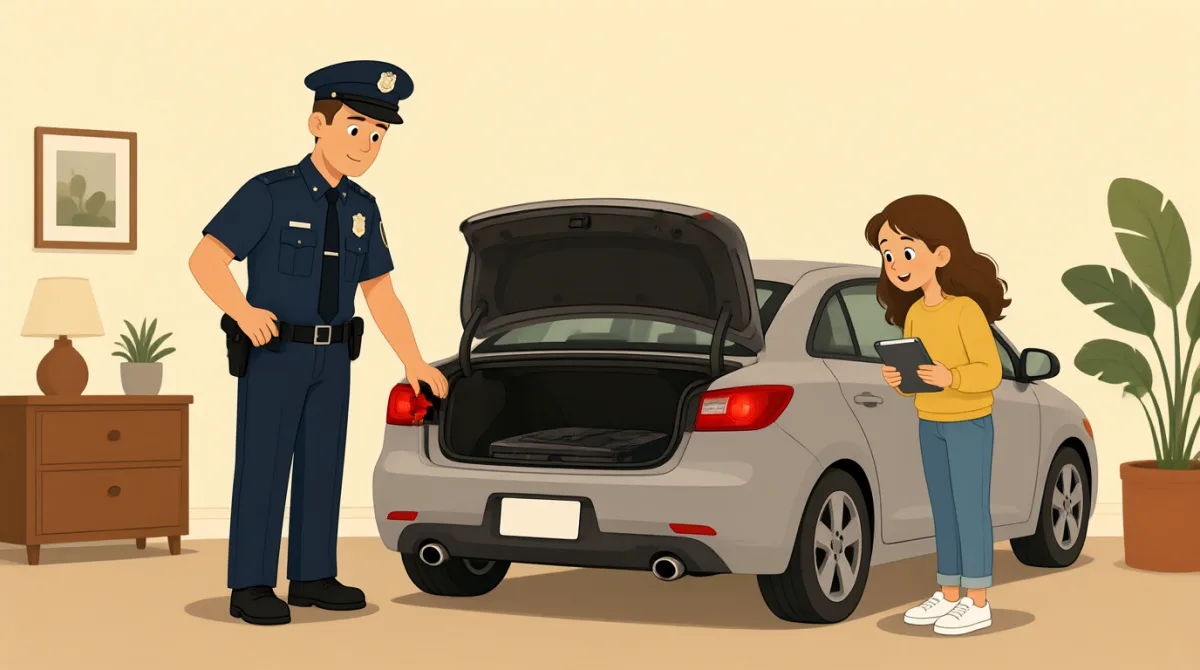

I noticed your right taillight is cracked, and part of the lens is missing. Do you know when that happened?
আমি দেখছি আপনার গাড়ির ডান দিকের পেছনের বাতিটা ফেটে গেছে, আর লেন্সের একটা অংশও নেই। এটা কখন হয়েছে, জানেন?

I saw it yesterday evening when I got home. I’m not sure how it happened, but I haven’t driven much since then.
গতকাল সন্ধ্যায় বাড়ি ফিরে এটা দেখেছি। কীভাবে হয়েছে জানি না, তবে তারপর থেকে বেশি গাড়ি চালাইনি।
All right. A broken taillight can be hard for other drivers to see, especially at night or in bad weather.
ঠিক আছে। পেছনের বাতি ভাঙা থাকলে অন্য চালকদের পক্ষে গাড়িটা দেখা কঠিন হতে পারে, বিশেষ করে রাতে বা খারাপ আবহাওয়ায়।
I understand. Is it safe to drive to a repair shop, or should I have the car towed?
বুঝতে পারছি। গাড়ি চালিয়ে মেরামতের দোকানে যাওয়া নিরাপদ হবে, নাকি গাড়িটা টেনে নিয়ে যেতে হবে?
If the light still works and the car is safe to drive, you can go straight to a nearby shop. Avoid driving after dark.
বাতিটা যদি এখনও জ্বলে এবং গাড়ি চালানো নিরাপদ হয়, তাহলে কাছের কোনো দোকানে সোজা চলে যেতে পারেন। অন্ধকারের পর গাড়ি চালাবেন না।
The light does come on, but the cover is broken. I’ll call a shop and see if they can fix it today.
বাতিটা জ্বলে ঠিকই, কিন্তু এর কভারটা ভাঙা। আমি একটা দোকানে ফোন করে দেখব, আজই ওরা এটা মেরামত করতে পারবে কি না।
That’s a good plan. Keep the repair receipt, and make sure the replacement light works before you leave the shop.
ভালো পরিকল্পনা। মেরামতের রসিদটা রেখে দেবেন, আর দোকান থেকে বেরোনোর আগে বদলে লাগানো বাতিটা কাজ করছে কি না দেখে নেবেন।
Should I show proof of the repair to the police, or is keeping the receipt enough?
মেরামতের প্রমাণ কি পুলিশকে দেখাতে হবে, নাকি রসিদটা রেখে দিলেই হবে?
You don’t need to bring it to me, but keep the receipt in case you’re asked about the repair later.
আমাকে দেখাতে হবে না, তবে পরে মেরামতের বিষয়ে জানতে চাইলে দেখানোর জন্য রসিদটা রেখে দেবেন।
শব্দভান্ডার8
- taillightপেছনের বাতি
A taillight is a red light at the back of a vehicle. It helps other drivers see the car, especially in the dark.
Taillight হলো গাড়ির পেছনে থাকা লাল বাতি। এটি অন্য চালকদের গাড়িটা দেখতে সাহায্য করে, বিশেষ করে অন্ধকারে।
- crackedফেটে যাওয়া
Cracked means damaged with a line or split in the surface. Here, it describes the broken cover of the taillight.
Cracked মানে কোনো কিছুর পৃষ্ঠে দাগ বা ফাটল ধরে ক্ষতিগ্রস্ত হওয়া। এখানে শব্দটি পেছনের বাতির ভাঙা কভার বোঝাতে ব্যবহার করা হয়েছে।
- lensলেন্স
The lens is the clear or colored cover over a light. In this dialogue, part of the taillight lens is missing.
Lens হলো বাতির ওপরের স্বচ্ছ বা রঙিন আবরণ। এই কথোপকথনে পেছনের বাতির লেন্সের একটা অংশ নেই।
- towedটেনে নিয়ে যাওয়া
Towed means pulled by another vehicle, usually because a car cannot be driven safely. You can ask whether a car needs to be towed to a repair shop.
Towed মানে অন্য কোনো যান দিয়ে টেনে নিয়ে যাওয়া—সাধারণত গাড়িটি নিরাপদে চালানো যায় না বলে। গাড়িটিকে মেরামতের দোকানে টেনে নিয়ে যেতে হবে কি না, তা জানতে চাইতে পারেন।
- straight toসোজা চলে যাওয়া
“Go straight to” means go directly to a place without stopping somewhere else. You can use it to give simple directions or explain what to do next.
“Go straight to” মানে অন্য কোথাও না থেমে সরাসরি কোনো জায়গায় যাওয়া। সহজে পথনির্দেশ দিতে বা পরবর্তী করণীয় জানাতে এই কথাটি ব্যবহার করতে পারেন।
- after darkঅন্ধকারের পর
“After dark” means in the evening or at night, when it is dark outside. It is often used when discussing visibility or safety.
“After dark” মানে সন্ধ্যায় বা রাতে, যখন বাইরে অন্ধকার থাকে। দৃশ্যমানতা বা নিরাপত্তার বিষয়ে কথা বলার সময় এটি প্রায়ই ব্যবহার করা হয়।
- repair receiptমেরামতের রসিদ
A repair receipt is a document showing that you paid for a repair. Keep it as proof of the work in case someone asks about it later.
Repair receipt হলো মেরামতের খরচ দেওয়ার প্রমাণ হিসেবে পাওয়া কাগজ। পরে কেউ কাজটির বিষয়ে জানতে চাইলে দেখানোর জন্য এটি রেখে দিন।
- proof of the repairমেরামতের প্রমাণ
This means evidence that a repair has been completed, such as a receipt. You can use the phrase when asking what documents you need to show.
“Proof of the repair” মানে মেরামত সম্পন্ন হয়েছে—এমন প্রমাণ, যেমন রসিদ। কী কী কাগজপত্র দেখাতে হবে তা জানতে চাইলে এই কথাটি ব্যবহার করতে পারেন।
গুরুত্বপূর্ণ বাক্য7
- 1
Do you know when that happened?
এটা কখন হয়েছে, জানেন?
This is a polite way to ask when something occurred. You can reuse it when asking about damage, a problem, or a change.
কোনো কিছু কখন ঘটেছে তা ভদ্রভাবে জানতে এই প্রশ্নটি করা হয়। ক্ষতি, সমস্যা বা কোনো পরিবর্তন কখন হয়েছে তা জানতে একই বাক্য ব্যবহার করতে পারেন।
- 2
I’m not sure how it happened, but I haven’t driven much since then.
কীভাবে হয়েছে জানি না, তবে তারপর থেকে বেশি গাড়ি চালাইনি।
This sentence explains that you do not know the cause while adding relevant information. Reuse “I’m not sure how..., but...” to give an honest answer with context.
এই বাক্যে কারণ জানা নেই বলে জানানো হচ্ছে, পাশাপাশি প্রাসঙ্গিক তথ্যও যোগ করা হচ্ছে। প্রেক্ষাপটসহ সৎভাবে উত্তর দিতে “I’m not sure how..., but...” ব্যবহার করতে পারেন।
- 3
Is it safe to drive to a repair shop, or should I have the car towed?
গাড়ি চালিয়ে মেরামতের দোকানে যাওয়া নিরাপদ হবে, নাকি গাড়িটা টেনে নিয়ে যেতে হবে?
This asks someone to compare two options and recommend the safer one. You can reuse “Is it safe to..., or should I...?” when making a practical decision.
দুটি বিকল্পের তুলনা করে কোনটি বেশি নিরাপদ, সে বিষয়ে পরামর্শ চাওয়া হচ্ছে। কোনো বাস্তব সিদ্ধান্ত নেওয়ার সময় “Is it safe to..., or should I...?” ব্যবহার করতে পারেন।
- 4
If the light still works and the car is safe to drive, you can go straight to a nearby shop.
বাতিটা যদি এখনও জ্বলে এবং গাড়ি চালানো নিরাপদ হয়, তাহলে কাছের কোনো দোকানে সোজা চলে যেতে পারেন।
This gives advice that depends on two conditions. The pattern “If..., you can...” is useful for explaining what someone may do in a particular situation.
দুটি শর্ত পূরণ হলে কী করা যায়, এই বাক্যে সেই পরামর্শ দেওয়া হচ্ছে। কোনো নির্দিষ্ট পরিস্থিতিতে কী করা যেতে পারে তা বোঝাতে “If..., you can...” কাঠামোটি কাজে লাগে।
- 5
I’ll call a shop and see if they can fix it today.
আমি একটা দোকানে ফোন করে দেখব, আজই ওরা এটা মেরামত করতে পারবে কি না।
This explains a plan and checks whether it is possible. Reuse “I’ll [action] and see if...” when you intend to find out what someone can do.
এই বাক্যে একটি পরিকল্পনার কথা বলা হচ্ছে এবং কাজটি সম্ভব কি না, তা জানার চেষ্টা করা হচ্ছে। কেউ কী করতে পারবেন তা জানতে চাইলে “I’ll [action] and see if...” কাঠামোটি ব্যবহার করতে পারেন।
- 6
Keep the repair receipt, and make sure the replacement light works before you leave the shop.
মেরামতের রসিদটা রেখে দেবেন, আর দোকান থেকে বেরোনোর আগে বদলে লাগানো বাতিটা কাজ করছে কি না দেখে নেবেন।
This gives two clear instructions using “keep” and “make sure.” You can use the same pattern to remind someone to save a document and check something before leaving.
“keep” এবং “make sure” ব্যবহার করে এখানে দুটি স্পষ্ট নির্দেশ দেওয়া হয়েছে। কাউকে কোনো কাগজপত্র রেখে দিতে এবং চলে যাওয়ার আগে কিছু পরীক্ষা করে নিতে মনে করিয়ে দিতেও এই কাঠামো ব্যবহার করতে পারেন।
- 7
You don’t need to bring it to me, but keep the receipt in case you’re asked about the repair later.
আমাকে দেখাতে হবে না, তবে পরে মেরামতের বিষয়ে জানতে চাইলে দেখানোর জন্য রসিদটা রেখে দেবেন।
This tells someone what is unnecessary and what they should do instead. “In case” introduces something to prepare for, such as a future question or problem.
এখানে কাউকে জানানো হচ্ছে কোন কাজটি দরকার নেই এবং তার বদলে কী করা উচিত। ভবিষ্যতে কোনো প্রশ্ন বা সমস্যা হতে পারে—এমন কিছুর জন্য প্রস্তুত থাকার কথা বোঝাতে “In case” ব্যবহার করা হয়।