Explaining a Broken Taillight
टूटी हुई टेललाइट के बारे में बताना
While checking the car, Officer David notices a broken taillight. Emma explains when she noticed it and asks what she should do to get it fixed.
कार की जाँच करते समय अधिकारी डेविड की नज़र टूटी हुई टेललाइट पर पड़ती है। एमा बताती है कि उसने इसे कब देखा और पूछती है कि इसे ठीक करवाने के लिए उसे क्या करना चाहिए।
संवाद9
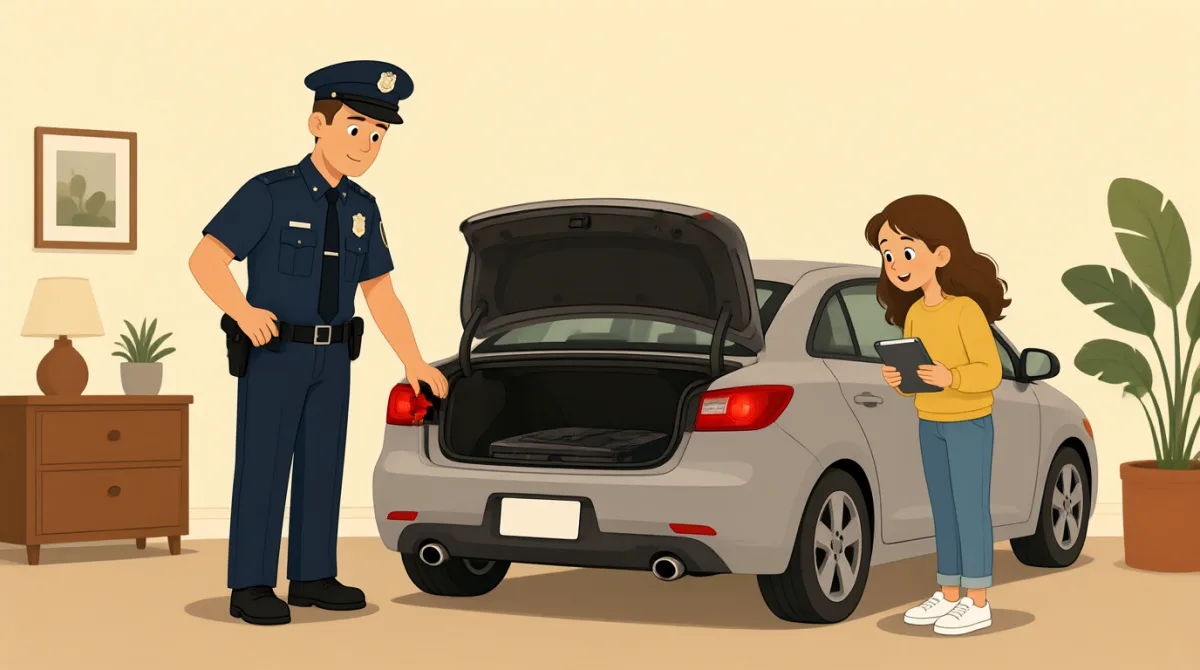

I noticed your right taillight is cracked, and part of the lens is missing. Do you know when that happened?
मैंने देखा कि आपकी दाईं टेललाइट में दरार है और उसका कुछ लेंस टूटा हुआ है। क्या आपको पता है कि ऐसा कब हुआ?

I saw it yesterday evening when I got home. I’m not sure how it happened, but I haven’t driven much since then.
मैंने इसे कल शाम घर पहुँचने पर देखा था। मुझे नहीं पता कि ऐसा कैसे हुआ, लेकिन तब से मैंने ज़्यादा गाड़ी नहीं चलाई है।
All right. A broken taillight can be hard for other drivers to see, especially at night or in bad weather.
ठीक है। टूटी हुई टेललाइट दूसरे ड्राइवरों को आसानी से दिखाई नहीं देती, खासकर रात में या खराब मौसम में।
I understand. Is it safe to drive to a repair shop, or should I have the car towed?
मैं समझती हूँ। क्या गाड़ी चलाकर मरम्मत की दुकान तक जाना सुरक्षित है, या मुझे कार टो करवानी चाहिए?
If the light still works and the car is safe to drive, you can go straight to a nearby shop. Avoid driving after dark.
अगर लाइट अभी भी जलती है और कार चलाना सुरक्षित है, तो आप सीधे पास की किसी दुकान पर जा सकती हैं। अँधेरा होने के बाद गाड़ी चलाने से बचें।
The light does come on, but the cover is broken. I’ll call a shop and see if they can fix it today.
लाइट जलती तो है, लेकिन उसका कवर टूटा हुआ है। मैं किसी दुकान पर फ़ोन करके पूछूँगी कि क्या वे इसे आज ठीक कर सकते हैं।
That’s a good plan. Keep the repair receipt, and make sure the replacement light works before you leave the shop.
यह अच्छा विचार है। मरम्मत की रसीद संभालकर रखें और दुकान से निकलने से पहले जाँच लें कि नई लाइट काम कर रही है।
Should I show proof of the repair to the police, or is keeping the receipt enough?
क्या मुझे मरम्मत का सबूत पुलिस को दिखाना चाहिए, या रसीद रखना ही काफ़ी है?
You don’t need to bring it to me, but keep the receipt in case you’re asked about the repair later.
आपको इसे मेरे पास लाने की ज़रूरत नहीं है, लेकिन रसीद संभालकर रखें, ताकि बाद में मरम्मत के बारे में पूछे जाने पर आपके पास हो।
शब्दावली8
- taillightटेललाइट
A taillight is a red light at the back of a vehicle. It helps other drivers see the car, especially in the dark.
टेललाइट वाहन के पीछे लगी लाल बत्ती होती है। इससे दूसरे ड्राइवरों को कार दिखाई देती है, खासकर अँधेरे में।
- crackedदरार पड़ा हुआ
Cracked means damaged with a line or split in the surface. Here, it describes the broken cover of the taillight.
“Cracked” का मतलब है कि किसी सतह पर दरार या चीरा पड़ गया है। यहाँ यह टेललाइट के टूटे हुए कवर के बारे में है।
- lensलेंस
The lens is the clear or colored cover over a light. In this dialogue, part of the taillight lens is missing.
“Lens” किसी लाइट के ऊपर लगा पारदर्शी या रंगीन कवर होता है। इस बातचीत में टेललाइट के लेंस का एक हिस्सा गायब है।
- towedटो किया गया
Towed means pulled by another vehicle, usually because a car cannot be driven safely. You can ask whether a car needs to be towed to a repair shop.
“Towed” का मतलब है किसी दूसरे वाहन से खींचकर ले जाना। आम तौर पर ऐसा तब किया जाता है जब कार को सुरक्षित रूप से चलाना संभव न हो। आप पूछ सकते हैं कि क्या कार को मरम्मत की दुकान तक टो करवाना होगा।
- straight toसीधे
“Go straight to” means go directly to a place without stopping somewhere else. You can use it to give simple directions or explain what to do next.
“Go straight to” का मतलब है बिना कहीं और रुके सीधे किसी जगह जाना। इसका इस्तेमाल आसान दिशा-निर्देश देने या आगे क्या करना है, यह बताने के लिए कर सकते हैं।
- after darkअँधेरा होने के बाद
“After dark” means in the evening or at night, when it is dark outside. It is often used when discussing visibility or safety.
“After dark” का मतलब है शाम या रात में, जब बाहर अँधेरा हो। इस वाक्यांश का इस्तेमाल अक्सर दिखने की स्थिति या सुरक्षा के बारे में बात करते समय होता है।
- repair receiptमरम्मत की रसीद
A repair receipt is a document showing that you paid for a repair. Keep it as proof of the work in case someone asks about it later.
“Repair receipt” वह दस्तावेज़ है जो दिखाता है कि आपने मरम्मत के लिए भुगतान किया है। काम का सबूत रखने के लिए इसे संभालकर रखें, ताकि बाद में पूछे जाने पर दिखा सकें।
- proof of the repairमरम्मत का सबूत
This means evidence that a repair has been completed, such as a receipt. You can use the phrase when asking what documents you need to show.
“Proof of the repair” का मतलब है यह दिखाने वाला सबूत कि मरम्मत पूरी हो चुकी है, जैसे कि रसीद। ज़रूरी दस्तावेज़ों के बारे में पूछते समय आप इस वाक्यांश का इस्तेमाल कर सकते हैं।
मुख्य वाक्य7
- 1
Do you know when that happened?
क्या आपको पता है कि ऐसा कब हुआ?
This is a polite way to ask when something occurred. You can reuse it when asking about damage, a problem, or a change.
यह किसी से विनम्रता से पूछने का तरीका है कि कोई घटना कब हुई। नुकसान, समस्या या बदलाव के बारे में पूछते समय भी आप इसका इस्तेमाल कर सकते हैं।
- 2
I’m not sure how it happened, but I haven’t driven much since then.
मुझे नहीं पता कि ऐसा कैसे हुआ, लेकिन तब से मैंने ज़्यादा गाड़ी नहीं चलाई है।
This sentence explains that you do not know the cause while adding relevant information. Reuse “I’m not sure how..., but...” to give an honest answer with context.
इस वाक्य में आप बताते हैं कि आपको कारण नहीं पता, और साथ ही उससे जुड़ी ज़रूरी जानकारी भी देते हैं। संदर्भ के साथ ईमानदारी से जवाब देने के लिए “I’m not sure how..., but...” का दोबारा इस्तेमाल करें।
- 3
Is it safe to drive to a repair shop, or should I have the car towed?
क्या गाड़ी चलाकर मरम्मत की दुकान तक जाना सुरक्षित है, या मुझे कार टो करवानी चाहिए?
This asks someone to compare two options and recommend the safer one. You can reuse “Is it safe to..., or should I...?” when making a practical decision.
इस वाक्य में आप किसी से दो विकल्पों की तुलना करके सुरक्षित विकल्प सुझाने के लिए कहते हैं। कोई व्यावहारिक फ़ैसला लेते समय “Is it safe to..., or should I...?” का इस्तेमाल कर सकते हैं।
- 4
If the light still works and the car is safe to drive, you can go straight to a nearby shop.
अगर लाइट अभी भी काम कर रही है और कार चलाना सुरक्षित है, तो आप सीधे पास की किसी दुकान पर जा सकती हैं।
This gives advice that depends on two conditions. The pattern “If..., you can...” is useful for explaining what someone may do in a particular situation.
इस वाक्य में दी गई सलाह दो शर्तों पर निर्भर करती है। किसी खास स्थिति में कोई क्या कर सकता है, यह बताने के लिए “If..., you can...” का इस्तेमाल करें।
- 5
I’ll call a shop and see if they can fix it today.
मैं किसी दुकान पर फ़ोन करके पूछूँगी कि क्या वे इसे आज ठीक कर सकते हैं।
This explains a plan and checks whether it is possible. Reuse “I’ll [action] and see if...” when you intend to find out what someone can do.
इस वाक्य में आप अपनी योजना बताते हैं और यह भी पता लगाते हैं कि काम हो पाएगा या नहीं। जब आप जानना चाहते हों कि कोई क्या कर सकता है, तो “I’ll [action] and see if...” का इस्तेमाल करें।
- 6
Keep the repair receipt, and make sure the replacement light works before you leave the shop.
मरम्मत की रसीद संभालकर रखें और दुकान से निकलने से पहले जाँच लें कि नई लाइट काम कर रही है।
This gives two clear instructions using “keep” and “make sure.” You can use the same pattern to remind someone to save a document and check something before leaving.
इस वाक्य में “keep” और “make sure” का इस्तेमाल करके दो साफ़ निर्देश दिए गए हैं। किसी को दस्तावेज़ सँभालकर रखने और जाने से पहले किसी चीज़ की जाँच करने की याद दिलाने के लिए यही तरीका अपनाएँ।
- 7
You don’t need to bring it to me, but keep the receipt in case you’re asked about the repair later.
आपको इसे मेरे पास लाने की ज़रूरत नहीं है, लेकिन रसीद संभालकर रखें, ताकि बाद में मरम्मत के बारे में पूछे जाने पर आपके पास हो।
This tells someone what is unnecessary and what they should do instead. “In case” introduces something to prepare for, such as a future question or problem.
इस वाक्य में बताया गया है कि क्या करना ज़रूरी नहीं है और उसके बजाय क्या करना चाहिए। “In case” किसी ऐसी बात की तैयारी करने के लिए इस्तेमाल होता है जो आगे हो सकती है, जैसे कोई सवाल या समस्या।