Explaining a Broken Taillight
อธิบายเรื่องไฟท้ายแตก
While checking the car, Officer David notices a broken taillight. Emma explains when she noticed it and asks what she should do to get it fixed.
ระหว่างตรวจรถ เจ้าหน้าที่เดวิดสังเกตเห็นว่าไฟท้ายแตก เอมมาอธิบายว่าเธอสังเกตเห็นตอนไหน และถามว่าควรทำอย่างไรจึงจะซ่อมได้
บทสนทนา9
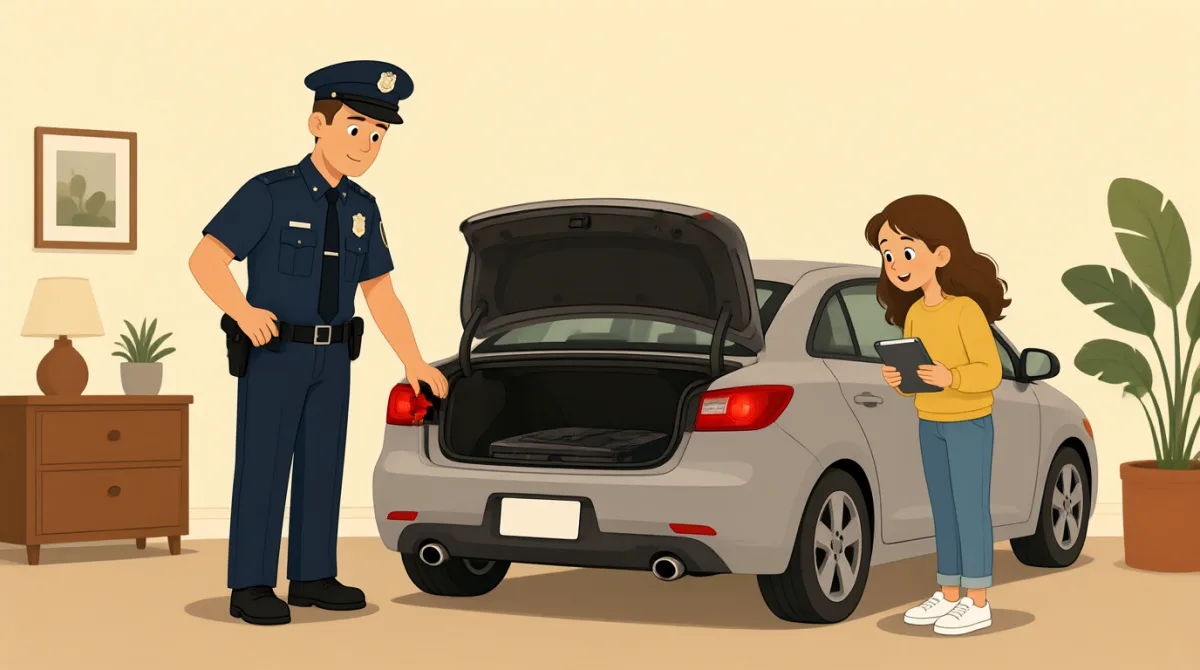

I noticed your right taillight is cracked, and part of the lens is missing. Do you know when that happened?
ผมสังเกตว่าไฟท้ายข้างขวาของคุณมีรอยร้าว แล้วก็มีส่วนหนึ่งของฝาครอบหายไป คุณทราบไหมว่าเกิดขึ้นเมื่อไหร่ครับ

I saw it yesterday evening when I got home. I’m not sure how it happened, but I haven’t driven much since then.
ฉันเห็นเมื่อคืนตอนกลับถึงบ้านค่ะ ไม่แน่ใจว่าเกิดขึ้นได้ยังไง แต่หลังจากนั้นก็แทบไม่ได้ขับรถเลย
All right. A broken taillight can be hard for other drivers to see, especially at night or in bad weather.
เข้าใจแล้วครับ ไฟท้ายที่แตกอาจทำให้คนขับรถคันอื่นมองเห็นได้ยาก โดยเฉพาะตอนกลางคืนหรือเวลาที่อากาศไม่ดี
I understand. Is it safe to drive to a repair shop, or should I have the car towed?
เข้าใจค่ะ ขับรถไปอู่ซ่อมได้อย่างปลอดภัยไหมคะ หรือต้องเรียกรถมายกรถไป
If the light still works and the car is safe to drive, you can go straight to a nearby shop. Avoid driving after dark.
ถ้าไฟยังติดและรถยังขับได้อย่างปลอดภัย คุณขับตรงไปที่อู่ใกล้ ๆ ได้เลยครับ อย่าขับหลังฟ้ามืดนะครับ
The light does come on, but the cover is broken. I’ll call a shop and see if they can fix it today.
ไฟยังติดอยู่ค่ะ แต่ฝาครอบแตก ฉันจะโทรหาอู่แล้วถามว่าซ่อมให้เสร็จวันนี้ได้ไหม
That’s a good plan. Keep the repair receipt, and make sure the replacement light works before you leave the shop.
เป็นแผนที่ดีครับ เก็บใบเสร็จค่าซ่อมไว้ แล้วตรวจให้แน่ใจว่าไฟที่เปลี่ยนใหม่ใช้งานได้ก่อนออกจากอู่
Should I show proof of the repair to the police, or is keeping the receipt enough?
ฉันต้องแสดงหลักฐานการซ่อมให้ตำรวจดูไหมคะ หรือแค่เก็บใบเสร็จไว้ก็พอ
You don’t need to bring it to me, but keep the receipt in case you’re asked about the repair later.
ไม่ต้องเอามาให้ผมหรอกครับ แต่เก็บใบเสร็จไว้ เผื่อมีคนถามเรื่องการซ่อมในภายหลัง
คำศัพท์8
- taillightไฟท้าย
A taillight is a red light at the back of a vehicle. It helps other drivers see the car, especially in the dark.
ไฟท้ายคือไฟสีแดงที่อยู่ด้านหลังรถ ช่วยให้คนขับรถคันอื่นมองเห็นรถได้ โดยเฉพาะในที่มืด
- crackedมีรอยร้าว
Cracked means damaged with a line or split in the surface. Here, it describes the broken cover of the taillight.
cracked หมายถึงเสียหายจนมีรอยร้าวหรือรอยแยกบนพื้นผิว ในบทสนทนานี้ใช้บรรยายฝาครอบไฟท้ายที่แตก
- lensเลนส์
The lens is the clear or colored cover over a light. In this dialogue, part of the taillight lens is missing.
เลนส์คือฝาครอบใสหรือมีสีที่อยู่เหนือหลอดไฟ ในบทสนทนานี้ มีเลนส์ไฟท้ายบางส่วนหายไป
- towedถูกลากไป
Towed means pulled by another vehicle, usually because a car cannot be driven safely. You can ask whether a car needs to be towed to a repair shop.
towed หมายถึงถูกยานพาหนะอีกคันลากไป โดยทั่วไปเป็นเพราะรถไม่ปลอดภัยที่จะขับ คุณถามได้ว่าควรลากรถไปอู่ซ่อมหรือไม่
- straight toตรงไปที่
“Go straight to” means go directly to a place without stopping somewhere else. You can use it to give simple directions or explain what to do next.
“Go straight to” หมายถึงไปยังสถานที่แห่งหนึ่งโดยตรง โดยไม่แวะที่อื่น ใช้บอกทางง่าย ๆ หรืออธิบายว่าควรทำอะไรต่อ
- after darkหลังฟ้ามืด
“After dark” means in the evening or at night, when it is dark outside. It is often used when discussing visibility or safety.
“After dark” หมายถึงช่วงเย็นหรือกลางคืนที่ข้างนอกมืด มักใช้พูดถึงทัศนวิสัยหรือความปลอดภัย
- repair receiptใบเสร็จค่าซ่อม
A repair receipt is a document showing that you paid for a repair. Keep it as proof of the work in case someone asks about it later.
ใบเสร็จค่าซ่อมคือเอกสารที่แสดงว่าคุณจ่ายเงินเพื่อซ่อมแซมแล้ว เก็บไว้เป็นหลักฐานการซ่อม เผื่อมีคนถามในภายหลัง
- proof of the repairหลักฐานการซ่อม
This means evidence that a repair has been completed, such as a receipt. You can use the phrase when asking what documents you need to show.
หมายถึงหลักฐานที่แสดงว่าซ่อมเสร็จแล้ว เช่น ใบเสร็จ คุณใช้วลีนี้ถามได้ว่าต้องแสดงเอกสารอะไรบ้าง
ประโยคสำคัญ7
- 1
Do you know when that happened?
คุณทราบไหมว่าเกิดขึ้นเมื่อไหร่ครับ
This is a polite way to ask when something occurred. You can reuse it when asking about damage, a problem, or a change.
ประโยคนี้เป็นวิธีสุภาพในการถามว่าเหตุการณ์หนึ่งเกิดขึ้นเมื่อไหร่ นำไปใช้ถามเกี่ยวกับความเสียหาย ปัญหา หรือการเปลี่ยนแปลงได้
- 2
I’m not sure how it happened, but I haven’t driven much since then.
ไม่แน่ใจว่าเกิดขึ้นได้ยังไง แต่หลังจากนั้นก็แทบไม่ได้ขับรถเลยค่ะ
This sentence explains that you do not know the cause while adding relevant information. Reuse “I’m not sure how..., but...” to give an honest answer with context.
ประโยคนี้บอกว่าคุณไม่ทราบสาเหตุ พร้อมให้ข้อมูลที่เกี่ยวข้องเพิ่มเติม ลองนำ “I’m not sure how..., but...” ไปใช้ตอบอย่างตรงไปตรงมาและให้บริบทประกอบได้
- 3
Is it safe to drive to a repair shop, or should I have the car towed?
ขับรถไปอู่ซ่อมได้อย่างปลอดภัยไหมคะ หรือต้องเรียกรถมายกรถไป
This asks someone to compare two options and recommend the safer one. You can reuse “Is it safe to..., or should I...?” when making a practical decision.
ประโยคนี้ใช้ถามให้คนอื่นเปรียบเทียบสองทางเลือกและแนะนำว่าทางไหนปลอดภัยกว่า คุณนำ “Is it safe to..., or should I...?” ไปใช้เมื่อต้องตัดสินใจเรื่องที่ทำได้จริง
- 4
If the light still works and the car is safe to drive, you can go straight to a nearby shop.
ถ้าไฟยังติดและรถยังขับได้อย่างปลอดภัย คุณขับตรงไปที่อู่ใกล้ ๆ ได้เลยครับ
This gives advice that depends on two conditions. The pattern “If..., you can...” is useful for explaining what someone may do in a particular situation.
ประโยคนี้ให้คำแนะนำที่ขึ้นอยู่กับเงื่อนไขสองข้อ รูปแบบ “If..., you can...” มีประโยชน์เมื่อต้องอธิบายว่าใครบางคนทำอะไรได้ในสถานการณ์หนึ่ง
- 5
I’ll call a shop and see if they can fix it today.
ฉันจะโทรหาอู่แล้วถามว่าซ่อมให้เสร็จวันนี้ได้ไหมค่ะ
This explains a plan and checks whether it is possible. Reuse “I’ll [action] and see if...” when you intend to find out what someone can do.
ประโยคนี้บอกแผนและตรวจสอบว่าทำได้หรือไม่ ลองใช้ “I’ll [action] and see if...” เมื่อตั้งใจจะถามว่าอีกฝ่ายทำอะไรให้ได้บ้าง
- 6
Keep the repair receipt, and make sure the replacement light works before you leave the shop.
เก็บใบเสร็จค่าซ่อมไว้ แล้วตรวจให้แน่ใจว่าไฟที่เปลี่ยนใหม่ใช้งานได้ก่อนออกจากอู่ครับ
This gives two clear instructions using “keep” and “make sure.” You can use the same pattern to remind someone to save a document and check something before leaving.
ประโยคนี้ให้คำแนะนำชัดเจนสองข้อโดยใช้ “keep” และ “make sure” คุณใช้รูปแบบเดียวกันเพื่อเตือนให้ใครเก็บเอกสารและตรวจสอบบางอย่างก่อนออกจากสถานที่ได้
- 7
You don’t need to bring it to me, but keep the receipt in case you’re asked about the repair later.
ไม่ต้องเอามาให้ผมหรอกครับ แต่เก็บใบเสร็จไว้ เผื่อมีคนถามเรื่องการซ่อมในภายหลัง
This tells someone what is unnecessary and what they should do instead. “In case” introduces something to prepare for, such as a future question or problem.
ประโยคนี้บอกว่าอะไรไม่จำเป็นต้องทำ และควรทำอะไรแทน “In case” ใช้เกริ่นถึงสิ่งที่ควรเตรียมรับมือไว้ เช่น คำถามหรือปัญหาที่อาจเกิดขึ้นในอนาคต