Explaining a Broken Taillight
解釋損壞的尾燈
While checking the car, Officer David notices a broken taillight. Emma explains when she noticed it and asks what she should do to get it fixed.
檢查車輛時,警官 David 發現尾燈損壞。Emma 解釋自己什麼時候發現這個問題,並詢問該如何修理。
對話9
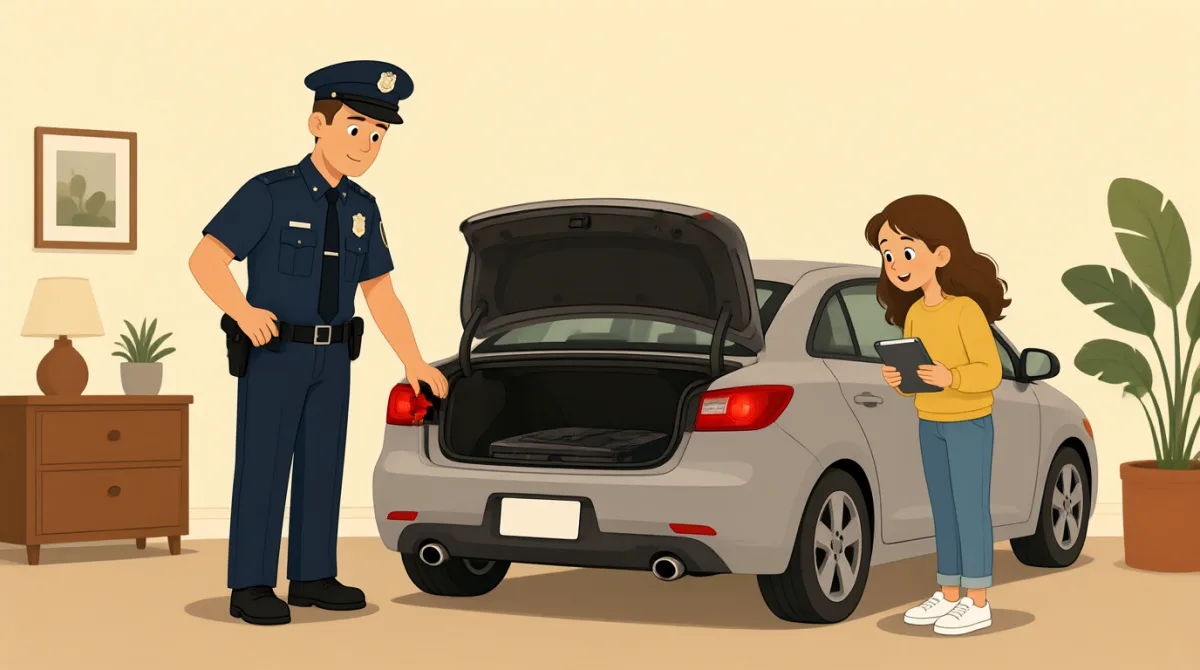

I noticed your right taillight is cracked, and part of the lens is missing. Do you know when that happened?
我注意到你的右側尾燈裂了,燈罩還缺了一塊。你知道是什麼時候弄壞的嗎?

I saw it yesterday evening when I got home. I’m not sure how it happened, but I haven’t driven much since then.
我昨天晚上到家時發現的。我不確定是怎麼弄壞的,不過從那以後我沒怎麼開車。
All right. A broken taillight can be hard for other drivers to see, especially at night or in bad weather.
好。尾燈壞了,其他司機可能很難看清,尤其是在夜間或天氣不好的時候。
I understand. Is it safe to drive to a repair shop, or should I have the car towed?
我明白。我可以開去修車店嗎?還是應該叫拖車?
If the light still works and the car is safe to drive, you can go straight to a nearby shop. Avoid driving after dark.
如果燈還能亮,而且車子開起來安全,你可以直接開去附近的修車店。天黑後儘量不要開車。
The light does come on, but the cover is broken. I’ll call a shop and see if they can fix it today.
燈確實還能亮,不過燈罩壞了。我會給修車店打電話,看看他們今天能不能修好。
That’s a good plan. Keep the repair receipt, and make sure the replacement light works before you leave the shop.
這個辦法不錯。記得留好維修收據,並在離開修車店前確認換上的尾燈能正常工作。
Should I show proof of the repair to the police, or is keeping the receipt enough?
我需要向警方出示維修證明嗎?還是留著收據就夠了?
You don’t need to bring it to me, but keep the receipt in case you’re asked about the repair later.
你不必把收據交給我,但要留好,以防之後有人問起維修情況。
詞彙8
- taillight尾燈
A taillight is a red light at the back of a vehicle. It helps other drivers see the car, especially in the dark.
尾燈是車輛後部的紅色燈,能幫助其他司機看清這輛車,尤其是在天黑的時候。
- cracked有裂紋的
Cracked means damaged with a line or split in the surface. Here, it describes the broken cover of the taillight.
“Cracked”表示表面有裂紋或裂縫,已經受損。這裡用來形容尾燈破損的燈罩。
- lens燈罩
The lens is the clear or colored cover over a light. In this dialogue, part of the taillight lens is missing.
“Lens”指燈外面透明或有顏色的罩子。在這段對話中,尾燈燈罩缺了一塊。
- towed被拖走
Towed means pulled by another vehicle, usually because a car cannot be driven safely. You can ask whether a car needs to be towed to a repair shop.
“Towed”表示由另一輛車拖走,通常是因為汽車無法安全行駛。你可以詢問是否需要把車拖到修車店。
- straight to直接去
“Go straight to” means go directly to a place without stopping somewhere else. You can use it to give simple directions or explain what to do next.
“Go straight to”表示不在其他地方停留,直接前往某個地點。你可以用它來簡單說明路線或接下來該做什麼。
- after dark天黑後
“After dark” means in the evening or at night, when it is dark outside. It is often used when discussing visibility or safety.
“After dark”指傍晚或夜間,也就是外面天黑的時候。談到能見度或安全問題時經常會用到這個說法。
- repair receipt維修收據
A repair receipt is a document showing that you paid for a repair. Keep it as proof of the work in case someone asks about it later.
維修收據是證明你支付了維修費用的單據。請把它留好,以便之後有人詢問時作為維修憑證。
- proof of the repair維修證明
This means evidence that a repair has been completed, such as a receipt. You can use the phrase when asking what documents you need to show.
這指的是維修已經完成的證據,比如收據。詢問需要出示哪些檔案時,可以用這個說法。
關鍵句7
- 1
Do you know when that happened?
你知道那是什麼時候發生的嗎?
This is a polite way to ask when something occurred. You can reuse it when asking about damage, a problem, or a change.
這是禮貌地詢問某件事發生時間的說法。詢問損壞、問題或變化是什麼時候出現時,也可以用這個句型。
- 2
I’m not sure how it happened, but I haven’t driven much since then.
我不確定這是怎麼發生的,不過從那以後我沒怎麼開車。
This sentence explains that you do not know the cause while adding relevant information. Reuse “I’m not sure how..., but...” to give an honest answer with context.
這句話先說明你不知道事情發生的原因,再補充相關資訊。你可以套用“I’m not sure how..., but...”來誠實作答並補充背景。
- 3
Is it safe to drive to a repair shop, or should I have the car towed?
開車去修車店安全嗎?還是我應該叫拖車?
This asks someone to compare two options and recommend the safer one. You can reuse “Is it safe to..., or should I...?” when making a practical decision.
這句話是在請對方比較兩種選擇,並推薦更安全的一種。做實際決定時,可以套用“Is it safe to..., or should I...?”。
- 4
If the light still works and the car is safe to drive, you can go straight to a nearby shop.
如果燈還能亮,而且車子開起來安全,你可以直接去附近的修車店。
This gives advice that depends on two conditions. The pattern “If..., you can...” is useful for explaining what someone may do in a particular situation.
這句話根據兩個條件給出建議。“If..., you can...”這個句型適合用來說明在特定情況下可以做什麼。
- 5
I’ll call a shop and see if they can fix it today.
我會給修車店打電話,看看他們今天能不能修好。
This explains a plan and checks whether it is possible. Reuse “I’ll [action] and see if...” when you intend to find out what someone can do.
這句話說明了一個計劃,並確認這件事是否可行。打算了解別人能做什麼時,可以套用“I’ll [action] and see if...”。
- 6
Keep the repair receipt, and make sure the replacement light works before you leave the shop.
留好維修收據,並在離開修車店前確認換上的尾燈能正常工作。
This gives two clear instructions using “keep” and “make sure.” You can use the same pattern to remind someone to save a document and check something before leaving.
這句話用“keep”和“make sure”給出兩項明確的指示。你也可以用同樣的句型提醒別人保留檔案,並在離開前檢查某樣東西。
- 7
You don’t need to bring it to me, but keep the receipt in case you’re asked about the repair later.
你不需要把收據交給我,但要留好,以防之後有人詢問維修情況。
This tells someone what is unnecessary and what they should do instead. “In case” introduces something to prepare for, such as a future question or problem.
這句話告訴對方什麼事不必做,以及應該怎麼做。“In case”用來引出需要提前應對的情況,比如以後可能遇到的問題或提問。