Giving the Police a Clear Account
警察に事故の状況を正確に説明する
An officer asks Emma and Jack to describe the accident separately. They explain what they remember without guessing, and Emma mentions Mia as a witness.
警察官がエマとジャックに、事故について別々に説明するよう求めます。二人は推測せずに覚えていることを話し、エマは目撃者としてミアのことを伝えます。
会話9
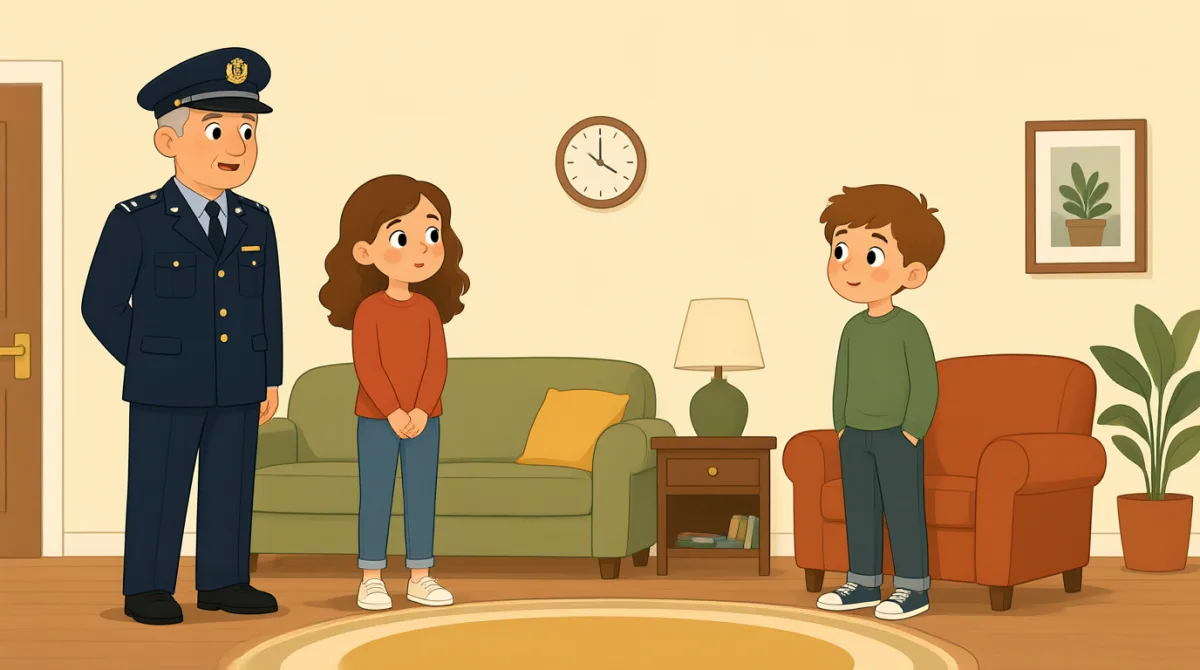

I’m Officer Chen. Let’s talk somewhere safe, away from traffic. Please describe what happened, one at a time.
警察官のチェンです。交通から離れた安全な場所でお話ししましょう。何が起きたのか、お一人ずつ説明してください。

I was driving straight through the intersection when Jack’s car touched the rear of mine. I stopped as soon as I could.
交差点をまっすぐ走っていたら、ジャックの車が私の車の後部にぶつかりました。できるだけ早く停車しました。
What do you remember about the traffic light and your speed? It’s fine if you’re not sure about every detail.
信号の色と速度について、何か覚えていますか?細かいところまで覚えていなくても大丈夫ですよ。
The light was green when I entered, I think. I wasn’t checking my speed, so I don’t want to guess.
交差点に入ったとき、信号は青だったと思います。速度は確認していなかったので、推測では答えたくありません。
That’s the right approach. Jack, please tell me what you recall, without trying to fill in anything you didn’t see.
それでいいですよ。ジャックさん、見ていないことを補おうとせずに、覚えていることを話してください。

I was behind Emma and slowing down, but my car still bumped hers. I can’t say exactly how much space was between us.
エマさんの後ろを走っていて、減速していましたが、それでも車がエマさんの車にぶつかりました。車間距離がどれくらいだったかは、正確には言えません。
Did either of you see anyone who witnessed the collision? I’ll note their contact details if they’re available.
お二人のどちらか、衝突を目撃した人を見ましたか?連絡先が分かれば記録しておきます。
Yes, a woman saw it and gave me her contact information. I wrote down what she told me, and I can share it with you.
はい、女性が事故を見ていて、連絡先を教えてくれました。その人が話してくれたことを書き留めたので、お渡しできます。
Good. I’ll record that she witnessed it. Please keep your notes and photos, and contact your insurer with the report number.
分かりました。その方が事故を目撃したと記録しておきます。メモや写真は保管して、報告書番号を添えて保険会社に連絡してください。
語彙8
- somewhere safe安全な場所
A place where you are protected from danger. Here, the officer wants them to move away from traffic.
危険から身を守れる場所のことです。ここでは、警察官は二人に車の通行から離れた場所へ移動してほしいと言っています。
- intersection交差点
A place where two or more roads cross. Use it when describing where an accident happened.
二つ以上の道路が交わる場所です。事故が起きた場所を説明するときに使います。
- as soon as I couldできるだけ早く
At the first possible moment. It explains how quickly Emma stopped the car.
可能になった時点ですぐに、という意味です。エマがどれだけ早く車を止めたかを表しています。
- I don’t want to guess推測では答えたくありません
A way to say you are not certain and do not want to invent an answer. It is useful when giving an accurate account.
確かではなく、答えを作りたくないと伝える言い方です。正確に状況を説明したいときに役立ちます。
- what you recall覚えていること
What you remember about something. You can use this phrase when asking someone to describe a past event.
あることについて記憶している内容です。過去の出来事について、相手に説明を求めるときに使えます。
- witnessed the collision衝突を目撃した
Saw the accident happen. A witness may be able to provide useful information about an incident.
事故が起きるところを見た、という意味です。目撃者は、出来事について役立つ情報を提供してくれることがあります。
- contact details連絡先
Information that lets you reach someone, such as their phone number or email address. It is often requested when following up on an event.
電話番号やメールアドレスなど、相手に連絡するための情報です。出来事について後から確認するときなどに尋ねます。
- report number報告書番号
A number used to identify an official report. You may need it when contacting your insurer or the police.
公的な報告書を識別するための番号です。保険会社や警察に連絡するときに必要になることがあります。
重要な文7
- 1
Please describe what happened, one at a time.
何が起きたのか、お一人ずつ説明してください。
This is a polite way to ask people to explain an event separately. You can reuse “Please [action], one at a time” when managing a group.
複数の人に、別々に出来事を説明してもらう丁寧な言い方です。「Please [action], one at a time」という形は、グループに順番に何かをしてもらうときにも使えます。
- 2
I stopped as soon as I could.
できるだけ早く停車しました。
This explains that you acted at the first possible moment. Replace “stopped” with another action to describe what you did promptly.
可能になった時点ですぐに行動したことを伝える文です。「stopped」を別の動作に置き換えると、すぐに何をしたかを説明できます。
- 3
The light was green when I entered, I think.
交差点に入ったとき、信号は青だったと思います。
This gives information while clearly showing some uncertainty. Add “I think” when you want to share a memory without claiming to be completely sure.
少し確信がないことをはっきり示しながら、情報を伝える文です。完全に確かだと言い切らずに記憶を伝えたいときは、「I think」を加えます。
- 4
I wasn’t checking my speed, so I don’t want to guess.
速度は確認していなかったので、推測では答えたくありません。
This gives a reason for not providing an exact answer. Use “I don’t want to guess” when you want to be honest about details you do not know.
正確に答えられない理由を伝える文です。分からないことについて正直に伝えたいときは、「I don’t want to guess」を使います。
- 5
I can’t say exactly how much space was between us.
車間距離がどれくらいだったかは、正確には言えません。
This is a useful way to explain that you do not remember a precise measurement. You can replace “how much space” with another detail you cannot estimate.
正確な数値を覚えていないことを伝えるのに便利な言い方です。推測できない別の事柄に合わせて、「how much space」を置き換えられます。
- 6
I wrote down what she told me, and I can share it with you.
その人が話してくれたことを書き留めたので、お渡しできます。
This explains that you recorded information and are willing to provide it. Use the same structure when offering notes or details to someone.
情報を記録していて、相手に提供できることを伝える文です。メモや詳細を誰かに渡すときにも、同じ形が使えます。
- 7
Please keep your notes and photos, and contact your insurer with the report number.
メモや写真は保管して、報告書番号を添えて保険会社に連絡してください。
This gives two clear instructions after an accident. You can reuse “Please [action], and [action]” to list practical next steps.
事故の後にするべきことを、二つはっきり伝える文です。「Please [action], and [action]」の形は、次に取るべき実用的な行動を並べるときに使えます。