Giving the Police a Clear Account
Dar una declaración clara a la policía
An officer asks Emma and Jack to describe the accident separately. They explain what they remember without guessing, and Emma mentions Mia as a witness.
Un agente les pide a Emma y Jack que describan el accidente por separado. Cuentan lo que recuerdan sin hacer suposiciones, y Emma menciona a Mia como testigo.
Diálogo9
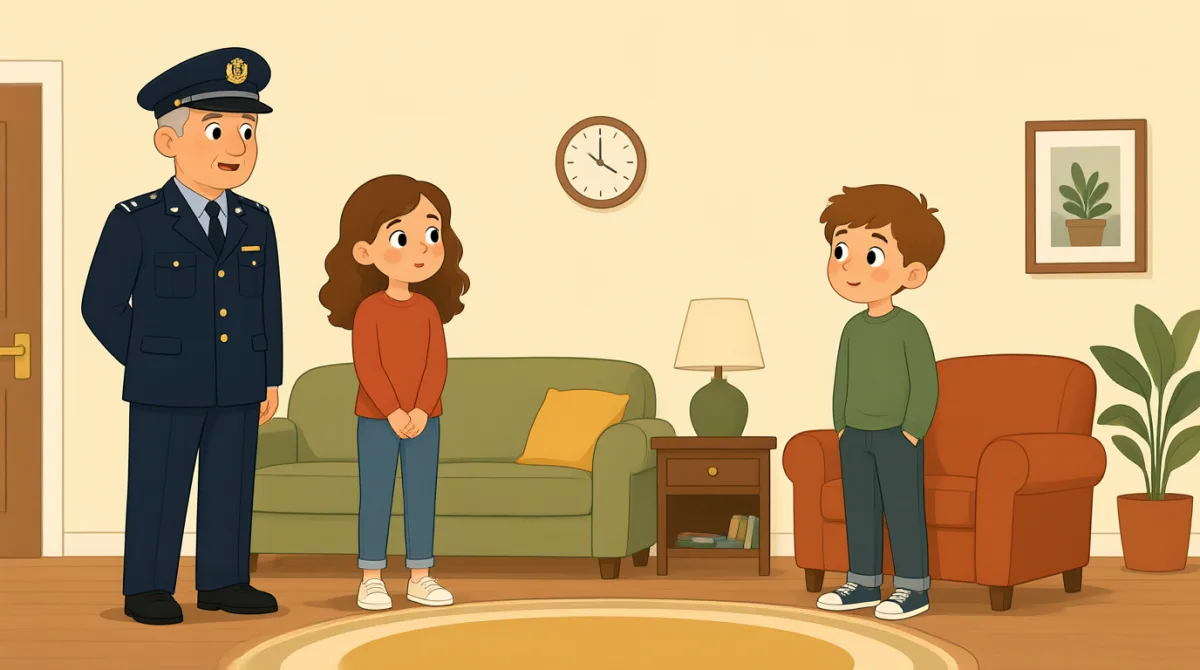

I’m Officer Chen. Let’s talk somewhere safe, away from traffic. Please describe what happened, one at a time.
Soy el agente Chen. Hablemos en un lugar seguro, lejos del tráfico. Por favor, describan lo que pasó, de uno en uno.

I was driving straight through the intersection when Jack’s car touched the rear of mine. I stopped as soon as I could.
Iba derecho por la intersección cuando el auto de Jack tocó la parte trasera del mío. Me detuve en cuanto pude.
What do you remember about the traffic light and your speed? It’s fine if you’re not sure about every detail.
¿Qué recuerdas del semáforo y de tu velocidad? No pasa nada si no estás segura de todos los detalles.
The light was green when I entered, I think. I wasn’t checking my speed, so I don’t want to guess.
Creo que el semáforo estaba en verde cuando entré. No estaba mirando mi velocidad, así que no quiero hacer suposiciones.
That’s the right approach. Jack, please tell me what you recall, without trying to fill in anything you didn’t see.
Esa es la actitud correcta. Jack, por favor, cuéntame qué recuerdas, sin intentar completar nada que no hayas visto.

I was behind Emma and slowing down, but my car still bumped hers. I can’t say exactly how much space was between us.
Iba detrás de Emma y estaba reduciendo la velocidad, pero aun así mi auto chocó ligeramente contra el suyo. No puedo decir exactamente qué distancia había entre nosotros.
Did either of you see anyone who witnessed the collision? I’ll note their contact details if they’re available.
¿Alguno de ustedes vio a alguien que presenciara la colisión? Anotaré sus datos de contacto si los tienen.
Yes, a woman saw it and gave me her contact information. I wrote down what she told me, and I can share it with you.
Sí, una mujer lo vio y me dio sus datos de contacto. Anoté lo que me dijo y puedo compartirlo con usted.
Good. I’ll record that she witnessed it. Please keep your notes and photos, and contact your insurer with the report number.
Bien. Anotaré que ella presenció el accidente. Guarden sus notas y fotos, y contacten a su aseguradora con el número del informe.
Vocabulario8
- somewhere safeun lugar seguro
A place where you are protected from danger. Here, the officer wants them to move away from traffic.
Un lugar donde estás protegido del peligro. En este caso, el agente quiere que se alejen del tráfico.
- intersectionintersección
A place where two or more roads cross. Use it when describing where an accident happened.
Un lugar donde se cruzan dos o más caminos. Puedes usar esta palabra para describir dónde ocurrió un accidente.
- as soon as I coulden cuanto pude
At the first possible moment. It explains how quickly Emma stopped the car.
En el primer momento posible. Explica lo rápido que Emma detuvo el auto.
- I don’t want to guessno quiero hacer suposiciones
A way to say you are not certain and do not want to invent an answer. It is useful when giving an accurate account.
Una forma de decir que no estás seguro y no quieres inventar una respuesta. Es útil cuando quieres dar una versión precisa de lo ocurrido.
- what you recallqué recuerdas
What you remember about something. You can use this phrase when asking someone to describe a past event.
Lo que recuerdas de algo. Puedes usar esta frase para pedirle a alguien que describa un hecho pasado.
- witnessed the collisionpresenció la colisión
Saw the accident happen. A witness may be able to provide useful information about an incident.
Vio cómo ocurrió el accidente. Un testigo puede aportar información útil sobre un incidente.
- contact detailsdatos de contacto
Information that lets you reach someone, such as their phone number or email address. It is often requested when following up on an event.
Información que permite comunicarse con alguien, como su número de teléfono o su correo electrónico. Suele pedirse para hacer un seguimiento de un suceso.
- report numbernúmero del informe
A number used to identify an official report. You may need it when contacting your insurer or the police.
Un número que identifica un informe oficial. Puede que lo necesites al contactar a tu aseguradora o a la policía.
Frases clave7
- 1
Please describe what happened, one at a time.
Por favor, describan lo que pasó, de uno en uno.
This is a polite way to ask people to explain an event separately. You can reuse “Please [action], one at a time” when managing a group.
Es una forma cortés de pedirles a varias personas que expliquen algo por separado. Puedes volver a usar “Please [action], one at a time” (Por favor, [acción], de uno en uno) cuando estés organizando a un grupo.
- 2
I stopped as soon as I could.
Me detuve en cuanto pude.
This explains that you acted at the first possible moment. Replace “stopped” with another action to describe what you did promptly.
Esto explica que actuaste en el primer momento posible. Cambia “stopped” por otra acción para describir lo que hiciste enseguida.
- 3
The light was green when I entered, I think.
Creo que el semáforo estaba en verde cuando entré.
This gives information while clearly showing some uncertainty. Add “I think” when you want to share a memory without claiming to be completely sure.
Esta frase aporta información y deja claro que no estás completamente seguro. Añade “I think” cuando quieras compartir un recuerdo sin afirmar que tienes total certeza.
- 4
I wasn’t checking my speed, so I don’t want to guess.
No estaba mirando mi velocidad, así que no quiero hacer suposiciones.
This gives a reason for not providing an exact answer. Use “I don’t want to guess” when you want to be honest about details you do not know.
Esto explica por qué no puedes dar una respuesta exacta. Usa “I don’t want to guess” cuando quieras ser sincero sobre detalles que no conoces.
- 5
I can’t say exactly how much space was between us.
No puedo decir exactamente qué distancia había entre nosotros.
This is a useful way to explain that you do not remember a precise measurement. You can replace “how much space” with another detail you cannot estimate.
Es una forma útil de explicar que no recuerdas una medida precisa. Puedes cambiar “how much space” por otro detalle que no puedas calcular.
- 6
I wrote down what she told me, and I can share it with you.
Anoté lo que me dijo y puedo compartirlo con usted.
This explains that you recorded information and are willing to provide it. Use the same structure when offering notes or details to someone.
Esto explica que registraste la información y que estás dispuesto a compartirla. Usa la misma estructura cuando ofrezcas tus notas o detalles a alguien.
- 7
Please keep your notes and photos, and contact your insurer with the report number.
Guarden sus notas y fotos, y contacten a su aseguradora con el número del informe.
This gives two clear instructions after an accident. You can reuse “Please [action], and [action]” to list practical next steps.
Esta frase da dos instrucciones claras después de un accidente. Puedes volver a usar “Please [action], and [action]” (Por favor, [acción] y [acción]) para enumerar los pasos prácticos que hay que seguir.