Checking That Everyone Is Okay
全員が無事か確認する
After a minor collision, Emma and Jack pull over safely and check whether anyone is hurt. They stay calm and make sure it is safe to talk before exchanging details.
軽い衝突のあと、エマとジャックは安全な場所に車を寄せ、けが人がいないか確認します。落ち着いて、連絡先を交換する前に話をしても安全か確かめます。
会話8
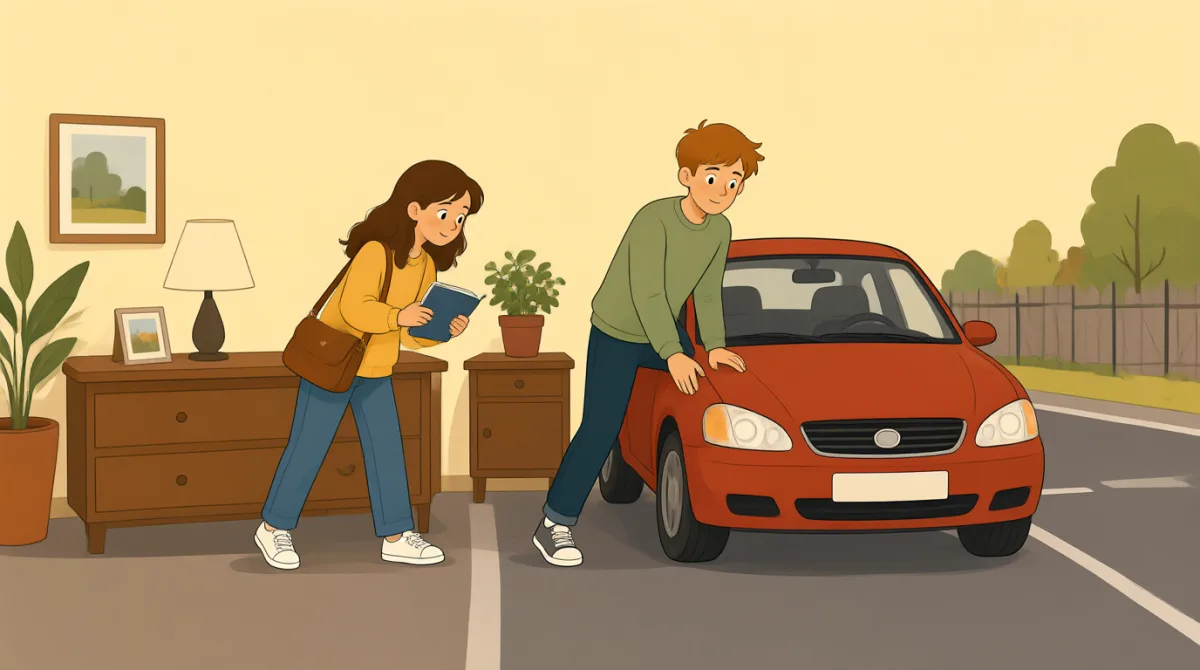

Are you okay? That was a small bump, but it startled me. I’ve pulled over by the curb.
大丈夫?ちょっとぶつかっただけだけど、びっくりした。路肩に車を寄せたよ。

I’m okay, thanks. Are you hurt at all? Let’s stay here and check before we get out.
僕は大丈夫、ありがとう。君はけがしてない?車を降りる前に、ここで様子を確認しよう。
I feel fine. My hands are shaking a little, but I don’t think I’m hurt. How about you?
私は平気。少し手が震えてるけど、けがはしてないと思う。あなたは?
I’m fine too. The cars are stopped, and traffic’s moving around us. Let’s turn on our hazard lights.
僕も大丈夫。車は止まってるし、周りを車が通ってる。ハザードランプをつけよう。
Good idea. Before we get out, let’s check that it’s safe. I don’t want either of us stepping into traffic.
そうだね。車を降りる前に、安全か確認しよう。どちらかが車道に出ることになったら困るから。
Right. I’ll look in my mirrors first. The shoulder looks wide enough, and cars are slowing down.
そうだね。まずミラーで確認するよ。路肩は十分な広さがありそうだし、車も減速してる。
Okay, I’ll get out carefully and stand away from the road. Please tell me if you feel any pain.
わかった。気をつけて降りて、道路から離れたところに立つね。痛みを感じたら教えて。
Will do. I don’t feel any pain, just a bit shaken up. Let’s keep calm and make sure we’re both safe.
わかった。痛みはないよ、ちょっと動揺してるだけ。落ち着いて、二人とも安全か確認しよう。
語彙7
- pulled over車を路肩に寄せた
This means moved a vehicle to the side of the road and stopped. It is often used when a driver needs to stop safely.
これは、車を道路の端に寄せて止めたという意味です。安全に止まる必要があるとき、運転手がよく使う表現です。
- startled meびっくりさせた
This means suddenly surprised or frightened me. It describes a quick reaction to the collision.
突然驚かせたり、怖がらせたりしたという意味です。衝突が起きたときの瞬間的な反応を表します。
- at all少しでも
This phrase is used to make a question stronger, especially in negative questions. “Are you hurt at all?” means “Are you hurt even a little?”
この表現は、特に否定疑問文で質問を強調するときに使います。「Are you hurt at all?」は「少しでもけがをした?」という意味です。
- hazard lightsハザードランプ
These are flashing lights used to warn other drivers that a vehicle is stopped or there is a problem.
車が止まっているときや、問題が起きたときに、ほかの運転手に知らせるために点滅させるライトです。
- stepping into traffic車道に出ること
This means moving on foot into the area where cars are driving. It can be dangerous, so the speakers want to avoid it.
車が走っている場所に、歩いて入っていくことを意味します。危険な場合があるため、二人はそうならないようにしています。
- wide enough十分な広さがある
This means having sufficient width for a particular purpose. Here, the shoulder has enough space for the cars and people to stay safely.
ある目的に必要な幅があるという意味です。ここでは、車や人が安全にいられるだけのスペースが路肩にあることを表します。
- shaken up動揺している
This means feeling upset, nervous, or physically affected after a surprising or frightening event. It does not necessarily mean being injured.
驚いたり怖い思いをしたりしたあとで、気持ちが乱れたり、緊張したり、体に影響が出たりしている状態です。必ずしもけがをしているという意味ではありません。
重要な文7
- 1
Are you okay?
大丈夫?
This is a common and caring way to check whether someone is safe after an accident or difficult event. You can also say it after someone falls or feels unwell.
事故や大変なことがあったあと、相手が無事かどうかを気遣って尋ねるときによく使う表現です。誰かが転んだときや、具合が悪そうなときにも使えます。
- 2
Let’s stay here and check before we get out.
車を降りる前に、ここで様子を確認しよう。
This sentence suggests waiting and checking the situation before leaving a vehicle. Use “Let’s + verb” to make a calm suggestion.
車を離れる前に、いったん待って状況を確認しようと提案する表現です。「Let’s + 動詞」は、落ち着いて提案するときに使います。
- 3
I feel fine.
私は平気。
This is a simple way to say that you do not feel sick or injured. You can replace “fine” with words such as “better,” “okay,” or “unwell.”
具合が悪くない、またはけがをしていないと簡潔に伝える表現です。「fine」の代わりに「better」「okay」「unwell」なども使えます。
- 4
Let’s turn on our hazard lights.
ハザードランプをつけよう。
This is a useful suggestion when a vehicle has stopped in a potentially dangerous place. “Turn on” can be used for lights, switches, and other controls.
車が危険の可能性がある場所で止まったときに役立つ提案です。「Turn on」は、ライトやスイッチなどをつけるときに使えます。
- 5
Before we get out, let’s check that it’s safe.
車を降りる前に、安全か確認しよう。
This sentence explains that safety should be checked before taking action. The structure “Before + clause, let’s + verb” is useful for making careful plans.
行動を起こす前に、安全を確認しようと伝える文です。「Before + 節, let’s + 動詞」の形は、慎重に計画を立てるときに便利です。
- 6
I’ll look in my mirrors first.
まずミラーで確認するよ。
This sentence describes a decision or offer to do something. “I’ll + verb” is often used for decisions made at the moment of speaking.
何かをするという決定や申し出を表す文です。「I’ll + 動詞」は、話しているその場で決めたことを伝えるときによく使います。
- 7
Let’s keep calm and make sure we’re both safe.
落ち着いて、二人とも安全か確認しよう。
This is a reassuring way to encourage people to stay relaxed and focus on safety. “Make sure” means check or do something so that a result is certain.
落ち着いて安全に意識を向けようと、相手を安心させながら促す表現です。「Make sure」は、確実にそうなるように確認したり、何かをしたりするという意味です。