Seeing the Sign in the Window
窓の貼り紙を見て
Emma spots a part-time job sign in a café window and talks with her friend Jack about whether to apply. She decides to go inside and ask for more information.
エマはカフェの窓に貼られたアルバイト募集の貼り紙を見つけ、応募するかどうか友達のジャックと話します。中に入って詳しいことを聞いてみることにします。
会話10
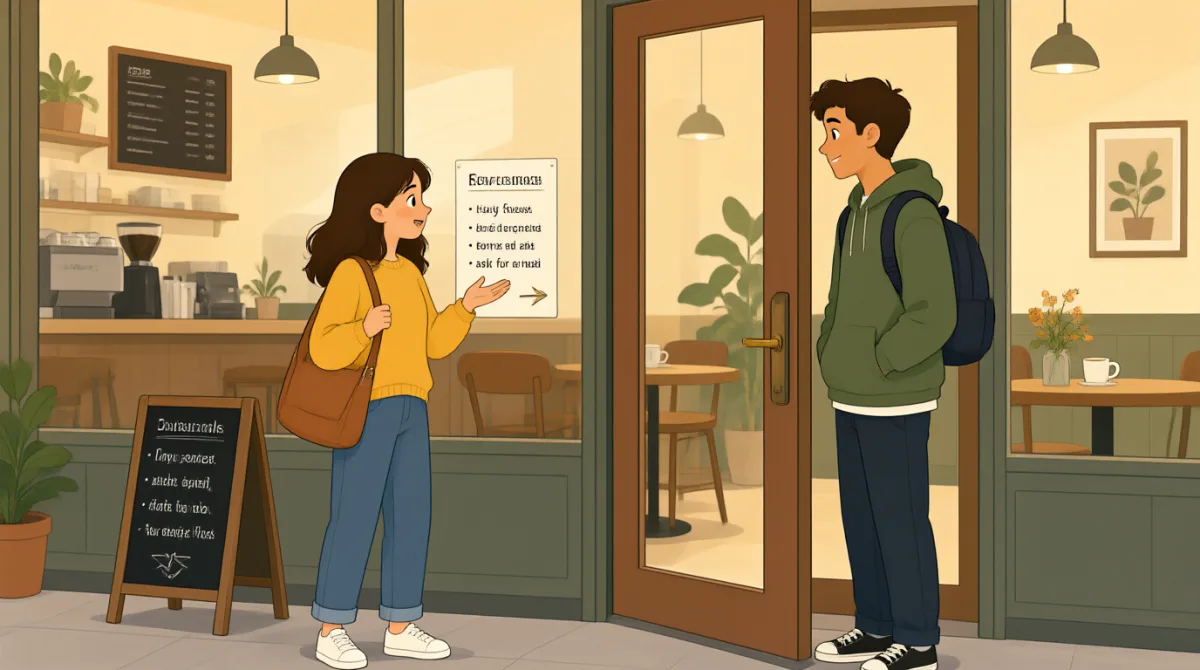

Hey, Jack, look at that sign in the café window. They’re hiring part-time staff.
ねえ、ジャック、カフェの窓の貼り紙見て。アルバイトを募集してるよ。

Oh, nice. You were looking for a job, weren’t you? What does the sign say?
お、いいね。仕事探してたよね?貼り紙には何て書いてあるの?
It says they need a café assistant, and there’s a number to call. I wonder what the hours are.
カフェのアシスタントが必要だって。電話番号も載ってるよ。勤務時間はどうなんだろう。
You could go in and ask. It’s probably easier than trying to get all the details over the phone.
中に入って聞いてみたら?電話で全部聞き出そうとするより、そのほうがたぶん簡単だよ。
That’s true. I’m a little nervous, though. I’ve never asked about a job in person before.
そうだね。でもちょっと緊張するな。直接仕事のことを聞いたことがないんだ。
Don’t overthink it. Just say you saw the sign and ask if they’re still hiring.
考えすぎないで。貼り紙を見たって伝えて、まだ募集してるか聞けばいいよ。
Good point. I can also ask about the main duties and whether they’re flexible with shifts.
そうだね。主な仕事内容と、シフトの融通が利くかも聞けるね。
Exactly. You’ve got nothing to lose, and you might find a job that fits your schedule.
その通り。聞いてみて損はないし、自分の予定に合う仕事が見つかるかもしれないよ。
All right, I’ll go in and ask. Wish me luck!
よし、中に入って聞いてみる。応援しててね!
Good luck! I’ll wait right here and save you a seat afterward.
頑張って!ここで待ってるから、戻ってきたら席を取っておくね。
語彙8
- part-time staffアルバイトスタッフ
Employees who work fewer hours than full-time employees. Here, the café is looking for people to work part-time.
フルタイムの従業員より短い時間働く人のことです。ここでは、カフェがアルバイトとして働く人を募集しています。
- get all the details詳しいことをすべて聞き出す
Find out all the important information about something. You can use this phrase when asking about a job, service, or plan.
何かについて大切な情報をすべて知ることです。仕事やサービス、計画について尋ねるときに使えます。
- in person直接、対面で
Face-to-face, rather than by phone or online. Here, Emma is thinking about asking the café staff directly.
電話やオンラインではなく、顔を合わせて行うことです。ここでは、エマはカフェのスタッフに直接尋ねようと考えています。
- Don’t overthink it.考えすぎないで。
A casual way to tell someone not to worry too much or make something seem more complicated than it is.
心配しすぎたり、物事を必要以上に複雑に考えたりしないよう、気軽に伝える表現です。
- main duties主な仕事内容
The most important tasks or responsibilities of a job. You can ask about the main duties before deciding whether to apply.
仕事で最も重要な作業や責任のことです。応募するか決める前に、主な仕事内容について尋ねられます。
- flexible with shiftsシフトの融通が利く
Willing to adjust work hours or schedules. This phrase is useful when asking whether a job can fit around your other commitments.
勤務時間や予定を調整してくれることです。ほかの予定に合わせられる仕事かどうか尋ねるときに便利な表現です。
- You’ve got nothing to lose.やってみても損はないよ。
A way to encourage someone to try something because there is little or no risk. Here, Jack is encouraging Emma to ask about the job.
リスクがほとんどないので、やってみるよう相手を励ます表現です。ここでは、ジャックがエマに仕事について聞いてみるよう勧めています。
- fits your schedule予定に合う
Works well with the times you are available. You can use this phrase to talk about a job, class, or activity that suits your routine.
自分が空いている時間とうまく合うことです。生活の予定に合った仕事や授業、活動について話すときに使えます。
重要な文8
- 1
You were looking for a job, weren’t you?
仕事を探してたよね?
This is a natural way to check something you think you already know. Use “weren’t you?” to confirm information about someone.
すでに知っていると思うことを自然に確認する言い方です。“weren’t you?” を付けると、相手について知っている情報を確かめられます。
- 2
I wonder what the hours are.
勤務時間はどうなんだろう。
This is a natural way to say you want to know something. You can reuse “I wonder what…” when asking indirectly about details.
何かを知りたいと思っていることを自然に表す文です。詳しいことを間接的に尋ねるときは、“I wonder what…” を使えます。
- 3
You could go in and ask.
中に入って聞いてみたら?
This is a simple way to suggest an action. Use “You could…” to offer someone an idea without sounding too forceful.
何かを提案するシンプルな言い方です。“You could…” を使うと、強く押しつける感じを出さずにアイデアを伝えられます。
- 4
I’m a little nervous, though.
でもちょっと緊張するな。
This sentence shares a feeling while “though” adds a contrast to what was said before. You can use it to explain a concern in a conversation.
自分の気持ちを伝えながら、“though” で前に話したこととの対比を加えています。会話の中で心配なことを説明するときに使えます。
- 5
Just say you saw the sign and ask if they’re still hiring.
貼り紙を見たって伝えて、まだ募集してるか聞けばいいよ。
This gives clear, practical advice for starting a conversation about a job. The structure “ask if…” is useful when checking whether something is true.
仕事について話し始めるときの、具体的で実用的なアドバイスです。“ask if…” は、何かが事実かどうかを確かめるときに便利です。
- 6
I can also ask about the main duties and whether they’re flexible with shifts.
主な仕事内容と、シフトの融通が利くかも聞けるね。
This sentence explains what someone plans to ask about. Use “ask about…” for topics and “whether…” to introduce a yes-or-no question.
何について尋ねるつもりなのかを説明する文です。話題には “ask about…” を使い、はい・いいえで答えられる質問を導入するときは “whether…” を使います。
- 7
You’ve got nothing to lose, and you might find a job that fits your schedule.
やってみても損はないし、自分の予定に合う仕事が見つかるかもしれないよ。
This encourages someone to try an opportunity and explains a possible benefit. You can reuse “You’ve got nothing to lose” when urging someone to take a low-risk step.
相手に挑戦を勧め、その結果得られるかもしれないことも伝える表現です。リスクの低い一歩を踏み出すよう促すときに、“You’ve got nothing to lose” を使えます。
- 8
I’ll wait right here and save you a seat afterward.
ここで待ってるから、戻ってきたら席を取っておくね。
This is a friendly way to offer support while someone does something. “Save you a seat” means keep a place for someone to sit.
相手が何かをしている間、親しみを込めて支えると伝える表現です。“Save you a seat” は、相手が座れる場所を取っておくという意味です。