Seeing the Sign in the Window
เห็นป้ายประกาศที่หน้าต่าง
Emma spots a part-time job sign in a café window and talks with her friend Jack about whether to apply. She decides to go inside and ask for more information.
เอ็มมาเห็นป้ายรับสมัครงานพาร์ตไทม์ที่หน้าต่างร้านกาแฟ แล้วคุยกับแจ็กเพื่อนของเธอว่าจะสมัครดีไหม เธอตัดสินใจเข้าไปถามรายละเอียดเพิ่มเติม
บทสนทนา10
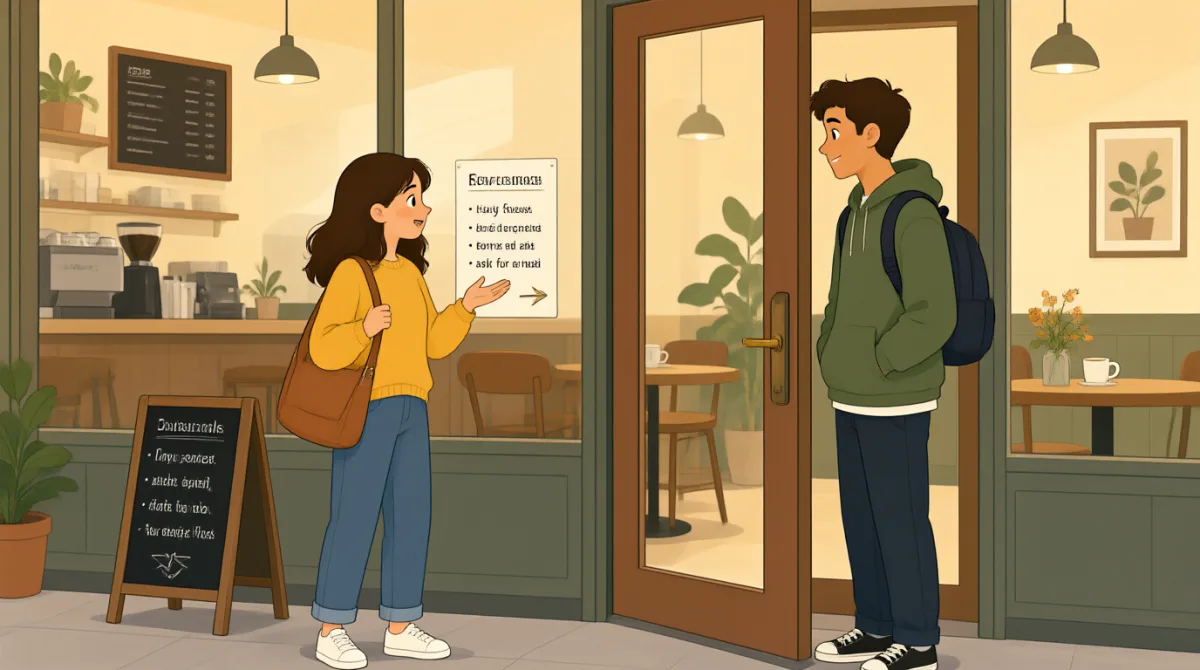

Hey, Jack, look at that sign in the café window. They’re hiring part-time staff.
เฮ้ แจ็ก ดูป้ายที่หน้าต่างร้านกาแฟนั่นสิ เขากำลังรับพนักงานพาร์ตไทม์อยู่

Oh, nice. You were looking for a job, weren’t you? What does the sign say?
อ๋อ ดีเลย เธอกำลังหางานอยู่ไม่ใช่เหรอ ป้ายเขียนว่ายังไงบ้าง
It says they need a café assistant, and there’s a number to call. I wonder what the hours are.
เขียนว่าต้องการผู้ช่วยร้านกาแฟ แล้วก็มีเบอร์ให้โทรด้วย ฉันสงสัยว่าต้องทำงานกี่ชั่วโมงนะ
You could go in and ask. It’s probably easier than trying to get all the details over the phone.
เธอเข้าไปถามก็ได้นะ น่าจะง่ายกว่าพยายามถามรายละเอียดทั้งหมดทางโทรศัพท์
That’s true. I’m a little nervous, though. I’ve never asked about a job in person before.
ก็จริงนะ แต่ฉันประหม่านิดหน่อย ไม่เคยไปถามเรื่องงานต่อหน้าแบบนี้มาก่อนเลย
Don’t overthink it. Just say you saw the sign and ask if they’re still hiring.
อย่าคิดมากเลย แค่บอกว่าเห็นป้าย แล้วถามว่ายังรับคนอยู่ไหม
Good point. I can also ask about the main duties and whether they’re flexible with shifts.
จริงด้วย ฉันถามเรื่องหน้าที่หลัก ๆ แล้วก็ถามได้ด้วยว่าปรับกะงานได้ยืดหยุ่นไหม
Exactly. You’ve got nothing to lose, and you might find a job that fits your schedule.
ใช่เลย เธอไม่มีอะไรจะเสีย แถมอาจได้งานที่เข้ากับตารางเวลาของเธอก็ได้นะ
All right, I’ll go in and ask. Wish me luck!
โอเค ฉันจะเข้าไปถามแล้วล่ะ ขอให้โชคดีด้วยนะ!
Good luck! I’ll wait right here and save you a seat afterward.
โชคดีนะ! ฉันจะรอตรงนี้ แล้วก็จองที่นั่งให้เธอหลังจากนั้น
คำศัพท์8
- part-time staffพนักงานพาร์ตไทม์
Employees who work fewer hours than full-time employees. Here, the café is looking for people to work part-time.
พนักงานที่ทำงานน้อยกว่าพนักงานเต็มเวลา ในที่นี้ ร้านกาแฟกำลังหาคนมาทำงานพาร์ตไทม์
- get all the detailsถามรายละเอียดทั้งหมด
Find out all the important information about something. You can use this phrase when asking about a job, service, or plan.
หาข้อมูลสำคัญทั้งหมดเกี่ยวกับบางสิ่ง วลีนี้ใช้ได้เวลาถามเรื่องงาน บริการ หรือแผนต่าง ๆ
- in personต่อหน้า
Face-to-face, rather than by phone or online. Here, Emma is thinking about asking the café staff directly.
พูดคุยกันแบบเห็นหน้ากัน ไม่ใช่ทางโทรศัพท์หรือทางออนไลน์ ในที่นี้ เอ็มมากำลังคิดว่าจะไปถามพนักงานร้านกาแฟโดยตรง
- Don’t overthink it.อย่าคิดมาก
A casual way to tell someone not to worry too much or make something seem more complicated than it is.
เป็นวิธีพูดแบบสบาย ๆ เพื่อบอกใครสักคนว่าไม่ต้องกังวลมาก หรือทำให้เรื่องดูซับซ้อนเกินจริง
- main dutiesหน้าที่หลัก
The most important tasks or responsibilities of a job. You can ask about the main duties before deciding whether to apply.
งานหรือความรับผิดชอบที่สำคัญที่สุดของตำแหน่งงานนั้น คุณถามถึงหน้าที่หลักได้ก่อนตัดสินใจสมัคร
- flexible with shiftsปรับกะงานได้ยืดหยุ่น
Willing to adjust work hours or schedules. This phrase is useful when asking whether a job can fit around your other commitments.
ยินดีปรับชั่วโมงหรือเวลาทำงาน วลีนี้มีประโยชน์เวลาถามว่างานนั้นปรับให้เข้ากับภาระหน้าที่อื่น ๆ ของคุณได้ไหม
- You’ve got nothing to lose.เธอไม่มีอะไรจะเสีย
A way to encourage someone to try something because there is little or no risk. Here, Jack is encouraging Emma to ask about the job.
เป็นคำพูดให้กำลังใจใครสักคนให้ลองทำบางอย่าง เพราะมีความเสี่ยงน้อยหรือแทบไม่มีเลย ในที่นี้ แจ็กกำลังให้กำลังใจเอ็มมาให้ลองถามเรื่องงาน
- fits your scheduleเข้ากับตารางเวลาของคุณ
Works well with the times you are available. You can use this phrase to talk about a job, class, or activity that suits your routine.
เหมาะกับช่วงเวลาที่คุณว่าง วลีนี้ใช้พูดถึงงาน ชั้นเรียน หรือกิจกรรมที่เข้ากับกิจวัตรของคุณได้
ประโยคสำคัญ8
- 1
You were looking for a job, weren’t you?
เธอกำลังหางานอยู่ไม่ใช่เหรอ
This is a natural way to check something you think you already know. Use “weren’t you?” to confirm information about someone.
นี่เป็นวิธีถามยืนยันอย่างเป็นธรรมชาติในเรื่องที่คุณคิดว่ารู้อยู่แล้ว ใช้ “weren’t you?” เพื่อยืนยันข้อมูลเกี่ยวกับใครสักคน
- 2
I wonder what the hours are.
ฉันสงสัยว่าต้องทำงานกี่ชั่วโมงนะ
This is a natural way to say you want to know something. You can reuse “I wonder what…” when asking indirectly about details.
นี่เป็นวิธีพูดอย่างเป็นธรรมชาติว่าคุณอยากรู้อะไรบางอย่าง คุณนำ “I wonder what…” ไปใช้ถามรายละเอียดทางอ้อมได้อีก
- 3
You could go in and ask.
เธอเข้าไปถามก็ได้นะ
This is a simple way to suggest an action. Use “You could…” to offer someone an idea without sounding too forceful.
นี่เป็นวิธีเสนอให้ทำอะไรสักอย่างแบบง่าย ๆ ใช้ “You could…” เพื่อเสนอความคิดให้ใครสักคนโดยไม่ฟังดูบังคับเกินไป
- 4
I’m a little nervous, though.
แต่ฉันประหม่านิดหน่อยนะ
This sentence shares a feeling while “though” adds a contrast to what was said before. You can use it to explain a concern in a conversation.
ประโยคนี้บอกความรู้สึก ส่วน “though” ใช้เพิ่มความขัดแย้งกับสิ่งที่พูดไปก่อนหน้า คุณใช้คำนี้อธิบายความกังวลระหว่างสนทนาได้
- 5
Just say you saw the sign and ask if they’re still hiring.
แค่บอกว่าเห็นป้าย แล้วถามว่ายังรับคนอยู่ไหม
This gives clear, practical advice for starting a conversation about a job. The structure “ask if…” is useful when checking whether something is true.
นี่เป็นคำแนะนำที่ชัดเจนและนำไปใช้ได้จริงสำหรับเริ่มคุยเรื่องงาน โครงสร้าง “ask if…” มีประโยชน์เมื่อต้องการถามว่าอะไรเป็นจริงหรือไม่
- 6
I can also ask about the main duties and whether they’re flexible with shifts.
ฉันถามเรื่องหน้าที่หลัก ๆ แล้วก็ถามได้ด้วยว่าปรับกะงานได้ยืดหยุ่นไหม
This sentence explains what someone plans to ask about. Use “ask about…” for topics and “whether…” to introduce a yes-or-no question.
ประโยคนี้บอกว่าใครสักคนวางแผนจะถามเรื่องอะไร ใช้ “ask about…” สำหรับหัวข้อที่ต้องการถาม และใช้ “whether…” เพื่อเกริ่นคำถามที่มีคำตอบว่าใช่หรือไม่
- 7
You’ve got nothing to lose, and you might find a job that fits your schedule.
เธอไม่มีอะไรจะเสีย แถมอาจได้งานที่เข้ากับตารางเวลาของเธอก็ได้นะ
This encourages someone to try an opportunity and explains a possible benefit. You can reuse “You’ve got nothing to lose” when urging someone to take a low-risk step.
ประโยคนี้ให้กำลังใจใครสักคนให้ลองคว้าโอกาส พร้อมบอกถึงข้อดีที่อาจเกิดขึ้น คุณนำ “You’ve got nothing to lose” ไปใช้กระตุ้นให้ใครลองทำสิ่งที่มีความเสี่ยงน้อยได้
- 8
I’ll wait right here and save you a seat afterward.
ฉันจะรอตรงนี้ แล้วก็จองที่นั่งให้เธอหลังจากนั้น
This is a friendly way to offer support while someone does something. “Save you a seat” means keep a place for someone to sit.
นี่เป็นวิธีเป็นมิตรในการเสนอตัวช่วยระหว่างที่ใครสักคนกำลังทำอะไรบางอย่าง “Save you a seat” หมายถึงเก็บที่นั่งไว้ให้ใครสักคน