Your First Shift
初めてのシフト
On Emma’s first shift, Grace shows her the routine and introduces her to the café team. Emma learns the basics and gets ready to help customers.
エマの初出勤の日、グレースは仕事の流れを教え、カフェのスタッフを紹介します。エマは基本を学び、お客さんの対応をする準備をします。
会話9
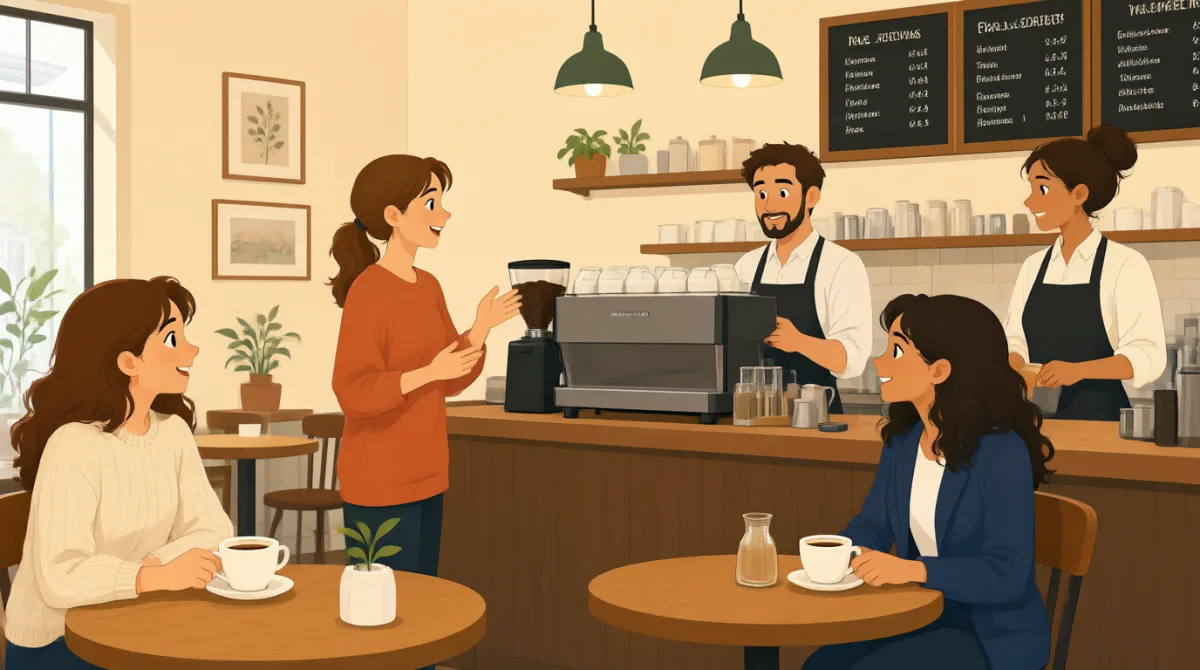

Welcome to your first shift, Emma. I’ll show you how we open the café, then Leo can walk you through the register.
初めてのシフトへようこそ、エマ。まずカフェの開店準備を教えるね。そのあとレオがレジの使い方を説明してくれるよ。

Thanks, Grace. I’m excited, but a little nervous. I’ve never worked in a café before, so I’ll probably have a few questions.
ありがとう、グレース。楽しみだけど、ちょっと緊張してる。カフェで働くのは初めてだから、たぶんいくつか質問すると思う。

No worries! We all start somewhere. First, tie your apron here, and keep your hair away from the food-prep area.
大丈夫!誰だって最初は初心者だよ。まずここでエプロンを結んで、髪が食品を扱う場所にかからないようにしてね。
Exactly. We wash our hands before handling food, and we wipe the counter between tasks. Clean as you go—it saves time later.
そのとおり。食べ物を扱う前には手を洗って、作業の合間にカウンターを拭くんだ。作業しながら片づけておくと、あとで時間を節約できるよ。
Got it. Where should I start if a customer comes in while I’m still learning the menu?
わかった。メニューを覚えている途中でお客さんが来たら、何から始めればいい?
Just smile and say hello. If you’re not sure about something, ask me or Grace instead of guessing. We’ve got your back.
笑顔で「こんにちは」って言えばいいよ。何か分からないことがあったら、当てずっぽうで答えずに僕かグレースに聞いてね。僕たちがついてるから。
That’s right. You can take simple orders today, and I’ll stay nearby. The register is easy once you get the hang of it.
そうだね。今日は簡単な注文なら受けていいよ。私も近くにいるからね。レジは慣れれば簡単だよ。
Thanks, both of you. I’ll take it one step at a time. That customer by the door looks ready to order!
二人ともありがとう。一つずつやっていくね。ドアのそばのお客さん、注文する準備ができてそう!
Go ahead, Emma. Greet them, listen carefully, and don’t rush. I’ll be right here if you need a hand.
行っておいで、エマ。挨拶して、よく聞いて、焦らなくていいよ。困ったらすぐそばにいるからね。
語彙8
- a little nervousa little nervous
Slightly worried or uneasy. Use it to describe how you feel in a new or unfamiliar situation.
少し心配だったり、落ち着かなかったりすることです。初めてのことや慣れない状況での気持ちを表すときに使います。
- We all start somewhere.We all start somewhere.
A reassuring way to say that everyone is inexperienced when they begin. Use it to encourage someone who is learning.
誰でも始めたばかりの頃は慣れていない、ということを伝える安心させる表現です。何かを学んでいる人を励ますときに使います。
- keep your hair away from the food-prep areakeep your hair away from the food-prep area
Make sure your hair does not come near the place where food is prepared. This is a practical hygiene instruction in a kitchen or café.
髪が食品を準備する場所にかからないようにすることです。キッチンやカフェで衛生面の注意を伝える実用的な表現です。
- Clean as you goClean as you go
Clean things while you work instead of leaving all the cleaning until later. This phrase is useful for describing an efficient routine.
あとでまとめて掃除するのではなく、作業しながら片づけるという意味です。効率よく作業する習慣について話すときに便利な表現です。
- instead of guessinginstead of guessing
Rather than trying to answer when you are unsure. Use this phrase to explain a safer or more reliable choice.
確信がないのに答えようとするのではなく、という意味です。より安全で確実な選択肢を伝えるときに使います。
- We’ve got your back.We’ve got your back.
We’re here to support and help you. This informal phrase reassures someone that they are not alone.
「私たちが力になるよ」「ちゃんと支えるよ」という意味です。相手は一人ではないと伝えて安心させる、くだけた表現です。
- get the hang of itget the hang of it
Learn how to do something through practice. Use it when a task feels difficult at first but becomes easier over time.
練習を重ねて、やり方を身につけることです。最初は難しく感じても、だんだん簡単になる作業について話すときに使います。
- take it one step at a timetake it one step at a time
Do things gradually, focusing on one part before moving to the next. This phrase can help someone stay calm when learning something new.
一度に全部やろうとせず、一つずつ順番に進めることです。新しいことを学ぶときに、落ち着いて取り組めるよう励ます表現です。
重要な文7
- 1
I’m excited, but a little nervous.
楽しみだけど、ちょっと緊張してる。
This sentence expresses two feelings at once. Use “I’m excited, but a little [feeling]” to describe mixed emotions about a new experience.
この文では、二つの気持ちを同時に表しています。“I’m excited, but a little [feeling]” の形を使うと、新しい経験について複雑な気持ちを伝えられます。
- 2
I’ve never worked in a café before, so I’ll probably have a few questions.
カフェで働くのは初めてだから、たぶんいくつか質問すると思う。
This is a natural way to explain that you are new to something and may need help. You can replace “worked in a café” with another activity or situation.
何かを始めたばかりで、助けが必要かもしれないと伝える自然な言い方です。“worked in a café” の部分を、別の活動や状況に置き換えて使えます。
- 3
If you’re not sure about something, ask me or Grace instead of guessing.
何か分からないことがあったら、当てずっぽうで答えずに私かグレースに聞いてね。
This gives clear, supportive advice for handling uncertainty. Reuse “If you’re not sure about something, [action] instead of [less helpful action].”
分からないことがあるときの対応について、分かりやすく思いやりのある助言をする表現です。“If you’re not sure about something, [action] instead of [less helpful action].” の形で応用できます。
- 4
We’ve got your back.
僕たちがついてるから。
This informal phrase lets someone know you will support them. It works well when reassuring a new colleague or friend.
相手を支えるつもりだと伝えるくだけた表現です。新しい同僚や友達を安心させるときにぴったりです。
- 5
The register is easy once you get the hang of it.
レジは慣れれば簡単だよ。
This sentence reassures someone that a task becomes easier with practice. Use “It’s easy once you get the hang of it” for other skills or routines.
練習すれば作業が簡単になると伝えて、相手を安心させる文です。ほかのスキルや作業についても、“It’s easy once you get the hang of it” と言えます。
- 6
I’ll take it one step at a time.
一つずつやっていくね。
This is a calm way to say you will handle a task gradually. Use it when you want to avoid feeling overwhelmed.
作業を順番に進めていくことを落ち着いて伝える言い方です。いっぱいいっぱいにならないようにしたいときに使えます。
- 7
Greet them, listen carefully, and don’t rush.
挨拶して、よく聞いて、焦らなくていいよ。
These are concise instructions for helping a customer. The sentence uses direct verbs to give a clear sequence of actions.
お客さんに対応するときの、簡潔で分かりやすい指示です。動詞をそのまま使って、行動の順番を伝えています。