Seeing the Sign in the Window
Al ver el cartel en la ventana
Emma spots a part-time job sign in a café window and talks with her friend Jack about whether to apply. She decides to go inside and ask for more information.
Emma ve un cartel de empleo a tiempo parcial en la ventana de una cafetería y habla con su amigo Jack sobre si debería postularse. Decide entrar a pedir más información.
Diálogo10
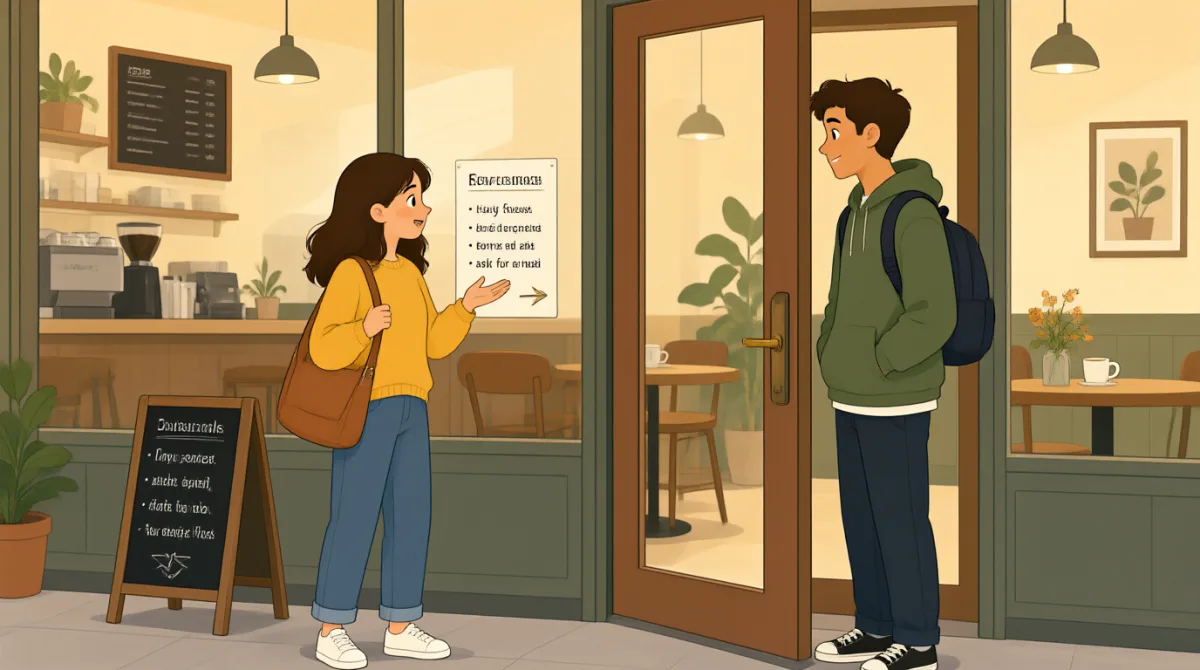

Hey, Jack, look at that sign in the café window. They’re hiring part-time staff.
Oye, Jack, mira ese cartel en la ventana de la cafetería. Están buscando personal a tiempo parcial.

Oh, nice. You were looking for a job, weren’t you? What does the sign say?
Ah, qué bien. Estabas buscando trabajo, ¿no? ¿Qué dice el cartel?
It says they need a café assistant, and there’s a number to call. I wonder what the hours are.
Dice que necesitan un ayudante para la cafetería y hay un número para llamar. Me pregunto cuál será el horario.
You could go in and ask. It’s probably easier than trying to get all the details over the phone.
Podrías entrar y preguntar. Seguro que es más fácil que intentar averiguar todos los detalles por teléfono.
That’s true. I’m a little nervous, though. I’ve never asked about a job in person before.
Es verdad. Aunque estoy un poco nerviosa. Nunca he preguntado en persona por un trabajo.
Don’t overthink it. Just say you saw the sign and ask if they’re still hiring.
No le des tantas vueltas. Solo di que viste el cartel y pregunta si todavía están contratando.
Good point. I can also ask about the main duties and whether they’re flexible with shifts.
Es cierto. También puedo preguntar cuáles serían las tareas principales y si son flexibles con los turnos.
Exactly. You’ve got nothing to lose, and you might find a job that fits your schedule.
Exactamente. No tienes nada que perder y quizá encuentres un trabajo que se ajuste a tu horario.
All right, I’ll go in and ask. Wish me luck!
Bueno, entraré a preguntar. ¡Deséame suerte!
Good luck! I’ll wait right here and save you a seat afterward.
¡Buena suerte! Te espero aquí y después te guardo un sitio.
Vocabulario8
- part-time staffpersonal a tiempo parcial
Employees who work fewer hours than full-time employees. Here, the café is looking for people to work part-time.
Empleados que trabajan menos horas que los empleados a tiempo completo. En este caso, la cafetería busca personas para trabajar a tiempo parcial.
- get all the detailsaveriguar todos los detalles
Find out all the important information about something. You can use this phrase when asking about a job, service, or plan.
Obtener toda la información importante sobre algo. Puedes usar esta expresión para preguntar por un trabajo, un servicio o un plan.
- in personen persona
Face-to-face, rather than by phone or online. Here, Emma is thinking about asking the café staff directly.
Cara a cara, en lugar de por teléfono o por internet. Aquí, Emma piensa en preguntarle directamente al personal de la cafetería.
- Don’t overthink it.No le des tantas vueltas.
A casual way to tell someone not to worry too much or make something seem more complicated than it is.
Una forma informal de decirle a alguien que no se preocupe tanto ni complique algo más de lo necesario.
- main dutiestareas principales
The most important tasks or responsibilities of a job. You can ask about the main duties before deciding whether to apply.
Las tareas o responsabilidades más importantes de un trabajo. Puedes preguntar cuáles son las tareas principales antes de decidir si postularte.
- flexible with shiftsser flexible con los turnos
Willing to adjust work hours or schedules. This phrase is useful when asking whether a job can fit around your other commitments.
Estar dispuesto a ajustar el horario o los turnos de trabajo. Esta expresión sirve para preguntar si un empleo se puede adaptar a tus otros compromisos.
- You’ve got nothing to lose.No tienes nada que perder.
A way to encourage someone to try something because there is little or no risk. Here, Jack is encouraging Emma to ask about the job.
Una forma de animar a alguien a probar algo porque implica poco o ningún riesgo. Aquí, Jack anima a Emma a preguntar por el trabajo.
- fits your scheduleajustarse a tu horario
Works well with the times you are available. You can use this phrase to talk about a job, class, or activity that suits your routine.
Encajar bien con los horarios en los que tienes disponibilidad. Puedes usar esta expresión para hablar de un trabajo, una clase o una actividad que se adapte a tu rutina.
Frases clave8
- 1
You were looking for a job, weren’t you?
Estabas buscando trabajo, ¿no?
This is a natural way to check something you think you already know. Use “weren’t you?” to confirm information about someone.
Esta es una forma natural de confirmar algo que crees saber. Usa “weren’t you?” para confirmar información sobre alguien.
- 2
I wonder what the hours are.
Me pregunto cuál será el horario.
This is a natural way to say you want to know something. You can reuse “I wonder what…” when asking indirectly about details.
Esta es una forma natural de decir que quieres saber algo. Puedes reutilizar “I wonder what…” para preguntar indirectamente por algunos detalles.
- 3
You could go in and ask.
Podrías entrar y preguntar.
This is a simple way to suggest an action. Use “You could…” to offer someone an idea without sounding too forceful.
Esta es una forma sencilla de sugerir algo. Usa “You could…” para proponer una idea sin sonar demasiado insistente.
- 4
I’m a little nervous, though.
Aunque estoy un poco nerviosa.
This sentence shares a feeling while “though” adds a contrast to what was said before. You can use it to explain a concern in a conversation.
Esta frase expresa un sentimiento y “though” añade un contraste con lo que se dijo antes. Puedes usarla para explicar una preocupación durante una conversación.
- 5
Just say you saw the sign and ask if they’re still hiring.
Solo di que viste el cartel y pregunta si todavía están contratando.
This gives clear, practical advice for starting a conversation about a job. The structure “ask if…” is useful when checking whether something is true.
Este es un consejo claro y práctico para iniciar una conversación sobre un trabajo. La estructura “ask if…” sirve para averiguar si algo es cierto.
- 6
I can also ask about the main duties and whether they’re flexible with shifts.
También puedo preguntar cuáles serían las tareas principales y si son flexibles con los turnos.
This sentence explains what someone plans to ask about. Use “ask about…” for topics and “whether…” to introduce a yes-or-no question.
Esta frase explica qué piensa preguntar alguien. Usa “ask about…” para hablar de temas y “whether…” para introducir una pregunta que se responde con sí o no.
- 7
You’ve got nothing to lose, and you might find a job that fits your schedule.
No tienes nada que perder y quizá encuentres un trabajo que se ajuste a tu horario.
This encourages someone to try an opportunity and explains a possible benefit. You can reuse “You’ve got nothing to lose” when urging someone to take a low-risk step.
Esta frase anima a alguien a aprovechar una oportunidad y explica un posible beneficio. Puedes reutilizar “You’ve got nothing to lose” para animar a alguien a dar un paso que implica poco riesgo.
- 8
I’ll wait right here and save you a seat afterward.
Te espero aquí y después te guardo un sitio.
This is a friendly way to offer support while someone does something. “Save you a seat” means keep a place for someone to sit.
Esta es una forma amistosa de ofrecer apoyo mientras alguien hace algo. “Save you a seat” significa reservarle un sitio a alguien para que se siente.