Seeing the Sign in the Window
Emma spots a part-time job sign in a café window and talks with her friend Jack about whether to apply. She decides to go inside and ask for more information.
Dialogue10
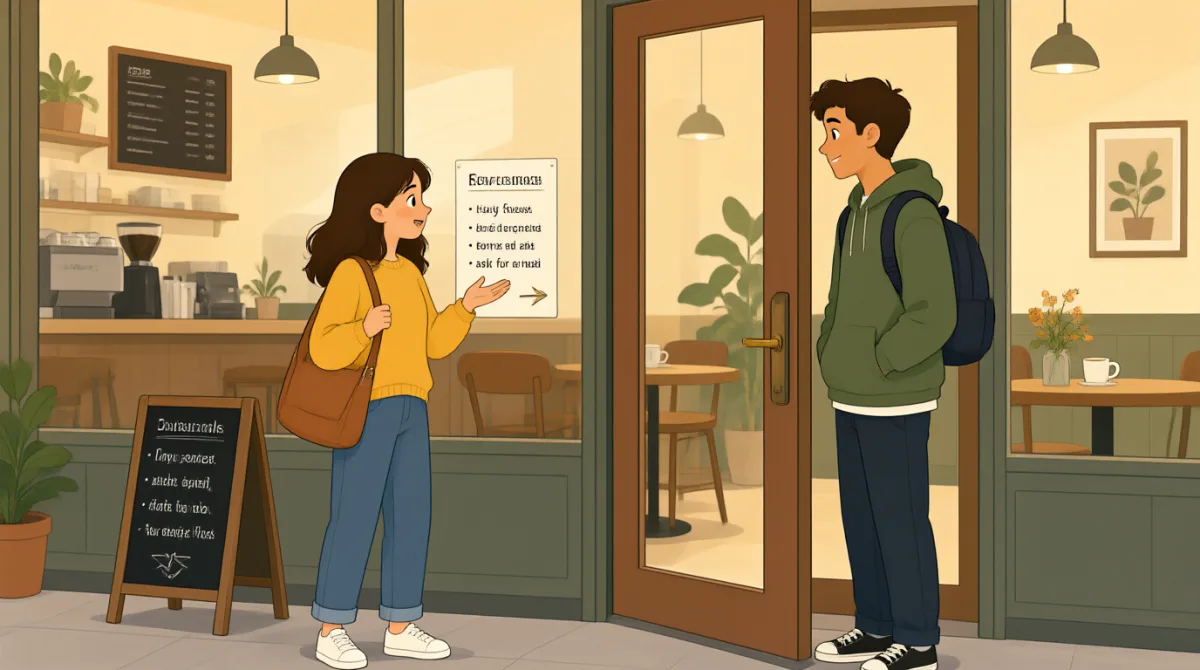

Hey, Jack, look at that sign in the café window. They’re hiring part-time staff.

Oh, nice. You were looking for a job, weren’t you? What does the sign say?
It says they need a café assistant, and there’s a number to call. I wonder what the hours are.
You could go in and ask. It’s probably easier than trying to get all the details over the phone.
That’s true. I’m a little nervous, though. I’ve never asked about a job in person before.
Don’t overthink it. Just say you saw the sign and ask if they’re still hiring.
Good point. I can also ask about the main duties and whether they’re flexible with shifts.
Exactly. You’ve got nothing to lose, and you might find a job that fits your schedule.
All right, I’ll go in and ask. Wish me luck!
Good luck! I’ll wait right here and save you a seat afterward.
Vocabulary8
- part-time staff
Employees who work fewer hours than full-time employees. Here, the café is looking for people to work part-time.
- get all the details
Find out all the important information about something. You can use this phrase when asking about a job, service, or plan.
- in person
Face-to-face, rather than by phone or online. Here, Emma is thinking about asking the café staff directly.
- Don’t overthink it.
A casual way to tell someone not to worry too much or make something seem more complicated than it is.
- main duties
The most important tasks or responsibilities of a job. You can ask about the main duties before deciding whether to apply.
- flexible with shifts
Willing to adjust work hours or schedules. This phrase is useful when asking whether a job can fit around your other commitments.
- You’ve got nothing to lose.
A way to encourage someone to try something because there is little or no risk. Here, Jack is encouraging Emma to ask about the job.
- fits your schedule
Works well with the times you are available. You can use this phrase to talk about a job, class, or activity that suits your routine.
Key Sentences8
- 1
You were looking for a job, weren’t you?
This is a natural way to check something you think you already know. Use “weren’t you?” to confirm information about someone.
- 2
I wonder what the hours are.
This is a natural way to say you want to know something. You can reuse “I wonder what…” when asking indirectly about details.
- 3
You could go in and ask.
This is a simple way to suggest an action. Use “You could…” to offer someone an idea without sounding too forceful.
- 4
I’m a little nervous, though.
This sentence shares a feeling while “though” adds a contrast to what was said before. You can use it to explain a concern in a conversation.
- 5
Just say you saw the sign and ask if they’re still hiring.
This gives clear, practical advice for starting a conversation about a job. The structure “ask if…” is useful when checking whether something is true.
- 6
I can also ask about the main duties and whether they’re flexible with shifts.
This sentence explains what someone plans to ask about. Use “ask about…” for topics and “whether…” to introduce a yes-or-no question.
- 7
You’ve got nothing to lose, and you might find a job that fits your schedule.
This encourages someone to try an opportunity and explains a possible benefit. You can reuse “You’ve got nothing to lose” when urging someone to take a low-risk step.
- 8
I’ll wait right here and save you a seat afterward.
This is a friendly way to offer support while someone does something. “Save you a seat” means keep a place for someone to sit.