Seeing the Sign in the Window
खिड़की में लगा नौकरी का इश्तहार देखना
Emma spots a part-time job sign in a café window and talks with her friend Jack about whether to apply. She decides to go inside and ask for more information.
एमा कैफ़े की खिड़की में अंशकालिक नौकरी का इश्तहार देखती है और अपने दोस्त जैक से आवेदन करने के बारे में बात करती है। वह अंदर जाकर और जानकारी पूछने का फ़ैसला करती है।
संवाद10
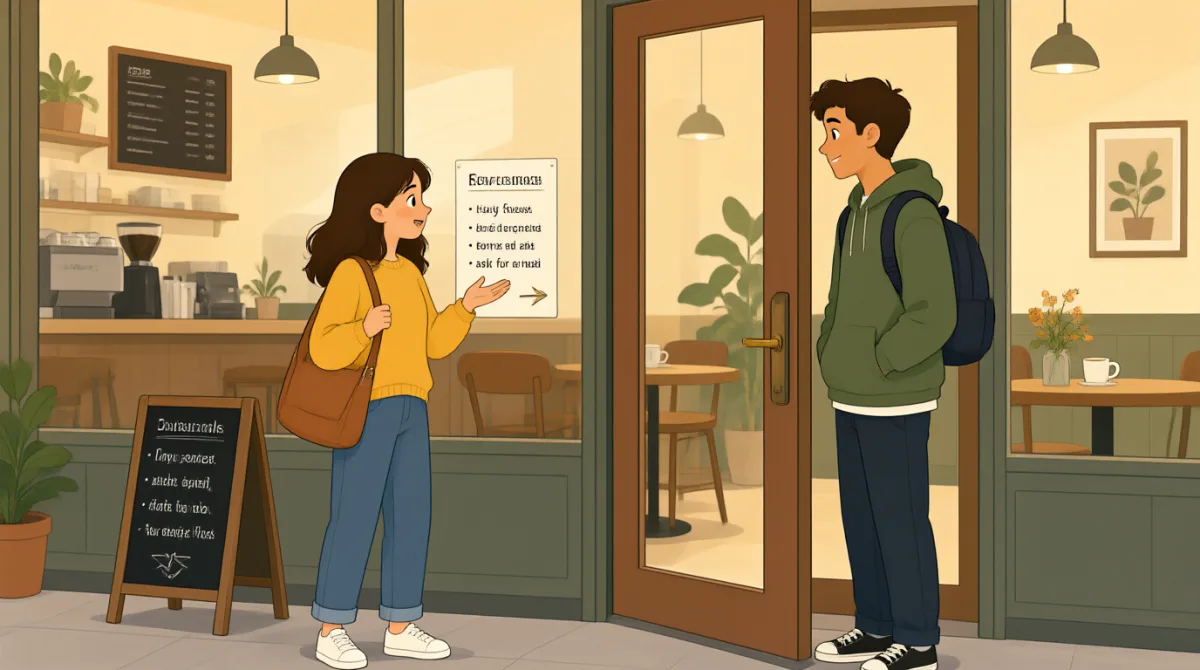

Hey, Jack, look at that sign in the café window. They’re hiring part-time staff.
अरे जैक, कैफ़े की खिड़की में उस इश्तहार को देख। उन्हें अंशकालिक कर्मचारी चाहिए।

Oh, nice. You were looking for a job, weren’t you? What does the sign say?
अच्छा, बढ़िया। तुम नौकरी ढूँढ़ रही थी, है न? इश्तहार में क्या लिखा है?
It says they need a café assistant, and there’s a number to call. I wonder what the hours are.
लिखा है कि उन्हें कैफ़े में काम करने के लिए एक सहायक चाहिए, और फ़ोन करने के लिए एक नंबर भी दिया है। पता नहीं काम के घंटे क्या होंगे।
You could go in and ask. It’s probably easier than trying to get all the details over the phone.
तुम अंदर जाकर पूछ सकती हो। फ़ोन पर सारी जानकारी लेने की कोशिश करने से शायद यह आसान होगा।
That’s true. I’m a little nervous, though. I’ve never asked about a job in person before.
सही कह रहे हो। लेकिन मैं थोड़ी घबराई हुई हूँ। मैंने पहले कभी किसी नौकरी के बारे में आमने-सामने जाकर नहीं पूछा।
Don’t overthink it. Just say you saw the sign and ask if they’re still hiring.
ज़्यादा मत सोचो। बस कह देना कि तुमने इश्तहार देखा है और पूछ लेना कि क्या वे अभी भी लोगों को काम पर रख रहे हैं।
Good point. I can also ask about the main duties and whether they’re flexible with shifts.
अच्छी बात है। मैं काम की मुख्य ज़िम्मेदारियों के बारे में भी पूछ सकती हूँ और यह भी कि क्या वे काम की शिफ़्ट में बदलाव कर सकते हैं।
Exactly. You’ve got nothing to lose, and you might find a job that fits your schedule.
बिल्कुल। तुम्हारा कुछ नहीं बिगड़ेगा, और हो सकता है तुम्हें ऐसी नौकरी मिल जाए जो तुम्हारे समय के हिसाब से ठीक बैठे।
All right, I’ll go in and ask. Wish me luck!
ठीक है, मैं अंदर जाकर पूछती हूँ। मेरे लिए शुभकामना करना!
Good luck! I’ll wait right here and save you a seat afterward.
शुभकामनाएँ! मैं यहीं इंतज़ार करूँगा और बाद में तुम्हारे लिए एक सीट बचाकर रखूँगा।
शब्दावली8
- part-time staffअंशकालिक कर्मचारी
Employees who work fewer hours than full-time employees. Here, the café is looking for people to work part-time.
ऐसे कर्मचारी जो पूर्णकालिक कर्मचारियों से कम घंटे काम करते हैं। यहाँ कैफ़े ऐसे लोगों को ढूँढ़ रहा है जो अंशकालिक काम करें।
- get all the detailsसारी जानकारी लेना
Find out all the important information about something. You can use this phrase when asking about a job, service, or plan.
किसी चीज़ के बारे में सभी ज़रूरी बातें पता करना। नौकरी, सेवा या योजना के बारे में पूछते समय आप इस वाक्यांश का इस्तेमाल कर सकते हैं।
- in personआमने-सामने
Face-to-face, rather than by phone or online. Here, Emma is thinking about asking the café staff directly.
फ़ोन या ऑनलाइन के बजाय सीधे मिलकर। यहाँ एमा कैफ़े के कर्मचारियों से सीधे पूछने के बारे में सोच रही है।
- Don’t overthink it.ज़्यादा मत सोचो।
A casual way to tell someone not to worry too much or make something seem more complicated than it is.
किसी से यह कहने का अनौपचारिक तरीका कि वह ज़्यादा चिंता न करे या किसी बात को ज़रूरत से ज़्यादा पेचीदा न बनाए।
- main dutiesमुख्य ज़िम्मेदारियाँ
The most important tasks or responsibilities of a job. You can ask about the main duties before deciding whether to apply.
किसी नौकरी के सबसे ज़रूरी काम या ज़िम्मेदारियाँ। आवेदन करने का फ़ैसला लेने से पहले आप मुख्य ज़िम्मेदारियों के बारे में पूछ सकते हैं।
- flexible with shiftsशिफ़्ट के समय में बदलाव करने को तैयार
Willing to adjust work hours or schedules. This phrase is useful when asking whether a job can fit around your other commitments.
काम के घंटों या समय-सारिणी में बदलाव करने को तैयार। यह पूछने के लिए यह वाक्यांश उपयोगी है कि क्या नौकरी आपके दूसरे कामों के समय के अनुसार हो सकती है।
- You’ve got nothing to lose.तुम्हारा कुछ नहीं बिगड़ेगा।
A way to encourage someone to try something because there is little or no risk. Here, Jack is encouraging Emma to ask about the job.
किसी को कुछ आज़माने के लिए प्रोत्साहित करने का यह एक तरीका है, क्योंकि इसमें बहुत कम या कोई जोखिम नहीं होता। यहाँ जैक एमा को नौकरी के बारे में पूछने के लिए प्रोत्साहित कर रहा है।
- fits your scheduleतुम्हारे समय के हिसाब से ठीक बैठना
Works well with the times you are available. You can use this phrase to talk about a job, class, or activity that suits your routine.
तुम्हारे उपलब्ध समय के साथ अच्छी तरह मेल खाना। अपनी दिनचर्या के अनुकूल नौकरी, कक्षा या गतिविधि के बारे में बात करते समय आप इस वाक्यांश का इस्तेमाल कर सकते हैं।
मुख्य वाक्य8
- 1
You were looking for a job, weren’t you?
तुम नौकरी ढूँढ़ रही थी, है न?
This is a natural way to check something you think you already know. Use “weren’t you?” to confirm information about someone.
जब आपको लगता है कि आपको कोई बात पहले से पता है, तो उसे पक्का करने का यह एक स्वाभाविक तरीका है। किसी के बारे में जानकारी की पुष्टि करने के लिए “weren’t you?” का इस्तेमाल करें।
- 2
I wonder what the hours are.
पता नहीं काम के घंटे क्या होंगे।
This is a natural way to say you want to know something. You can reuse “I wonder what…” when asking indirectly about details.
यह कहने का स्वाभाविक तरीका है कि आप कुछ जानना चाहते हैं। किसी जानकारी के बारे में अप्रत्यक्ष रूप से पूछते समय “I wonder what…” का दोबारा इस्तेमाल कर सकते हैं।
- 3
You could go in and ask.
तुम अंदर जाकर पूछ सकती हो।
This is a simple way to suggest an action. Use “You could…” to offer someone an idea without sounding too forceful.
किसी काम का सुझाव देने का यह एक आसान तरीका है। बिना ज़्यादा दबाव डाले किसी को सुझाव देने के लिए “You could…” का इस्तेमाल करें।
- 4
I’m a little nervous, though.
लेकिन मैं थोड़ी घबराई हुई हूँ।
This sentence shares a feeling while “though” adds a contrast to what was said before. You can use it to explain a concern in a conversation.
इस वाक्य में आप अपनी भावना बताते हैं, और “though” पहले कही गई बात के उलट एक बात जोड़ता है। बातचीत में अपनी चिंता बताने के लिए इसका इस्तेमाल कर सकते हैं।
- 5
Just say you saw the sign and ask if they’re still hiring.
बस कह देना कि तुमने इश्तहार देखा है और पूछ लेना कि क्या वे अभी भी लोगों को काम पर रख रहे हैं।
This gives clear, practical advice for starting a conversation about a job. The structure “ask if…” is useful when checking whether something is true.
यह नौकरी के बारे में बातचीत शुरू करने के लिए साफ़ और व्यावहारिक सलाह देता है। यह जानने के लिए कि कोई बात सच है या नहीं, “ask if…” वाली बनावट उपयोगी है।
- 6
I can also ask about the main duties and whether they’re flexible with shifts.
मैं काम की मुख्य ज़िम्मेदारियों के बारे में भी पूछ सकती हूँ और यह भी कि क्या वे शिफ़्ट के समय में बदलाव कर सकते हैं।
This sentence explains what someone plans to ask about. Use “ask about…” for topics and “whether…” to introduce a yes-or-no question.
इस वाक्य में बताया गया है कि कोई व्यक्ति किन बातों के बारे में पूछने की योजना बना रहा है। विषयों के बारे में पूछने के लिए “ask about…” और हाँ-या-नहीं वाले सवाल की शुरुआत करने के लिए “whether…” का इस्तेमाल करें।
- 7
You’ve got nothing to lose, and you might find a job that fits your schedule.
तुम्हारा कुछ नहीं बिगड़ेगा, और हो सकता है तुम्हें ऐसी नौकरी मिल जाए जो तुम्हारे समय के हिसाब से ठीक बैठे।
This encourages someone to try an opportunity and explains a possible benefit. You can reuse “You’ve got nothing to lose” when urging someone to take a low-risk step.
यह किसी को अवसर आज़माने के लिए प्रोत्साहित करता है और उसका एक संभावित फ़ायदा भी बताता है। किसी को कम जोखिम वाला कदम उठाने के लिए कहें, तो “You’ve got nothing to lose” का दोबारा इस्तेमाल कर सकते हैं।
- 8
I’ll wait right here and save you a seat afterward.
मैं यहीं इंतज़ार करूँगा और बाद में तुम्हारे लिए एक सीट बचाकर रखूँगा।
This is a friendly way to offer support while someone does something. “Save you a seat” means keep a place for someone to sit.
जब कोई कुछ कर रहा हो, तब उसे सहारा देने की पेशकश करने का यह एक दोस्ताना तरीका है। “Save you a seat” का मतलब है किसी के बैठने के लिए जगह रोककर रखना।