Hearing an Old Story
昔話を聞く
David tells Emma a funny story about his younger days. Emma asks questions and enjoys hearing about the past.
デイビッドが若い頃の面白い話をエマに聞かせる。エマは質問しながら、昔の話を楽しむ。
会話8
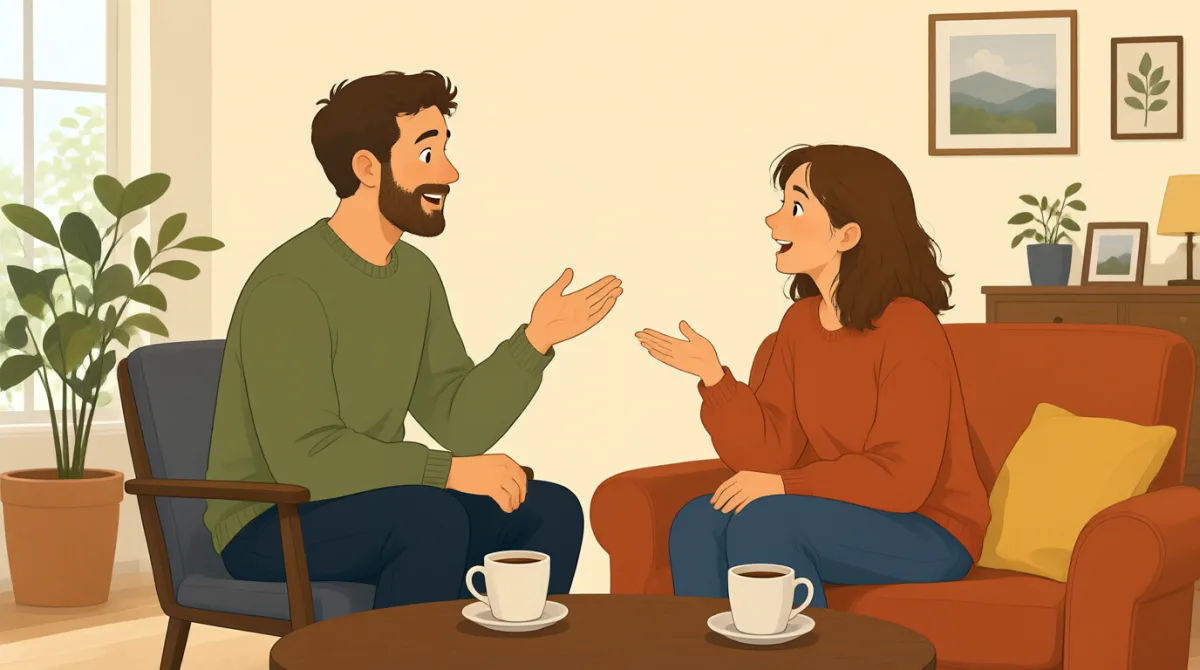

When I was your age, I tried to fix a radio without reading the instructions.
君くらいの年の頃、説明書を読まずにラジオを直そうとしたことがあるんだ。

Did you know how to fix radios back then?
その頃、ラジオの直し方を知ってたの?
Not at all. I took it apart, and then I couldn't put it back together.
全然。分解したんだけど、元に戻せなくなっちゃったんだ。
What did your father say when he saw it?
お父さん、それを見て何て言ったの?
He asked if I was building a new radio. I said, “I hope so!”
新しいラジオを作ってるのかって聞かれたよ。「そうだといいね!」って答えたんだ。
Did you ever get it working again?
結局、また動くようにできたの?
Yes, but only after my father showed me how to put it together.
うん。でも父さんに組み立て方を教えてもらってからね。
That’s funny! I bet you read the instructions next time.
面白いね!次はきっと説明書を読んだんでしょ。
語彙6
- your age君くらいの年
This means the age you are now. You can use it to compare someone’s life with your own past.
今のあなたと同じくらいの年齢、という意味です。自分の昔のことと、誰かの今の生活を比べるときに使えます。
- back thenその頃
This means at a time in the past. Use it when talking about what people knew or did before.
過去のある時期に、という意味です。昔の人が何を知っていたか、何をしていたかを話すときに使います。
- put it back together元に戻す
This means to join the pieces of something again. Use it after taking an object apart.
ばらばらになったものを、もう一度組み立てるという意味です。何かを分解した後に使えます。
- get it working againまた動くようにする
This means to make something work after it has stopped working. You can use it when talking about repairing a machine or device.
動かなくなったものを、再び動く状態にするという意味です。機械や装置の修理について話すときに使えます。
- showed me howやり方を教えてくれた
This means someone taught you how to do something by explaining or demonstrating it. Use it to describe learning a skill.
説明や実演を通して、誰かが何かのやり方を教えてくれたという意味です。技術や技能を学んだことを表すときに使えます。
- I betきっと〜だと思う
This is a casual way to say you are sure or think something is likely. You can use it to make a friendly guess.
確信していたり、そうなる可能性が高いと思ったりするときの、くだけた言い方です。親しみを込めた推測に使えます。
重要な文7
- 1
When I was your age, I tried to fix a radio without reading the instructions.
君くらいの年の頃、説明書を読まずにラジオを直そうとしたことがあるんだ。
Use this to begin a story about something you did when you were younger. You can replace “fix a radio” with another past activity.
若い頃にしたことについて話し始めるときに使えます。「fix a radio」の部分を、過去にした別のことに置き換えられます。
- 2
Did you know how to fix radios back then?
その頃、ラジオの直し方を知ってたの?
This is a useful question about someone’s past skills or knowledge. Replace “fix radios” with another skill or activity.
相手が昔、どんな技術や知識を持っていたかを尋ねるときに便利な質問です。「fix radios」を別の技能や活動に置き換えて使えます。
- 3
I took it apart, and then I couldn't put it back together.
分解したんだけど、元に戻せなくなっちゃったんだ。
This sentence describes trying something and having a problem afterward. Use it to tell a simple story about an object you tried to repair.
何かを試した後に問題が起きたことを説明する文です。修理しようとした物について、簡単な話をするときに使えます。
- 4
What did your father say when he saw it?
お父さん、それを見て何て言ったの?
Use this to ask what someone said after seeing something happen. Replace “your father” with another person.
何かが起きたのを見た後で、相手が何と言ったか尋ねるときに使えます。「your father」を別の人に置き換えられます。
- 5
Did you ever get it working again?
結局、また動くようにできたの?
This asks whether someone eventually made something work. You can use it to ask about a repair or problem.
相手が最終的に何かを動く状態にできたかどうかを尋ねます。修理や問題について聞くときに使えます。
- 6
Yes, but only after my father showed me how to put it together.
うん。でも父さんに組み立て方を教えてもらってからね。
Use “only after” to explain that something happened later, once another thing was done. You can replace the final action with another skill.
「only after」を使うと、別のことを済ませた後で初めて何かが起きた、と説明できます。最後の行動の部分は、別の技能に置き換えられます。
- 7
That’s funny! I bet you read the instructions next time.
面白いね!次はきっと説明書を読んだんでしょ。
This is a friendly response to a funny story, followed by a guess about what happened later. Use “I bet” to make a casual prediction.
面白い話に親しみを込めて反応し、その後に何が起きたかを推測する言い方です。「I bet」を使うと、くだけた予想を伝えられます。