Hearing an Old Story
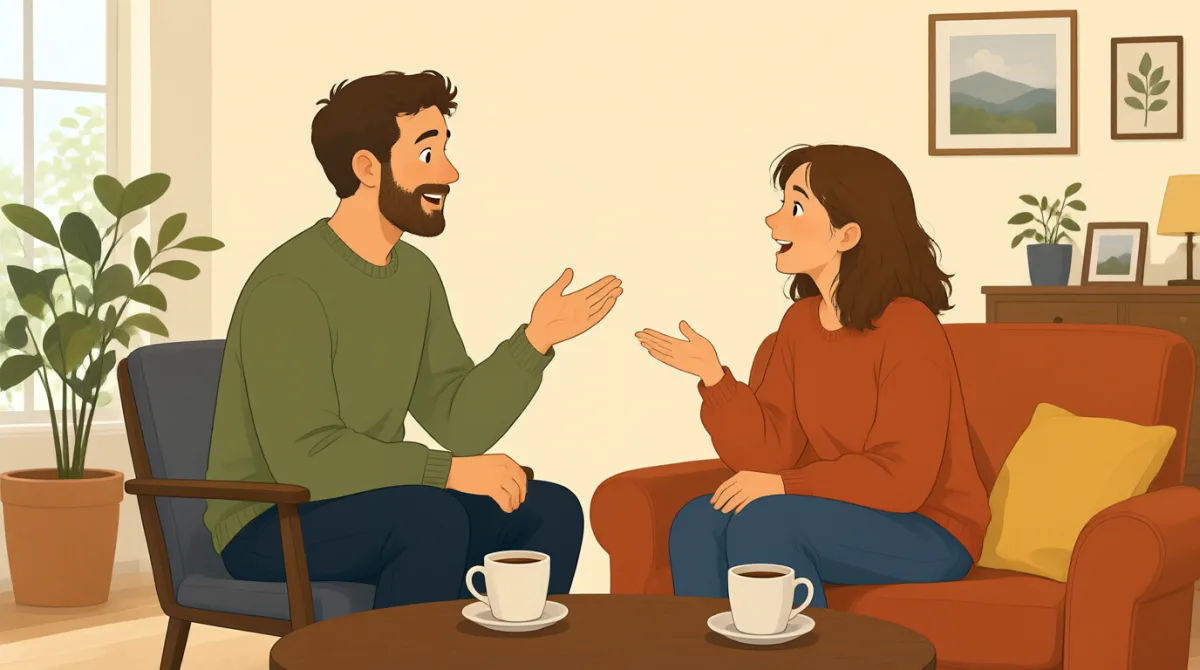
David tells Emma a funny story about his younger days. Emma asks questions and enjoys hearing about the past.
Dialogue8

When I was your age, I tried to fix a radio without reading the instructions.

Did you know how to fix radios back then?
Not at all. I took it apart, and then I couldn't put it back together.
What did your father say when he saw it?
He asked if I was building a new radio. I said, “I hope so!”
Did you ever get it working again?
Yes, but only after my father showed me how to put it together.
That’s funny! I bet you read the instructions next time.
Vocabulary6
- your age
This means the age you are now. You can use it to compare someone’s life with your own past.
- back then
This means at a time in the past. Use it when talking about what people knew or did before.
- put it back together
This means to join the pieces of something again. Use it after taking an object apart.
- get it working again
This means to make something work after it has stopped working. You can use it when talking about repairing a machine or device.
- showed me how
This means someone taught you how to do something by explaining or demonstrating it. Use it to describe learning a skill.
- I bet
This is a casual way to say you are sure or think something is likely. You can use it to make a friendly guess.
Key Sentences7
- 1
When I was your age, I tried to fix a radio without reading the instructions.
Use this to begin a story about something you did when you were younger. You can replace “fix a radio” with another past activity.
- 2
Did you know how to fix radios back then?
This is a useful question about someone’s past skills or knowledge. Replace “fix radios” with another skill or activity.
- 3
I took it apart, and then I couldn't put it back together.
This sentence describes trying something and having a problem afterward. Use it to tell a simple story about an object you tried to repair.
- 4
What did your father say when he saw it?
Use this to ask what someone said after seeing something happen. Replace “your father” with another person.
- 5
Did you ever get it working again?
This asks whether someone eventually made something work. You can use it to ask about a repair or problem.
- 6
Yes, but only after my father showed me how to put it together.
Use “only after” to explain that something happened later, once another thing was done. You can replace the final action with another skill.
- 7
That’s funny! I bet you read the instructions next time.
This is a friendly response to a funny story, followed by a guess about what happened later. Use “I bet” to make a casual prediction.