Asking About Their Health
健康について尋ねる
Emma asks how her grandparents have been feeling. They talk about a recent checkup and their daily walks.
エマは祖父母に最近の体調を尋ねます。最近の健康診断や、毎日の散歩について話します。
会話9
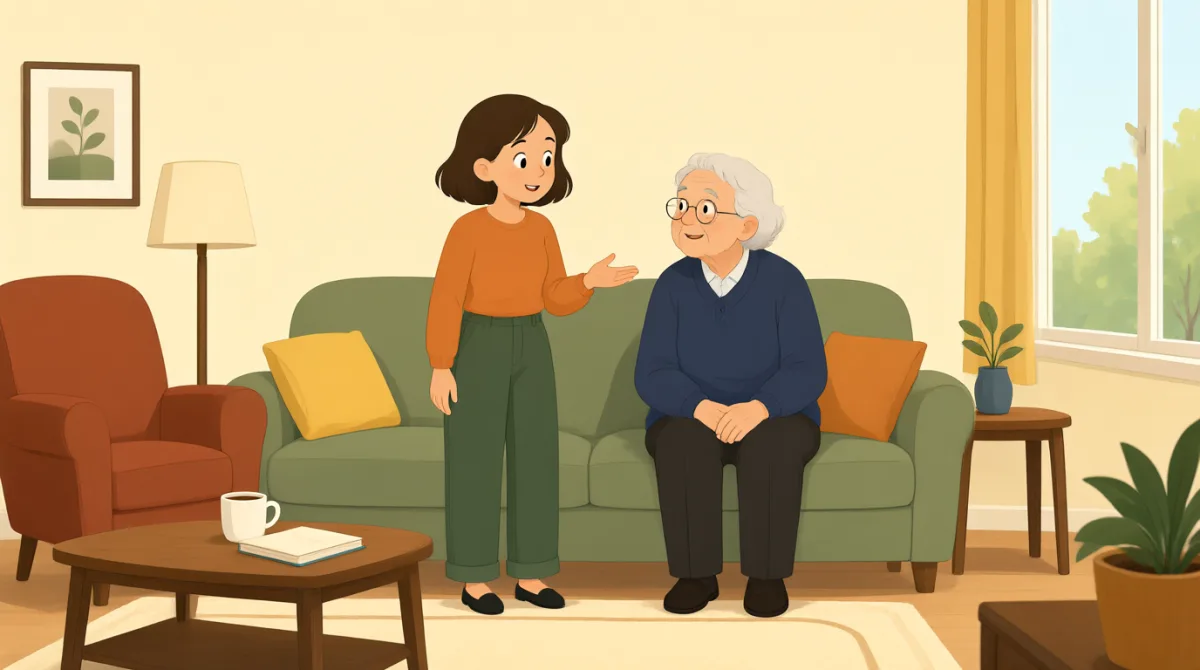

How have you both been feeling lately? Are you getting enough rest?
最近、二人とも体調はどう?ちゃんと休めてる?

I’ve been feeling well, thank you. I went for a checkup last week.
元気にしてるよ、ありがとう。この前の週に健康診断を受けたんだ。
That’s good. What did the doctor say?
それはよかった。お医者さんは何て言ってた?
Everything looked fine. I just need to drink more water and keep walking.
特に問題なかったよ。もう少し水を飲んで、散歩を続ければいいって。

We walk around the park every morning, unless it rains.
雨が降らなければ、毎朝公園を散歩してるよ。
How far do you walk? Does it make you tired?
どのくらい歩くの?疲れない?
Not too far. We take our time and sit down if we need to.
そんなに遠くまでは歩かないよ。ゆっくり歩いて、必要なら座って休むんだ。
Walking helps us feel strong. You should come with us tomorrow.
歩くと元気でいられるよ。明日、一緒に来たらいいよ。
I’d love to! I’ll bring my walking shoes.
ぜひ行きたい!歩きやすい靴を持っていくね。
語彙8
- feeling well体調がいい
This means being in good health. Use it to tell someone how you are doing.
健康な状態だという意味です。自分の調子を伝えるときに使います。
- checkup健康診断
A checkup is a visit to the doctor to see if you are healthy. You can say, “I have a checkup next week.”
健康診断とは、健康かどうかを確認するために医者に診てもらうことです。“I have a checkup next week.”(来週、健康診断があるんだ)のように言えます。
- everything looked fine特に問題なかった
This means the doctor did not find a problem. Use it to share reassuring news after a visit or test.
医者が問題を見つけなかった、という意味です。診察や検査のあとに、安心させる知らせを伝えるときに使います。
- keep walking散歩を続ける
This means to continue walking regularly. Use “keep” with an -ing verb to encourage someone to continue an activity.
定期的に歩き続ける、という意味です。“keep”のあとに「動詞の-ing形」を置くと、活動を続けるよう勧める表現になります。
- unless it rains雨が降らなければ
This means something will happen if it does not rain. Use “unless” to describe an exception to a plan.
雨が降らない場合に何かをする、という意味です。“unless”は予定の例外を表すときに使います。
- take our timeゆっくりやる
This means to do something slowly and without rushing. You can use it when you want to go at a comfortable pace.
急がず、ゆっくり何かをするという意味です。無理のないペースで進めたいときに使えます。
- sit down座る
This means to move into a sitting position. Use it when you need to rest.
座った姿勢になる、という意味です。休む必要があるときに使います。
- walking shoesウォーキングシューズ
These are comfortable shoes for walking. You can use this phrase when talking about what to wear for a walk.
歩くときに履く、履き心地のよい靴のことです。散歩に何を履いていくか話すときに使えます。
重要な文8
- 1
How have you both been feeling lately?
最近、二人とも体調はどう?
This is a friendly way to ask two people about their health recently. You can change “both” to “you” when speaking to one person.
二人の最近の体調を尋ねる、親しみのある言い方です。一人に尋ねるときは、“both”を“you”に変えられます。
- 2
I went for a checkup last week.
この前の週に健康診断を受けたんだ。
Use this sentence to say that you visited a doctor for a health check. Change “last week” to another time phrase to say when it happened.
健康状態を確認するために医者に診てもらったと伝える文です。“last week”を別の時を表す言葉に変えると、いつ受けたかを伝えられます。
- 3
What did the doctor say?
お医者さんは何て言ってた?
This is a simple way to ask about the results or advice from a doctor. You can also use it to ask what another person said.
医者から聞いた結果やアドバイスを尋ねる簡単な言い方です。ほかの人が何と言ったか尋ねるときにも使えます。
- 4
Everything looked fine.
特に問題なかったよ。
Use this to say that there did not seem to be a problem. It is a reassuring reply after a checkup or test.
問題はなさそうだったと伝えるときに使います。健康診断や検査のあとに、相手を安心させる返事です。
- 5
We walk around the park every morning, unless it rains.
雨が降らなければ、毎朝公園を散歩してるよ。
This sentence describes a regular routine and an exception to it. Use “unless” to explain when a routine may not happen.
習慣にしていることと、その例外を説明する文です。“unless”を使うと、どんなときに習慣を実行しないかを伝えられます。
- 6
We take our time and sit down if we need to.
ゆっくり歩いて、必要なら座って休むんだ。
This explains how the speakers walk at a comfortable pace and rest when needed. You can reuse “if we need to” to talk about doing something only when necessary.
無理のないペースで歩き、必要なときに休むことを説明しています。“if we need to”は「必要なら」という意味で、必要な場合にだけ何かをすると伝えるときに使えます。
- 7
You should come with us tomorrow.
明日、一緒に来たらいいよ。
This is a friendly way to invite someone to join an activity. Change “tomorrow” to say when you want them to come.
何かに一緒に参加しようと誘う、親しみのある言い方です。“tomorrow”を変えると、いつ来てほしいかを伝えられます。
- 8
I’ll bring my walking shoes.
歩きやすい靴を持っていくね。
Use “I’ll bring…” to say what you plan to take with you. You can replace “walking shoes” with another useful item.
“I’ll bring…”は、持っていく予定のものを伝えるときに使います。“walking shoes”を別の役立つ持ち物に変えて使えます。