Hearing an Old Story
سماع حكاية قديمة
David tells Emma a funny story about his younger days. Emma asks questions and enjoys hearing about the past.
يروي ديفيد لإيما حكاية طريفة من أيام شبابه. تطرح إيما أسئلة وتستمتع بسماع قصص الماضي.
حوار8
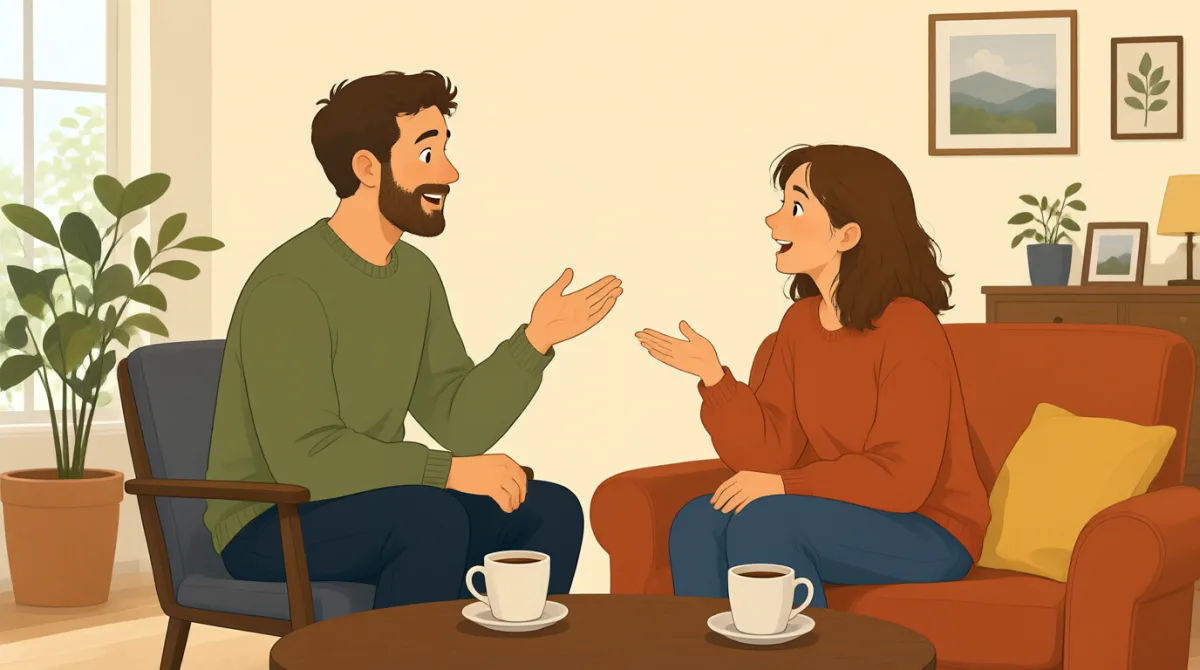

When I was your age, I tried to fix a radio without reading the instructions.
عندما كنت في عمرك، حاولت إصلاح مذياع من دون قراءة التعليمات.

Did you know how to fix radios back then?
هل كنت تعرف كيف تصلح أجهزة المذياع في ذلك الوقت؟
Not at all. I took it apart, and then I couldn't put it back together.
أبدًا. فككته، ثم لم أستطع تركيبه من جديد.
What did your father say when he saw it?
ماذا قال أبوك عندما رآه؟
He asked if I was building a new radio. I said, “I hope so!”
سألني إن كنت أصنع مذياعًا جديدًا. فقلت: «آمل ذلك!»
Did you ever get it working again?
وهل تمكنت في النهاية من تشغيله مجددًا؟
Yes, but only after my father showed me how to put it together.
نعم، لكن بعد أن أراني أبي كيف أركبه.
That’s funny! I bet you read the instructions next time.
هذا مضحك! أراهن أنك قرأت التعليمات في المرة التالية.
المفردات6
- your ageفي عمرك
This means the age you are now. You can use it to compare someone’s life with your own past.
تعني هذه العبارة العمر الذي أنت فيه الآن. يمكنك استخدامها لمقارنة حياة شخص ما بماضيك.
- back thenفي ذلك الوقت
This means at a time in the past. Use it when talking about what people knew or did before.
تعني هذه العبارة في وقت مضى. استخدمها عند الحديث عما كان الناس يعرفونه أو يفعلونه في الماضي.
- put it back togetherأركّبه من جديد
This means to join the pieces of something again. Use it after taking an object apart.
تعني هذه العبارة وصل أجزاء شيء بعضها ببعض مرة أخرى. استخدمها بعد تفكيك غرض ما.
- get it working againأعيد تشغيله
This means to make something work after it has stopped working. You can use it when talking about repairing a machine or device.
تعني هذه العبارة جعل شيء يعمل مجددًا بعد أن يتوقف عن العمل. يمكنك استخدامها عند الحديث عن إصلاح آلة أو جهاز.
- showed me howأراني كيف
This means someone taught you how to do something by explaining or demonstrating it. Use it to describe learning a skill.
تعني هذه العبارة أن شخصًا علّمك طريقة فعل شيء ما بالشرح أو العرض. استخدمها لوصف تعلّم مهارة.
- I betأراهن
This is a casual way to say you are sure or think something is likely. You can use it to make a friendly guess.
هذه طريقة غير رسمية للتعبير عن اليقين أو الاعتقاد بأن شيئًا ما مرجح. يمكنك استخدامها لتخمين شيء بطريقة ودية.
الجمل الأساسية7
- 1
When I was your age, I tried to fix a radio without reading the instructions.
عندما كنت في عمرك، حاولت إصلاح مذياع من دون قراءة التعليمات.
Use this to begin a story about something you did when you were younger. You can replace “fix a radio” with another past activity.
استخدم هذه الجملة لبدء حكاية عن شيء فعلته عندما كنت أصغر سنًا. يمكنك استبدال “fix a radio” بنشاط آخر من الماضي.
- 2
Did you know how to fix radios back then?
هل كنت تعرف كيف تصلح أجهزة المذياع في ذلك الوقت؟
This is a useful question about someone’s past skills or knowledge. Replace “fix radios” with another skill or activity.
هذا سؤال مفيد عن مهارات شخص ما أو ما كان يعرفه في الماضي. استبدل “fix radios” بمهارة أو نشاط آخر.
- 3
I took it apart, and then I couldn't put it back together.
فككته، ثم لم أستطع تركيبه من جديد.
This sentence describes trying something and having a problem afterward. Use it to tell a simple story about an object you tried to repair.
تصف هذه الجملة محاولة فعل شيء ثم مواجهة مشكلة. استخدمها لسرد حكاية بسيطة عن غرض حاولت إصلاحه.
- 4
What did your father say when he saw it?
ماذا قال أبوك عندما رآه؟
Use this to ask what someone said after seeing something happen. Replace “your father” with another person.
استخدم هذا السؤال لتسأل عما قاله شخص بعد أن رأى شيئًا يحدث. استبدل “your father” بشخص آخر.
- 5
Did you ever get it working again?
وهل تمكنت في النهاية من تشغيله مجددًا؟
This asks whether someone eventually made something work. You can use it to ask about a repair or problem.
يسأل هذا السؤال إن كان شخص ما قد نجح في النهاية في جعل شيء يعمل. يمكنك استخدامه للسؤال عن إصلاح أو مشكلة.
- 6
Yes, but only after my father showed me how to put it together.
نعم، لكن بعد أن أراني أبي كيف أركبه.
Use “only after” to explain that something happened later, once another thing was done. You can replace the final action with another skill.
استخدم “only after” لتوضيح أن شيئًا ما حدث لاحقًا، بعد إنجاز أمر آخر. يمكنك استبدال الفعل الأخير بمهارة أخرى.
- 7
That’s funny! I bet you read the instructions next time.
هذا مضحك! أراهن أنك قرأت التعليمات في المرة التالية.
This is a friendly response to a funny story, followed by a guess about what happened later. Use “I bet” to make a casual prediction.
هذا رد ودود على حكاية مضحكة، يتبعه تخمين عما حدث لاحقًا. استخدم “I bet” للتنبؤ بطريقة غير رسمية.