Hearing an Old Story
Escuchando una historia de hace tiempo
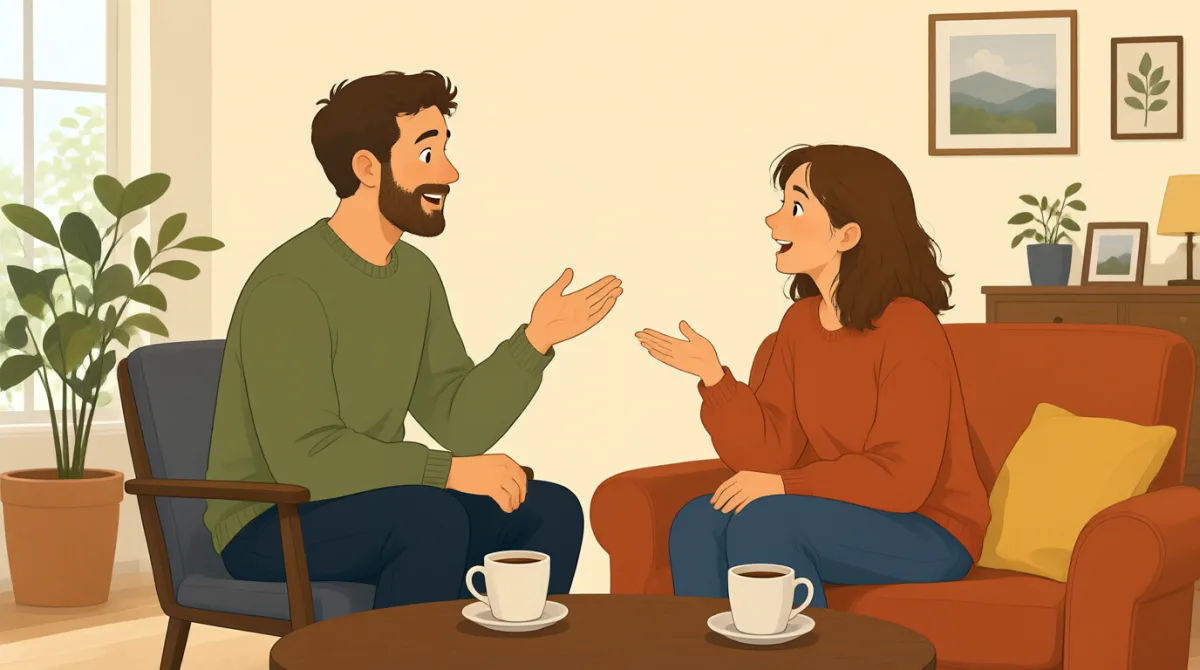
David tells Emma a funny story about his younger days. Emma asks questions and enjoys hearing about the past.
David le cuenta a Emma una historia divertida de cuando era joven. Emma le hace preguntas y disfruta escuchando sus recuerdos.
Diálogo8

When I was your age, I tried to fix a radio without reading the instructions.
Cuando tenía tu edad, intenté arreglar una radio sin leer las instrucciones.

Did you know how to fix radios back then?
¿Sabías arreglar radios en aquella época?
Not at all. I took it apart, and then I couldn't put it back together.
Para nada. La desmonté y luego no pude volver a armarla.
What did your father say when he saw it?
¿Qué dijo tu padre cuando la vio?
He asked if I was building a new radio. I said, “I hope so!”
Me preguntó si estaba construyendo una radio nueva. Le dije: «¡Eso espero!»
Did you ever get it working again?
¿Al final conseguiste que volviera a funcionar?
Yes, but only after my father showed me how to put it together.
Sí, pero solo después de que mi padre me enseñara a armarla.
That’s funny! I bet you read the instructions next time.
¡Qué gracioso! Seguro que la próxima vez leíste las instrucciones.
Vocabulario6
- your agetu edad
This means the age you are now. You can use it to compare someone’s life with your own past.
Se refiere a la edad que tienes ahora. Puedes usarlo para comparar la vida de alguien con la tuya en el pasado.
- back thenen aquella época
This means at a time in the past. Use it when talking about what people knew or did before.
Se refiere a un momento del pasado. Úsalo para hablar de lo que la gente sabía o hacía antes.
- put it back togethervolver a armarlo
This means to join the pieces of something again. Use it after taking an object apart.
Significa unir otra vez las piezas de algo. Se usa después de desmontar un objeto.
- get it working againconseguir que volviera a funcionar
This means to make something work after it has stopped working. You can use it when talking about repairing a machine or device.
Significa hacer que algo vuelva a funcionar después de que se haya estropeado. Puedes usarlo al hablar de la reparación de una máquina o un aparato.
- showed me howme enseñó cómo
This means someone taught you how to do something by explaining or demonstrating it. Use it to describe learning a skill.
Significa que alguien te enseñó a hacer algo explicándotelo o mostrándote cómo se hace. Úsalo para hablar de cómo aprendiste una habilidad.
- I betseguro que
This is a casual way to say you are sure or think something is likely. You can use it to make a friendly guess.
Es una forma informal de decir que estás seguro de algo o que crees que es probable. Puedes usarla para hacer una suposición amistosa.
Frases clave7
- 1
When I was your age, I tried to fix a radio without reading the instructions.
Cuando tenía tu edad, intenté arreglar una radio sin leer las instrucciones.
Use this to begin a story about something you did when you were younger. You can replace “fix a radio” with another past activity.
Usa esta frase para empezar a contar algo que hiciste cuando eras más joven. Puedes sustituir “fix a radio” por otra actividad que hicieras en el pasado.
- 2
Did you know how to fix radios back then?
¿Sabías arreglar radios en aquella época?
This is a useful question about someone’s past skills or knowledge. Replace “fix radios” with another skill or activity.
Es una pregunta útil para hablar de las habilidades o los conocimientos que alguien tenía en el pasado. Sustituye “fix radios” por otra habilidad o actividad.
- 3
I took it apart, and then I couldn't put it back together.
La desmonté y luego no pude volver a armarla.
This sentence describes trying something and having a problem afterward. Use it to tell a simple story about an object you tried to repair.
Esta frase describe un intento que después presentó un problema. Úsala para contar una historia sencilla sobre un objeto que intentaste reparar.
- 4
What did your father say when he saw it?
¿Qué dijo tu padre cuando la vio?
Use this to ask what someone said after seeing something happen. Replace “your father” with another person.
Usa esta pregunta para saber qué dijo alguien después de ver algo. Sustituye “your father” por otra persona.
- 5
Did you ever get it working again?
¿Al final conseguiste que volviera a funcionar?
This asks whether someone eventually made something work. You can use it to ask about a repair or problem.
Esta pregunta sirve para saber si alguien consiguió que algo funcionara al final. Puedes usarla para preguntar por una reparación o un problema.
- 6
Yes, but only after my father showed me how to put it together.
Sí, pero solo después de que mi padre me enseñara a armarla.
Use “only after” to explain that something happened later, once another thing was done. You can replace the final action with another skill.
Usa “only after” para explicar que algo ocurrió más tarde, una vez que se hizo otra cosa. Puedes sustituir la acción final por otra habilidad.
- 7
That’s funny! I bet you read the instructions next time.
¡Qué gracioso! Seguro que la próxima vez leíste las instrucciones.
This is a friendly response to a funny story, followed by a guess about what happened later. Use “I bet” to make a casual prediction.
Es una respuesta amistosa a una historia divertida, seguida de una suposición sobre lo que pasó después. Usa “I bet” para hacer una predicción informal.