Hearing an Old Story
पुरानी कहानी सुनना
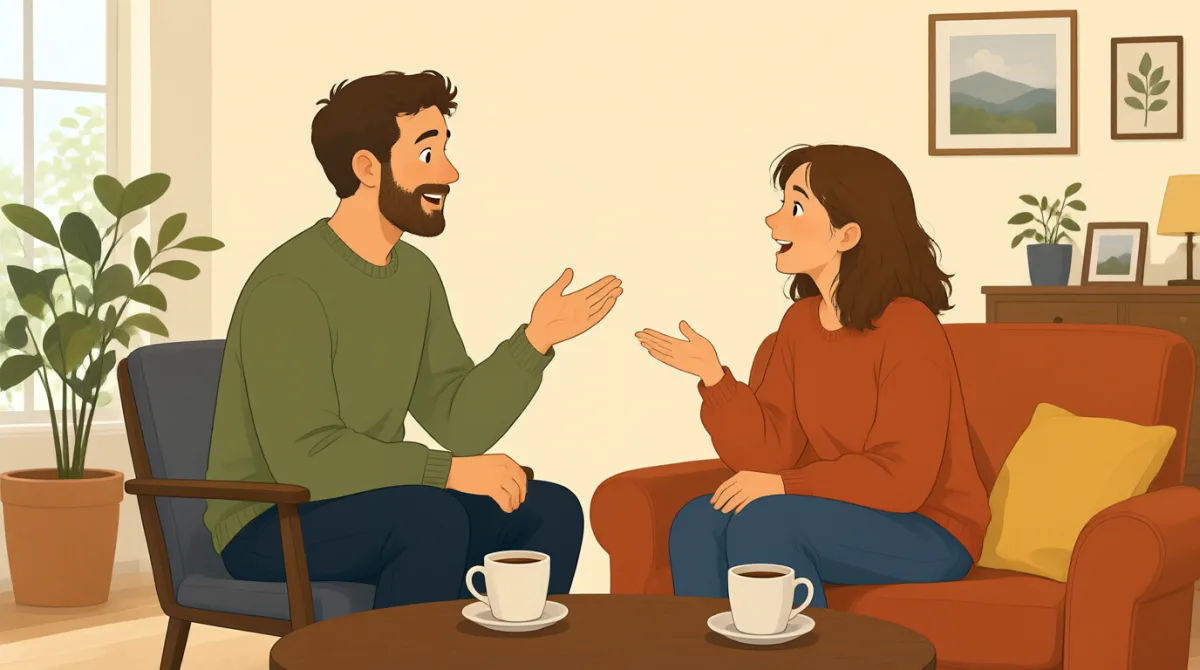
David tells Emma a funny story about his younger days. Emma asks questions and enjoys hearing about the past.
डेविड एमा को अपने बचपन के दिनों की एक मज़ेदार कहानी सुनाता है। एमा सवाल पूछती है और बीते दिनों के बारे में सुनकर आनंद लेती है।
संवाद8

When I was your age, I tried to fix a radio without reading the instructions.
जब मैं तुम्हारी उम्र का था, तो मैंने बिना निर्देश पढ़े एक रेडियो ठीक करने की कोशिश की थी।

Did you know how to fix radios back then?
क्या तुम्हें तब रेडियो ठीक करना आता था?
Not at all. I took it apart, and then I couldn't put it back together.
बिलकुल नहीं। मैंने उसे खोल तो लिया, लेकिन फिर वापस जोड़ नहीं पाया।
What did your father say when he saw it?
जब तुम्हारे पिता ने उसे देखा, तो उन्होंने क्या कहा?
He asked if I was building a new radio. I said, “I hope so!”
उन्होंने पूछा कि क्या मैं नया रेडियो बना रहा हूँ। मैंने कहा, “उम्मीद तो यही है!”
Did you ever get it working again?
क्या तुम आखिरकार उसे फिर से चालू कर पाए?
Yes, but only after my father showed me how to put it together.
हाँ, लेकिन तभी जब मेरे पिता ने मुझे उसे जोड़ना सिखाया।
That’s funny! I bet you read the instructions next time.
यह तो मज़ेदार है! मुझे यकीन है कि अगली बार तुमने निर्देश पढ़े होंगे।
शब्दावली6
- your ageतुम्हारी उम्र
This means the age you are now. You can use it to compare someone’s life with your own past.
“your age” का मतलब है तुम्हारी अभी की उम्र। इसका इस्तेमाल किसी की ज़िंदगी की तुलना अपने बीते हुए समय से करने के लिए कर सकते हो।
- back thenतब
This means at a time in the past. Use it when talking about what people knew or did before.
“back then” का मतलब है अतीत के किसी समय में। पहले लोग क्या जानते थे या क्या करते थे, इस बारे में बात करते समय इसका इस्तेमाल करो।
- put it back togetherउसे वापस जोड़ना
This means to join the pieces of something again. Use it after taking an object apart.
“put it back together” का मतलब है किसी चीज़ के हिस्सों को फिर से जोड़ना। किसी वस्तु को खोलने के बाद इसका इस्तेमाल करो।
- get it working againउसे फिर से चालू करना
This means to make something work after it has stopped working. You can use it when talking about repairing a machine or device.
“get it working again” का मतलब है किसी चीज़ के काम करना बंद करने के बाद उसे फिर से चलाना। किसी मशीन या उपकरण की मरम्मत के बारे में बात करते समय इसका इस्तेमाल कर सकते हो।
- showed me howमुझे तरीका सिखाया
This means someone taught you how to do something by explaining or demonstrating it. Use it to describe learning a skill.
“showed me how” का मतलब है कि किसी ने समझाकर या करके दिखाकर तुम्हें कुछ करना सिखाया। कोई हुनर सीखने के बारे में बताने के लिए इसका इस्तेमाल करो।
- I betमुझे यकीन है
This is a casual way to say you are sure or think something is likely. You can use it to make a friendly guess.
“I bet” यह कहने का अनौपचारिक तरीका है कि तुम्हें किसी बात का यकीन है या तुम्हें लगता है कि वह सच होने की संभावना है। दोस्ताना अंदाज़ में अंदाज़ा लगाने के लिए इसका इस्तेमाल कर सकते हो।
मुख्य वाक्य7
- 1
When I was your age, I tried to fix a radio without reading the instructions.
जब मैं तुम्हारी उम्र का था, तो मैंने बिना निर्देश पढ़े एक रेडियो ठीक करने की कोशिश की थी।
Use this to begin a story about something you did when you were younger. You can replace “fix a radio” with another past activity.
जब तुम अपने छोटे दिनों में की गई किसी बात का किस्सा सुनाना चाहो, तो इस वाक्य से शुरुआत करो। “fix a radio” की जगह कोई दूसरी पुरानी गतिविधि रख सकते हो।
- 2
Did you know how to fix radios back then?
क्या तुम्हें तब रेडियो ठीक करना आता था?
This is a useful question about someone’s past skills or knowledge. Replace “fix radios” with another skill or activity.
किसी के पुराने हुनर या जानकारी के बारे में पूछने के लिए यह एक काम का सवाल है। “fix radios” की जगह कोई दूसरा हुनर या गतिविधि रख सकते हो।
- 3
I took it apart, and then I couldn't put it back together.
मैंने उसे खोल तो लिया, लेकिन फिर वापस जोड़ नहीं पाया।
This sentence describes trying something and having a problem afterward. Use it to tell a simple story about an object you tried to repair.
यह वाक्य बताता है कि तुमने कुछ करने की कोशिश की और बाद में परेशानी में पड़ गए। किसी ऐसी चीज़ के बारे में छोटा-सा किस्सा सुनाने के लिए इसका इस्तेमाल करो जिसे तुमने ठीक करने की कोशिश की थी।
- 4
What did your father say when he saw it?
जब तुम्हारे पिता ने उसे देखा, तो उन्होंने क्या कहा?
Use this to ask what someone said after seeing something happen. Replace “your father” with another person.
कुछ होते देखने के बाद किसी ने क्या कहा, यह पूछने के लिए इसका इस्तेमाल करो। “your father” की जगह किसी दूसरे व्यक्ति का ज़िक्र कर सकते हो।
- 5
Did you ever get it working again?
क्या तुम आखिरकार उसे फिर से चालू कर पाए?
This asks whether someone eventually made something work. You can use it to ask about a repair or problem.
यह पूछता है कि क्या कोई आखिरकार किसी चीज़ को फिर से चलाने में कामयाब हुआ। मरम्मत या किसी समस्या के बारे में पूछने के लिए इसका इस्तेमाल कर सकते हो।
- 6
Yes, but only after my father showed me how to put it together.
हाँ, लेकिन तभी जब मेरे पिता ने मुझे उसे जोड़ना सिखाया।
Use “only after” to explain that something happened later, once another thing was done. You can replace the final action with another skill.
“only after” का इस्तेमाल यह बताने के लिए करो कि कोई काम दूसरी चीज़ पूरी होने के बाद ही हुआ। आख़िर में दी गई कार्रवाई की जगह कोई दूसरा हुनर रख सकते हो।
- 7
That’s funny! I bet you read the instructions next time.
यह तो मज़ेदार है! मुझे यकीन है कि अगली बार तुमने निर्देश पढ़े होंगे।
This is a friendly response to a funny story, followed by a guess about what happened later. Use “I bet” to make a casual prediction.
मज़ेदार किस्सा सुनने के बाद दोस्ताना जवाब देने और फिर आगे क्या हुआ होगा, इसका अंदाज़ा लगाने के लिए यह वाक्य है। अनौपचारिक ढंग से अंदाज़ा लगाने के लिए “I bet” का इस्तेमाल करो।