A Childhood Friend
子どもの頃の友達
Emma and Mia talk about a close friend from childhood and the things they did together. They share how they stayed in touch—or lost touch.
エマとミアが、子どもの頃の親しい友達や、一緒にしていたことについて話します。連絡を取り続けたのか、いつの間にか疎遠になったのかを語り合います。
会話8
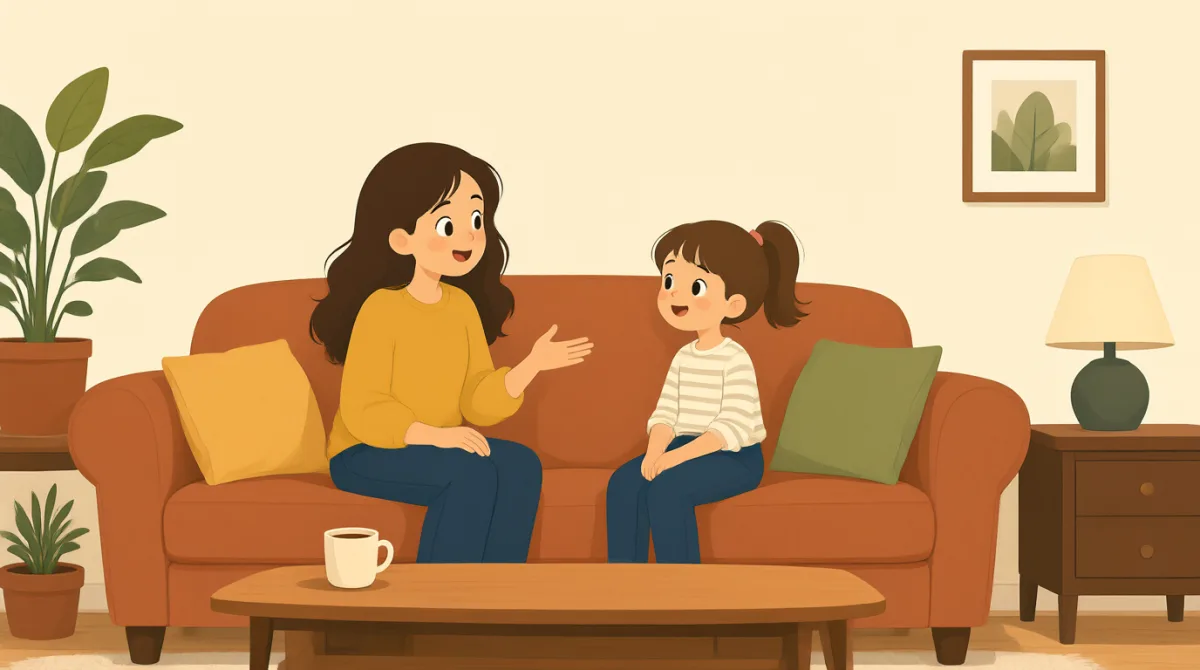

Did you have a close friend when you were growing up?
子どもの頃、仲のいい友達はいた?

Yes, my best friend lived next door. We played together every day.
うん、親友が隣に住んでたんだ。毎日一緒に遊んでたよ。
What did you like to do together?
一緒に何をするのが好きだったの?
We rode our bikes and made up stories in the garden.
自転車に乗ったり、庭でお話を作ったりしてたよ。
Did you go to the same school?
同じ学校に通ってたの?
Yes, we walked to school together. We sat near each other in class.
うん、一緒に歩いて学校に行ってたよ。授業では近くに座ってた。
Do you still keep in touch with your friend?
今もその友達と連絡を取り合ってる?
We lost touch after my family moved away. I still remember those days.
家族が引っ越してから、連絡を取らなくなっちゃった。あの頃のことは今でも覚えてるよ。
語彙7
- close friend親しい友達
A close friend is someone you know well and feel comfortable with. Use it to talk about an important friendship.
「close friend」は、よく知っていて、一緒にいて気楽に感じられる人のことです。大切な友情について話すときに使えます。
- growing up子どもの頃
This means during the time when you were a child. You can use it to ask about someone’s childhood.
「growing up」は、子どもだった頃という意味です。相手の子ども時代について尋ねるときに使えます。
- lived next door隣に住んでいた
This means someone’s home was beside or very near your home. Use it to describe where a neighbor lived.
「lived next door」は、誰かの家が自分の家の隣、またはすぐ近くにあったという意味です。近所の人がどこに住んでいたかを説明するときに使えます。
- played together一緒に遊んだ
This means two or more people did games or fun activities with each other. You can use it to talk about things you did as a child.
「played together」は、二人以上で一緒に遊んだり、楽しいことをしたりしたという意味です。子どもの頃にしていたことについて話すときに使えます。
- made up storiesお話を作った
This means invented stories that were not real. Use it to describe creative play.
「made up stories」は、実際には起きていないお話を考えて作ったという意味です。想像力を使った遊びについて説明するときに使えます。
- keep in touch連絡を取り合う
This means continue talking or communicating with someone. You can use it to ask if people still contact each other.
「keep in touch」は、誰かと話したり連絡したりし続けるという意味です。今もお互いに連絡しているか尋ねるときに使えます。
- lost touch連絡が途絶える
This means you stopped communicating with someone. It is often used when people move or their lives change.
「lost touch」は、誰かと連絡を取らなくなったという意味です。引っ越しや生活の変化をきっかけに、連絡が途絶えたときによく使います。
重要な文7
- 1
Did you have a close friend when you were growing up?
子どもの頃、仲のいい友達はいた?
This is a friendly way to ask about someone’s childhood friendships. You can change “close friend” to another person or relationship.
相手の子どもの頃の友達について尋ねる、親しみのある言い方です。「close friend」を別の人や関係に置き換えて使えます。
- 2
My best friend lived next door.
親友が隣に住んでたんだ。
This sentence tells where a childhood friend lived. Use “lived” to describe someone’s home in the past.
子どもの頃の友達がどこに住んでいたかを伝える文です。過去の住まいについて話すときは「lived」を使います。
- 3
We played together every day.
毎日一緒に遊んでたよ。
This describes a regular activity in the past. You can replace “played” with another past activity, such as “studied” or “walked.”
過去に繰り返ししていたことを表す文です。「played」を「studied」や「walked」のような別の過去の行動に置き換えられます。
- 4
What did you like to do together?
一緒に何をするのが好きだったの?
Use this question to ask about activities two people enjoyed. After “did,” use the base form of the verb, as in “do.”
二人が一緒に楽しんでいたことを尋ねる質問です。「did」の後には、「do」のように動詞の原形を使います。
- 5
We rode our bikes and made up stories in the garden.
自転車に乗ったり、庭でお話を作ったりしてたよ。
This gives examples of activities from the past. You can join two activities with “and” to share more details.
過去にしていたことの例を挙げる文です。「and」で二つの行動をつなげると、より詳しく伝えられます。
- 6
Do you still keep in touch with your friend?
今もその友達と連絡を取り合ってる?
This is a natural way to ask whether someone still communicates with a person. You can replace “your friend” with another person, such as “your cousin.”
今も誰かと連絡を取っているか尋ねる自然な言い方です。「your friend」を「your cousin」のような別の人に置き換えられます。
- 7
We lost touch after my family moved away.
家族が引っ越してから、連絡を取らなくなっちゃった。
This explains when communication stopped. Use “after” to connect an event with what happened next.
連絡がいつ途絶えたのかを説明する文です。「after」を使うと、ある出来事と、その後に起きたことをつなげられます。