A Childhood Friend
Emma and Mia talk about a close friend from childhood and the things they did together. They share how they stayed in touch—or lost touch.
Dialogue8
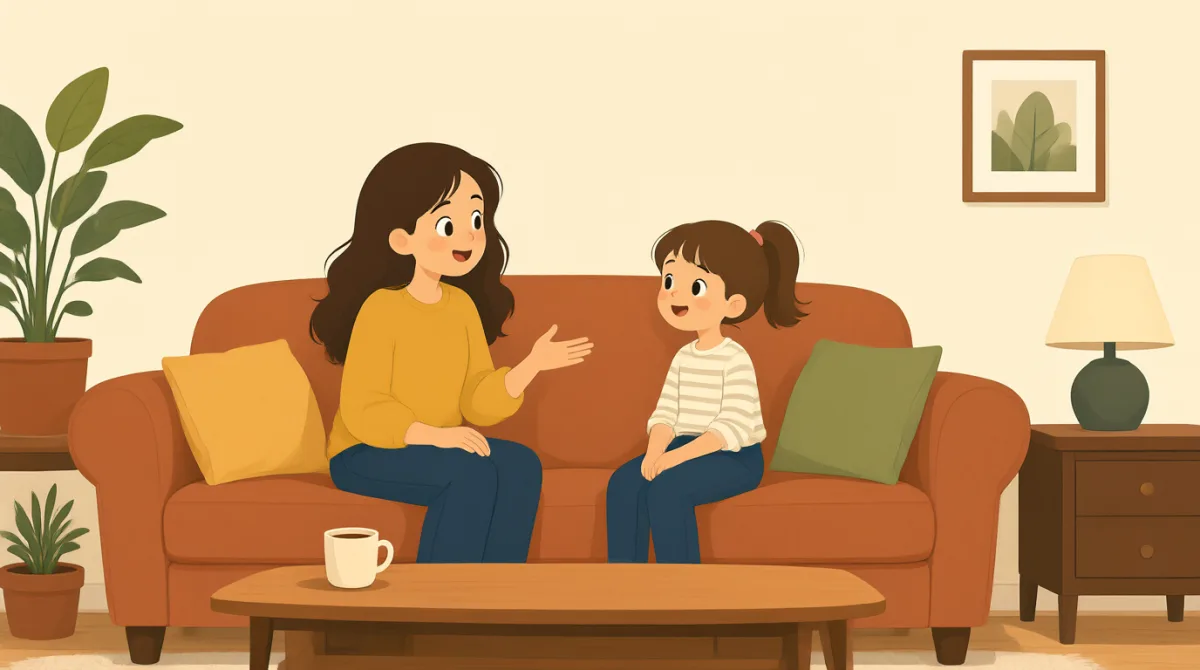

Did you have a close friend when you were growing up?

Yes, my best friend lived next door. We played together every day.
What did you like to do together?
We rode our bikes and made up stories in the garden.
Did you go to the same school?
Yes, we walked to school together. We sat near each other in class.
Do you still keep in touch with your friend?
We lost touch after my family moved away. I still remember those days.
Vocabulary7
- close friend
A close friend is someone you know well and feel comfortable with. Use it to talk about an important friendship.
- growing up
This means during the time when you were a child. You can use it to ask about someone’s childhood.
- lived next door
This means someone’s home was beside or very near your home. Use it to describe where a neighbor lived.
- played together
This means two or more people did games or fun activities with each other. You can use it to talk about things you did as a child.
- made up stories
This means invented stories that were not real. Use it to describe creative play.
- keep in touch
This means continue talking or communicating with someone. You can use it to ask if people still contact each other.
- lost touch
This means you stopped communicating with someone. It is often used when people move or their lives change.
Key Sentences7
- 1
Did you have a close friend when you were growing up?
This is a friendly way to ask about someone’s childhood friendships. You can change “close friend” to another person or relationship.
- 2
My best friend lived next door.
This sentence tells where a childhood friend lived. Use “lived” to describe someone’s home in the past.
- 3
We played together every day.
This describes a regular activity in the past. You can replace “played” with another past activity, such as “studied” or “walked.”
- 4
What did you like to do together?
Use this question to ask about activities two people enjoyed. After “did,” use the base form of the verb, as in “do.”
- 5
We rode our bikes and made up stories in the garden.
This gives examples of activities from the past. You can join two activities with “and” to share more details.
- 6
Do you still keep in touch with your friend?
This is a natural way to ask whether someone still communicates with a person. You can replace “your friend” with another person, such as “your cousin.”
- 7
We lost touch after my family moved away.
This explains when communication stopped. Use “after” to connect an event with what happened next.