Favorite Childhood Food
子どもの頃に好きだった食べ物
Mia asks Emma and Leo what food they loved as children. They talk about family meals and treats they still remember.
ミアがエマとレオに、子どもの頃に好きだった食べ物を尋ねる。二人は、家族で食べた料理や今でも覚えているおやつについて話す。
会話9
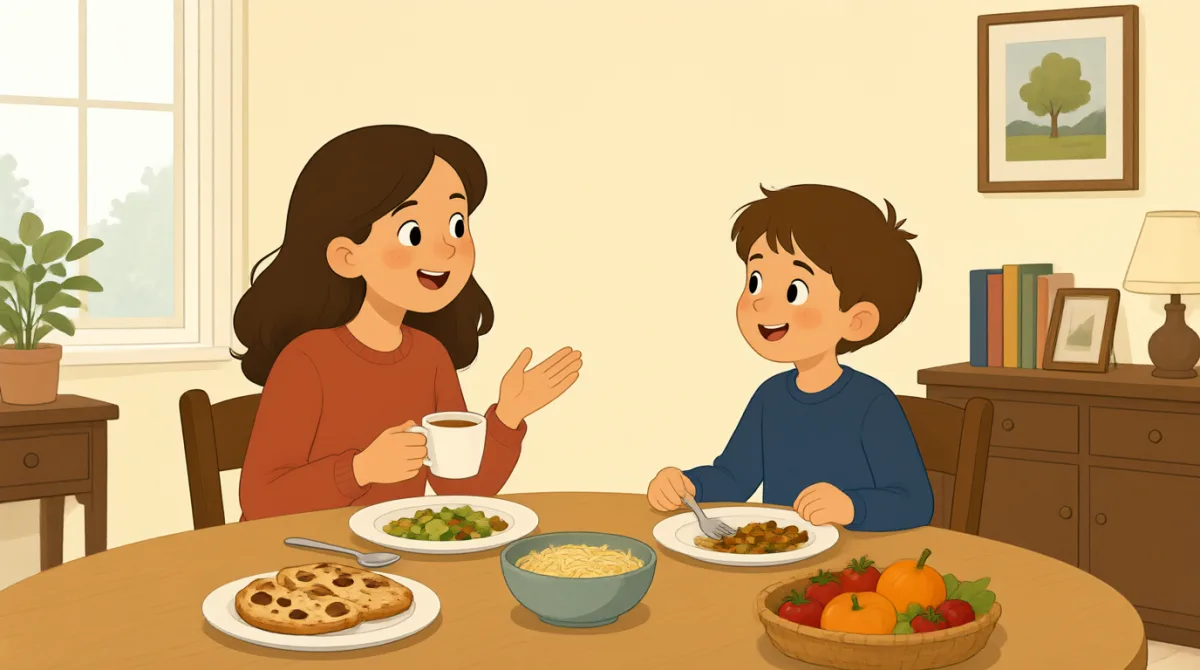

What food did you love as a child, Emma?
エマ、子どもの頃はどんな食べ物が好きだった?

I loved my mother's tomato soup and grilled cheese sandwiches.
お母さんのトマトスープとチーズサンドが大好きだったよ。

I always asked for my grandmother's noodles when I visited her.
おばあちゃんのところに行くと、いつもおばあちゃんの麺料理を食べたいって言ってたよ。
That sounds good! Did you eat them for lunch or dinner?
おいしそう!お昼に食べてたの?それとも夕飯?
Usually dinner. She made a big pot, and we all ate together.
たいてい夕飯だったよ。大きな鍋いっぱいに作ってくれて、みんなで一緒に食べたんだ。
My family had soup on cold days. I still remember its smell.
うちは寒い日にスープを食べてたよ。今でもあの匂いを覚えてる。
Did you have a favorite treat, too?
好きなおやつもあった?
Yes! My dad bought me strawberry ice cream after school sometimes.
あったよ!お父さんが、学校のあとにときどきイチゴアイスを買ってくれたんだ。
Those little treats made childhood special, didn't they?
ああいうちょっとしたおやつが、子どもの頃を特別なものにしてくれたよね。
語彙7
- as a child子どもの頃に
This means when someone was young. Use it to talk about things you liked or did in the past.
これは、誰かがまだ幼かった頃という意味です。昔好きだったことや、していたことについて話すときに使います。
- grilled cheese sandwichesチーズサンド
These are sandwiches with melted cheese, often cooked in a pan. Emma remembers eating them with tomato soup.
溶けたチーズを挟んだサンドイッチで、フライパンで焼くことが多いです。エマはトマトスープと一緒に食べたことを覚えています。
- asked for頼んだ
This means requested or wanted something. You can say, “I asked for my favorite dessert.”
何かをお願いしたり、欲しいと言ったりすることです。“I asked for my favorite dessert.”(お気に入りのデザートを頼んだ)のように言えます。
- visited her彼女のところに行った
This means went to see her. Use “visited” to talk about going to someone’s home or another place.
彼女に会いに行ったという意味です。“visited”は、誰かの家や別の場所を訪れたことを話すときに使います。
- a big pot大きな鍋
A pot is a deep cooking container, and “a big pot” means a large one. You can use this phrase when talking about cooking food for many people.
“pot”は深さのある調理用の鍋で、“a big pot”は大きな鍋のことです。大勢のために料理をするときに使える表現です。
- ate together一緒に食べた
This means shared a meal with other people. You can use it to describe a family meal.
ほかの人と食事を共にしたという意味です。家族で食べた食事について話すときに使えます。
- after school学校のあとに
This means when school has finished for the day. Use it to talk about activities or treats that happen then.
その日の学校が終わったとき、という意味です。その時間にすることや食べるおやつについて話すときに使います。
重要な文8
- 1
What food did you love as a child, Emma?
エマ、子どもの頃はどんな食べ物が好きだった?
This is a friendly way to ask about someone’s childhood favorites. You can replace “food” with another topic, such as “What game did you love as a child?”
相手が子どもの頃に好きだったものを尋ねる、親しみやすい言い方です。“food”を別の話題に置き換えて、“What game did you love as a child?”(子どもの頃、どんなゲームが好きだった?)のようにも言えます。
- 2
I loved my mother's tomato soup and grilled cheese sandwiches.
お母さんのトマトスープとチーズサンドが大好きだったよ。
This sentence describes favorite foods from the past. Use “I loved” to talk about something you enjoyed when you were younger.
昔好きだった食べ物について話す文です。“I loved”を使うと、若い頃に楽しんでいたものを表せます。
- 3
I always asked for my grandmother's noodles when I visited her.
おばあちゃんのところに行くと、いつもおばあちゃんの麺料理を食べたいって言ってたよ。
This sentence connects a repeated request with a past visit. You can use “I always asked for...” to describe something you often wanted.
何度もしたお願いと、過去に訪れたときのことをつなげた文です。“I always asked for...”を使うと、よく欲しがっていたものについて話せます。
- 4
Did you eat them for lunch or dinner?
お昼に食べてたの?それとも夕飯?
This is a simple way to ask when someone ate a food. Use “Did you eat it for lunch or dinner?” when asking about one food.
その食べ物をいつ食べていたか、簡単に尋ねる言い方です。食べ物が一つなら、“Did you eat it for lunch or dinner?”と聞けます。
- 5
She made a big pot, and we all ate together.
大きな鍋いっぱいに作ってくれて、みんなで一緒に食べたんだ。
This sentence describes preparing food and sharing a meal. You can use “we all ate together” when talking about a group meal.
料理を作って、みんなで食事をする様子を表す文です。グループで食事をしたことを話すときは、“we all ate together”が使えます。
- 6
My family had soup on cold days.
うちは寒い日にスープを食べてたよ。
This sentence explains when a family usually ate a certain food. Use “on [kind of] days” to talk about a regular routine, such as “on rainy days.”
家族がいつもどんなときに特定の食べ物を食べていたかを説明する文です。“on [kind of] days”は習慣について話すときに使えます。たとえば、“on rainy days”(雨の日に)と言えます。
- 7
My dad bought me strawberry ice cream after school sometimes.
お父さんが、学校のあとにときどきイチゴアイスを買ってくれたんだ。
This sentence tells what someone bought and when. You can reuse “bought me [something] after school” to talk about a treat or gift.
誰かが何を買ってくれたか、そしていつのことかを伝える文です。“bought me [something] after school”を使えば、おやつやプレゼントについて話せます。
- 8
Those little treats made childhood special, didn't they?
ああいうちょっとしたおやつが、子どもの頃を特別なものにしてくれたよね。
This is a warm way to share a thought and invite someone to agree. You can use “..., didn't they?” after a positive statement.
自分の温かい気持ちを伝えて、相手にも同意を促す言い方です。肯定的なことを言ったあとに、“..., didn't they?”を付けて使えます。