Your First School
初めて通った学校
Emma asks Mia about her first school, her teachers, and how she got to class. Mia shares a few memories from her school days.
エマがミアに、初めて通った学校や先生、学校までの通い方について尋ねる。ミアは学校時代の思い出をいくつか話す。
会話8
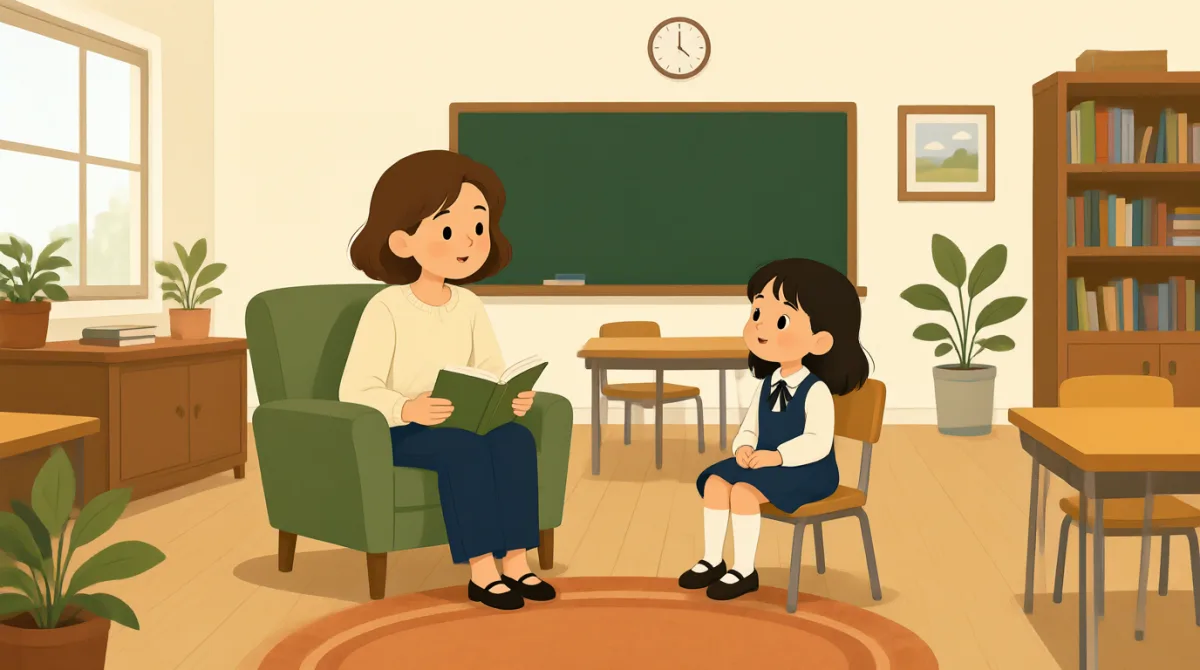

Mia, what was your first school like? Was it near your home?
ミア、初めて通った学校ってどんなところだった?家の近くだった?

It was a small school in my town. I walked there with my mother.
町にある小さな学校だったよ。母と一緒に歩いて通ったんだ。
Did you like your teachers? What did they teach you?
先生たちのことは好きだった?何を教えてもらったの?
Yes, they were kind. My favorite teacher taught us reading and art.
うん、みんな優しかったよ。一番好きな先生は、読み書きと図工を教えてくれたんだ。
What time did school start? Did you eat lunch there?
学校は何時に始まったの?そこでお昼ごはんを食べてた?
It started at eight. I ate lunch with my friends in the classroom.
8時に始まったよ。教室で友達とお昼ごはんを食べたんだ。
What did you do after class? Did you walk home together?
授業のあと、何をしてたの?一緒に歩いて帰った?
We walked home together and talked about our day. I remember it fondly.
一緒に歩いて帰って、その日のことを話したよ。懐かしい思い出だな。
語彙8
- first school初めて通った学校
This means the first school you attended as a child. Use it to ask about someone's early school experience.
子どものころに初めて通った学校のことです。相手の幼いころの学校生活について尋ねるときに使えます。
- near your home家の近く
This means close to the place where you live. Use it to ask how far away a school or other place was.
住んでいる場所から近い、という意味です。学校などの場所がどれくらい離れていたか尋ねるときに使えます。
- walked there歩いて行った
This means went to that place on foot. Use it to describe how you traveled somewhere in the past.
その場所まで徒歩で行った、という意味です。過去にどんな方法で移動したかを伝えるときに使えます。
- favorite teacher一番好きな先生
This means the teacher you liked best. Use it to talk about a teacher you remember fondly.
一番好きだった先生のことです。心に残っている先生について話すときに使えます。
- started at eight8時に始まった
This means school began at eight o'clock. Use this pattern to say when an event or activity began.
学校が8時に始まった、という意味です。何かがいつ始まったのか伝えるときに使える表現です。
- ate lunchお昼ごはんを食べた
This means had a midday meal. Use it to talk about what you ate and when.
昼の食事をした、という意味です。何をいつ食べたか話すときに使えます。
- after class授業のあと
This means after a lesson or the school day ended. Use it to ask or talk about what happened next.
授業や学校が終わったあと、という意味です。そのあとに何があったか尋ねたり話したりするときに使えます。
- walked home together一緒に歩いて帰った
This means went home on foot with other people. Use it to describe how you traveled home with someone.
ほかの人と一緒に徒歩で帰った、という意味です。誰かとどうやって家に帰ったかを話すときに使えます。
重要な文8
- 1
What was your first school like?
初めて通った学校ってどんなところだった?
This is a friendly way to ask someone about their early school experience. You can reuse “What was your first ___ like?” to ask about another place or experience.
相手が幼いころに通った学校について尋ねる、親しみのある言い方です。“What was your first ___ like?”(初めての___はどんな感じだった?)の形を使えば、別の場所や経験についても尋ねられます。
- 2
Was it near your home?
家の近くだった?
This asks whether a place was close to someone's home. You can replace “it” with a school, shop, or other place.
ある場所が相手の家の近くにあったかどうかを尋ねる表現です。“it”を学校やお店など、別の場所に置き換えられます。
- 3
I walked there with my mother.
母と一緒に歩いて行ったんだ。
This tells how someone traveled to a place in the past and who went with them. Change “walked” or “my mother” to describe your own experience.
過去にどんな方法である場所へ行ったのか、誰と一緒だったのかを伝える表現です。“walked”や“my mother”を変えれば、自分の経験を話せます。
- 4
My favorite teacher taught us reading and art.
一番好きな先生は、読み書きと図工を教えてくれたんだ。
This describes a teacher someone liked best and the subjects the teacher taught. You can change the teacher or subjects to share a school memory.
一番好きだった先生と、その先生が教えていた科目について話す表現です。先生や科目を変えて、学校の思い出を伝えられます。
- 5
It started at eight.
8時に始まったよ。
This is a simple way to say when something began. Use it to talk about school, work, or an event in the past.
何かがいつ始まったのかを簡潔に伝える表現です。過去の学校や仕事、イベントについて話すときに使えます。
- 6
I ate lunch with my friends in the classroom.
教室で友達とお昼ごはんを食べたんだ。
This sentence says what someone did, who they were with, and where they ate. You can change the meal, people, or place to describe your routine.
何をしたのか、誰と一緒だったのか、どこで食べたのかを伝える文です。食事や人、場所を変えて、自分の習慣について話せます。
- 7
We walked home together and talked about our day.
一緒に歩いて帰って、その日のことを話したよ。
This describes two things people did after school. Use “We [past action] and [past action]” to tell someone about a shared experience.
放課後にした二つのことを伝える表現です。“We [過去の行動] and [過去の行動]”の形を使って、一緒にしたことを話せます。
- 8
I remember it fondly.
懐かしい思い出だよ。
This means you remember something with warm, happy feelings. Use it when talking about a positive memory from the past.
温かく幸せな気持ちとともに何かを思い出す、という意味です。過去の楽しい思い出について話すときに使えます。