Where You Grew Up
育った場所
Emma and Mia talk about the towns and neighborhoods where they grew up. They ask what their homes and streets were like.
エマとミアが、育った町や近所について話します。家や通りがどんな様子だったかを尋ね合います。
会話9
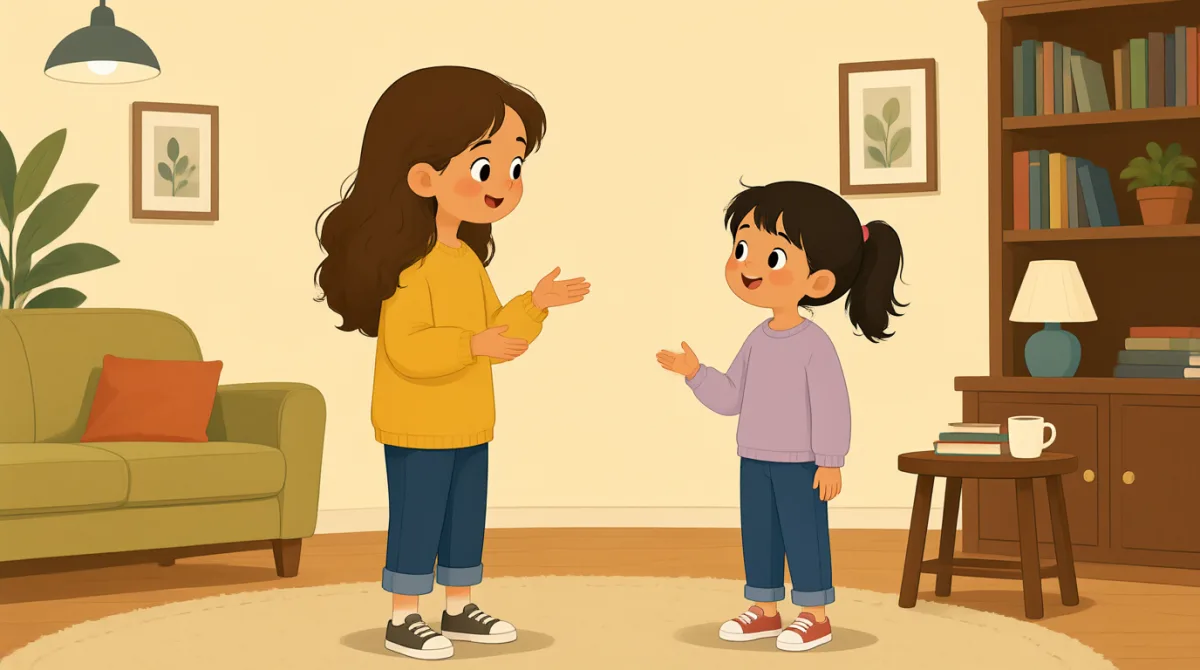

Mia, where did you grow up? Was it a big city?
ミア、どこで育ったの?大きな街だった?

I grew up in a small town near the mountains. It was very quiet.
山の近くの小さな町で育ったよ。すごく静かだった。
That sounds lovely. What was your neighborhood like?
いいね。近所はどんな感じだった?
There were little houses and a park. The streets were safe for children.
小さな家が並んでて、公園もあったよ。子どもにとって安全な通りだった。
Did you play outside with other kids after school?
放課後、ほかの子たちと外で遊んだ?
Yes, we rode our bikes and played in the park until dinner.
うん、自転車に乗ったり、公園で夕食の時間まで遊んだりしたよ。
I grew up in a busy city. Our street had shops and buses.
私はにぎやかな街で育ったよ。うちの通りにはお店やバスがあった。
Did you like living there?
そこで暮らすのは好きだった?
Yes. It was noisy, but my friends lived close by.
うん。騒がしかったけど、友達が近くに住んでたんだ。
語彙6
- grew up育った
This means lived as a child in a particular place. Use it to talk about where you spent your childhood.
「grew up」は、ある場所で子ども時代を過ごしたという意味です。子どもの頃にどこで暮らしていたかを話すときに使います。
- small town小さな町
A small town is a place with fewer people and buildings than a city. You can use this phrase to describe where you grew up.
「small town」は、街よりも人や建物が少ない場所のことです。育った場所を説明するときに使えます。
- near the mountains山の近く
This means close to the mountains. Use “near” to say that one place is not far from another.
「near the mountains」は、山から近いという意味です。「near」を使うと、ある場所が別の場所から遠くないことを表せます。
- neighborhood近所
A neighborhood is an area of a town or city where people live. Use this word when talking about the homes and streets around you.
「neighborhood」は、人々が暮らしている町や街の一画のことです。自分の周りにある家や通りについて話すときに使います。
- after school放課後
This means after classes finish for the day. You can use it to talk about activities children do later in the day.
「after school」は、その日の授業が終わった後という意味です。子どもたちが一日の後半にする活動について話すときに使えます。
- lived close by近くに住んでいた
This means lived nearby. Use it to say that someone’s home was not far away.
「lived close by」は、近くに住んでいたという意味です。誰かの家が遠くなかったことを伝えるときに使います。
重要な文8
- 1
Mia, where did you grow up?
ミア、どこで育ったの?
This is a friendly way to ask where someone spent their childhood. You can replace “Mia” with another person’s name.
相手が子ども時代をどこで過ごしたかを尋ねる、親しみのある言い方です。「Mia」の部分は、ほかの人の名前に置き換えられます。
- 2
Was it a big city?
大きな街だった?
Use this yes-or-no question to ask whether a place was a large city. You can change “big city” to another kind of place.
ある場所が大きな街だったかどうかを尋ねる、はい・いいえで答えられる質問です。「big city」を別の種類の場所に変えて使えます。
- 3
What was your neighborhood like?
近所はどんな感じだった?
This asks someone to describe the area where they lived. You can use “What was [place] like?” to ask about a place in the past.
住んでいた地域について説明してもらう質問です。「What was [place] like?」を使うと、過去の場所がどんな様子だったかを尋ねられます。
- 4
The streets were safe for children.
通りは子どもにとって安全だった。
This describes a neighborhood in the past. You can replace “safe” with another adjective, such as “quiet” or “busy.”
過去の近所の様子を説明する文です。「safe」は「quiet」や「busy」など、ほかの形容詞に置き換えられます。
- 5
Did you play outside with other kids after school?
放課後、ほかの子たちと外で遊んだ?
Use this question to ask about a past activity. Start with “Did you” and use the simple form of the verb, such as “play.”
過去の活動について尋ねる質問です。「Did you」で始め、その後には「play」のように動詞の原形を使います。
- 6
Yes, we rode our bikes and played in the park until dinner.
うん、自転車に乗ったり、公園で夕食の時間まで遊んだりしたよ。
This sentence describes activities that continued until a certain time. You can reuse the pattern “We [past activity] until [time or event].”
ある時点まで続いた活動について説明する文です。「We [過去の活動] until [時間や出来事].」という形も使えます。
- 7
Our street had shops and buses.
うちの通りにはお店やバスがあった。
This is a simple way to describe what was on a street in the past. Replace “shops and buses” with other things you remember.
過去の通りに何があったかを簡潔に説明する言い方です。「shops and buses」を、覚えているほかのものに置き換えてみましょう。
- 8
It was noisy, but my friends lived close by.
騒がしかったけど、友達が近くに住んでたんだ。
Use “but” to connect two different ideas: the street was noisy, and friends lived nearby. You can use this pattern to describe both a problem and something positive.
「but」は、異なる二つの内容をつなぐ言葉です。この文では、通りは騒がしかった一方で、友達が近くに住んでいたことを表しています。この形を使うと、困った点とよかった点を一緒に説明できます。