Helping Someone in Line
कतार में किसी की मदद करना
A confused traveler in the immigration line is unsure which form to complete. Mia explains what she learned and helps him find the right counter.
आव्रजन की कतार में खड़ा एक उलझन में पड़ा यात्री समझ नहीं पा रहा कि उसे कौन-सा फ़ॉर्म भरना है। Mia उसे बताती है कि उसने क्या सीखा है और सही काउंटर ढूँढ़ने में उसकी मदद करती है।
संवाद10
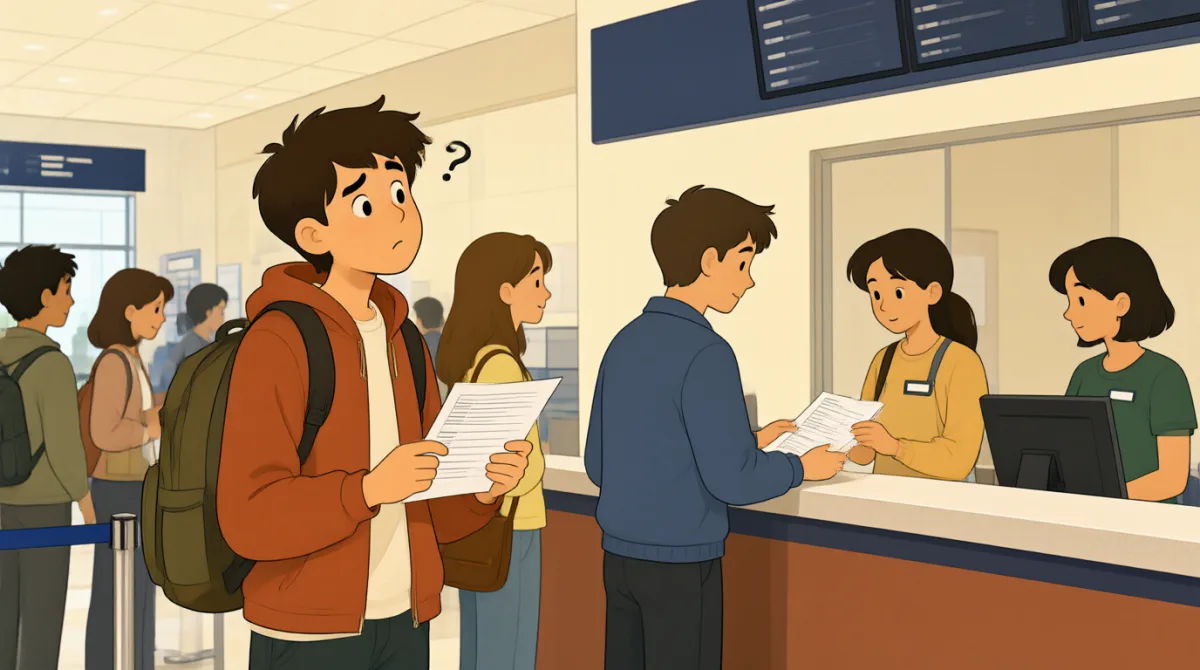

Excuse me, do you know which form I need to fill out? I’m visiting for a few days, but the signs are confusing.
माफ़ कीजिए, क्या आपको पता है कि मुझे कौन-सा फ़ॉर्म भरना है? मैं कुछ दिनों के लिए आया हूँ, लेकिन ये संकेत समझना मुश्किल है।

Sure. If you’re here for a short visit, you probably need the arrival card, not the work or study form.
ज़रूर। अगर आप यहाँ थोड़े समय के लिए आए हैं, तो शायद आपको आगमन कार्ड भरना होगा, काम या पढ़ाई वाला फ़ॉर्म नहीं।
That makes sense. I picked up a form near the entrance, but I’m not sure it’s the right one.
अच्छा, समझ में आया। मैंने प्रवेश द्वार के पास से एक फ़ॉर्म लिया था, लेकिन मुझे यक़ीन नहीं है कि वही सही है।
Let me take a look. Yes, this is the arrival card. You’ll need your passport and the address where you’re staying.
ज़रा मुझे देखने दीजिए। हाँ, यह आगमन कार्ड है। आपको अपना पासपोर्ट और जहाँ आप ठहरे हैं, उसका पता चाहिए होगा।
Thanks. I’ve got my hotel details on my phone. Do I fill it out before I get to the counter?
शुक्रिया। मेरे होटल की जानकारी मेरे फ़ोन में है। क्या मुझे काउंटर तक पहुँचने से पहले इसे भर लेना चाहिए?
Yes, it’s best to complete it while you’re in line. The immigration officer will ask about your visit, too.
हाँ, कतार में रहते हुए इसे भर लेना बेहतर है। आव्रजन अधिकारी आपसे आपकी यात्रा के बारे में भी पूछेंगे।
Got it. And where should I go after I finish? There are two counters up ahead.
समझ गया। भरने के बाद मुझे कहाँ जाना चाहिए? आगे दो काउंटर हैं।
The counter on the left is for visitors. The one on the right is for residents, so follow that sign.
बायाँ काउंटर आगंतुकों के लिए है। दायाँ वहाँ के निवासियों के लिए है, इसलिए उस संकेत का अनुसरण कीजिए।
That clears things up. Thanks for helping me out—I was starting to feel a little lost.
अब सब साफ़ हो गया। मेरी मदद करने के लिए शुक्रिया—मैं थोड़ा भटक-सा गया था।
No problem. I was confused at first, too. Just have your passport ready, and you’ll be fine.
कोई बात नहीं। शुरुआत में मैं भी उलझन में थी। बस अपना पासपोर्ट तैयार रखिए, सब ठीक रहेगा।
शब्दावली6
- fill outभरना
To complete a form by writing the required information on it. You can use this phrase when asking what information a form needs.
किसी फ़ॉर्म में ज़रूरी जानकारी लिखकर उसे पूरा करना। फ़ॉर्म में कौन-सी जानकारी भरनी है, यह पूछते समय आप इस अंग्रेज़ी वाक्यांश का इस्तेमाल कर सकते हैं।
- arrival cardआगमन कार्ड
A form that visitors may need to complete when they arrive in a country. Here, Mia explains that it is for someone visiting briefly.
वह फ़ॉर्म जिसे किसी देश में आने पर आगंतुकों को भरना पड़ सकता है। यहाँ Mia समझाती है कि यह थोड़े समय के लिए आने वाले व्यक्ति के लिए है।
- detailsजानकारी
Specific pieces of information. Here, David has his hotel address and other information saved on his phone.
कोई खास तथ्य या सूचना। यहाँ David ने अपने होटल का पता और दूसरी जानकारी फ़ोन में सहेज रखी है।
- complete itइसे पूरा भरना
To finish filling in a form. You can use this phrase to ask when you should finish paperwork.
फ़ॉर्म भरने का काम पूरा करना। काग़ज़ी कार्रवाई कब पूरी करनी है, यह पूछने के लिए आप इस अंग्रेज़ी वाक्यांश का इस्तेमाल कर सकते हैं।
- up aheadआगे
Farther forward in the direction you are going. David uses it to refer to the counters in front of him.
आप जिस दिशा में जा रहे हैं, उस ओर कुछ दूरी पर। David अपने सामने मौजूद काउंटरों की ओर इशारा करने के लिए इस वाक्यांश का इस्तेमाल करता है।
- helping me outमेरी मदद करने
Giving someone help or support. It is a friendly, informal way to thank someone for assisting you.
किसी को सहायता या सहारा देना। मदद के लिए किसी को धन्यवाद देने का यह दोस्ताना और अनौपचारिक तरीका है।
मुख्य वाक्य8
- 1
Excuse me, do you know which form I need to fill out?
माफ़ कीजिए, क्या आपको पता है कि मुझे कौन-सा फ़ॉर्म भरना है?
This is a polite way to ask for help with paperwork. You can reuse the pattern “Do you know which [item] I need to [action]?” when asking for directions or instructions.
काग़ज़ी कार्रवाई में मदद माँगने का यह एक विनम्र तरीका है। रास्ता या निर्देश पूछते समय आप “Do you know which [item] I need to [action]?” वाले ढाँचे का फिर से इस्तेमाल कर सकते हैं।
- 2
If you’re here for a short visit, you probably need the arrival card, not the work or study form.
अगर आप यहाँ थोड़े समय के लिए आए हैं, तो शायद आपको आगमन कार्ड भरना होगा, काम या पढ़ाई वाला फ़ॉर्म नहीं।
This sentence gives advice based on someone’s situation. Use “If you’re here for…” to explain which option may apply.
यह वाक्य किसी की परिस्थिति के आधार पर सलाह देता है। यह बताने के लिए कि कौन-सा विकल्प लागू हो सकता है, “If you’re here for…” का इस्तेमाल करें।
- 3
I picked up a form near the entrance, but I’m not sure it’s the right one.
मैंने प्रवेश द्वार के पास से एक फ़ॉर्म लिया था, लेकिन मुझे यक़ीन नहीं है कि वही सही है।
This explains what you have done while expressing uncertainty. You can replace “form” and “near the entrance” with another item and location.
इसमें बताया गया है कि आपने क्या किया है और साथ ही अनिश्चितता भी जताई गई है। आप “form” और “near the entrance” की जगह कोई दूसरी चीज़ और जगह रख सकते हैं।
- 4
Do I fill it out before I get to the counter?
क्या मुझे काउंटर तक पहुँचने से पहले इसे भर लेना चाहिए?
This is a useful way to check when to complete a task. You can reuse “Do I [action] before I [next step]?” to ask about the order of steps.
किसी काम को कब पूरा करना है, यह जानने का यह एक उपयोगी तरीका है। कामों का क्रम पूछने के लिए “Do I [action] before I [next step]?” वाले ढाँचे का फिर से इस्तेमाल कर सकते हैं।
- 5
The counter on the left is for visitors.
बायाँ काउंटर आगंतुकों के लिए है।
This gives a clear direction and explains who should use a particular counter. You can use “The [place] on the [side] is for…” to identify the right place or service.
इससे स्पष्ट निर्देश मिलता है और बताया जाता है कि किसी खास काउंटर का इस्तेमाल किसे करना चाहिए। सही जगह या सेवा बताने के लिए “The [place] on the [side] is for…” का इस्तेमाल कर सकते हैं।
- 6
That clears things up.
अब सब साफ़ हो गया।
This is a natural way to say that an explanation has made something easier to understand. Use it when someone has resolved your confusion.
कुछ समझना आसान हो गया है, यह कहने का यह एक सहज तरीका है। जब कोई आपकी उलझन दूर कर दे, तब इसका इस्तेमाल करें।
- 7
Thanks for helping me out—I was starting to feel a little lost.
मेरी मदद करने के लिए शुक्रिया—मैं थोड़ा भटक-सा गया था।
This thanks someone and explains why their help mattered. You can use “I was starting to feel a little…” to describe how you felt before someone assisted you.
इसमें किसी को धन्यवाद देने के साथ यह भी बताया जाता है कि उनकी मदद क्यों मायने रखती थी। किसी की मदद मिलने से पहले अपनी मनःस्थिति बताने के लिए “I was starting to feel a little…” का इस्तेमाल कर सकते हैं।
- 8
Just have your passport ready, and you’ll be fine.
बस अपना पासपोर्ट तैयार रखिए, सब ठीक रहेगा।
This gives simple, reassuring advice. You can use “Have your [item] ready, and you’ll be fine” to help someone feel prepared.
इसमें सरल और दिलासा देने वाली सलाह दी गई है। किसी को तैयार महसूस कराने के लिए “Have your [item] ready, and you’ll be fine” का इस्तेमाल कर सकते हैं।