Checking Other Medicines
अन्य दवाओं के बारे में पूछना
Emma mentions the vitamins and pain reliever she sometimes takes and asks whether they are safe to use with her new medicine. Jack checks for possible interactions and advises her what to avoid.
एमा उन विटामिनों और दर्द निवारक दवा का ज़िक्र करती है जिन्हें वह कभी-कभी लेती है, और पूछती है कि क्या नई दवा के साथ उनका सेवन सुरक्षित है। जैक दवाओं के बीच संभावित प्रतिक्रिया की जाँच करता है और बताता है कि उसे किन चीज़ों से बचना चाहिए।
संवाद10
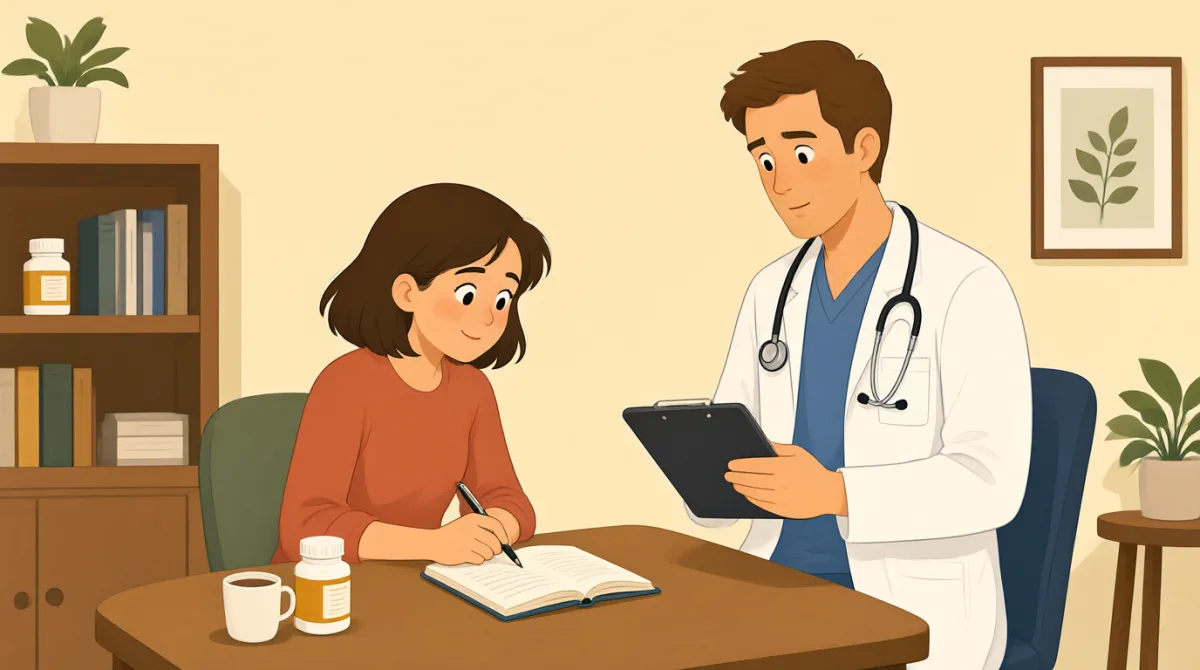

I take a daily multivitamin and sometimes use ibuprofen for headaches. Are those okay with my new medicine?
मैं रोज़ एक मल्टीविटामिन लेती हूँ और कभी-कभी सिरदर्द के लिए इबुप्रोफेन लेती हूँ। क्या नई दवा के साथ ये लेना ठीक है?

Let me check the medication list and the label. Do you know the name and strength of the pain reliever?
मुझे दवाओं की सूची और लेबल देखने दीजिए। क्या आपको दर्द निवारक दवा का नाम और उसकी खुराक पता है?
It’s regular ibuprofen, 200 milligrams. I only take one or two when I really need it.
यह सामान्य इबुप्रोफेन है, 200 मिलीग्राम। ज़रूरत पड़ने पर ही मैं एक या दो गोलियाँ लेती हूँ।
Thanks. This new medicine can interact with ibuprofen, so it’s best to avoid taking them together unless your doctor says otherwise.
धन्यवाद। इस नई दवा की इबुप्रोफेन के साथ प्रतिक्रिया हो सकती है, इसलिए बेहतर होगा कि आप दोनों एक साथ न लें—जब तक कि आपके डॉक्टर कुछ और न कहें।
Got it. What about the multivitamin? I usually take it with breakfast, so I’d rather not stop if I don’t have to.
समझ गई। मल्टीविटामिन के बारे में क्या? मैं इसे आमतौर पर नाश्ते के साथ लेती हूँ, इसलिए अगर ज़रूरी न हो तो इसे बंद नहीं करना चाहती।
That should be fine, but check the vitamin label for minerals like calcium or iron. They may affect how your medicine is absorbed.
वह ठीक होना चाहिए, लेकिन कैल्शियम या आयरन जैसे खनिजों के लिए विटामिन का लेबल देख लें। इनसे आपकी दवा के शरीर में अवशोषित होने पर असर पड़ सकता है।
There’s some calcium in it. Should I take the medicine at a different time, just to be on the safe side?
इसमें थोड़ा कैल्शियम है। क्या एहतियात के तौर पर मुझे दवा किसी और समय लेनी चाहिए?
Yes, leave at least two hours between them. And if you need something for a headache, call your doctor or ask us about a safer option.
हाँ, दोनों के बीच कम-से-कम दो घंटे का अंतर रखें। और अगर सिरदर्द के लिए आपको कुछ लेना हो, तो अपने डॉक्टर को फ़ोन करें या हमसे किसी ज़्यादा सुरक्षित विकल्प के बारे में पूछें।
Thanks, I’ll keep them apart and avoid the ibuprofen for now. I’m glad I checked before mixing anything.
धन्यवाद, मैं दोनों को अलग-अलग समय पर लूँगी और अभी इबुप्रोफेन से बचूँगी। अच्छा हुआ कि कुछ भी साथ में लेने से पहले मैंने पूछ लिया।
You’re welcome. Bring in the vitamin bottle next time, and we can double-check the ingredients together.
कोई बात नहीं। अगली बार विटामिन की बोतल ले आइए, फिर हम साथ मिलकर उसकी सामग्री दोबारा जाँच लेंगे।
शब्दावली8
- interact withके साथ प्रतिक्रिया करना
To affect each other when used together. Here, the new medicine may have an unwanted effect when taken with ibuprofen.
जब दो चीज़ें साथ में ली जाती हैं, तो उनका एक-दूसरे पर असर होना। यहाँ नई दवा को इबुप्रोफेन के साथ लेने पर अवांछित असर हो सकता है।
- unless your doctor says otherwiseजब तक आपके डॉक्टर कुछ और न कहें
This means you should follow the advice given, except when your doctor gives different instructions. Use it to explain when an exception is allowed.
इसका मतलब है कि दी गई सलाह का पालन करें, सिवाय इसके कि आपके डॉक्टर कोई अलग निर्देश दें। इसका इस्तेमाल यह बताने के लिए करें कि कब कोई अपवाद लागू होता है।
- What about the multivitamin?मल्टीविटामिन के बारे में क्या?
A natural way to ask about another item or topic. You can use “What about…?” to check whether something else is okay.
किसी दूसरी चीज़ या विषय के बारे में पूछने का यह एक स्वाभाविक तरीका है। यह जानने के लिए कि कोई और चीज़ ठीक है या नहीं, “What about…?” का इस्तेमाल कर सकते हैं।
- on the safe sideएहतियात के तौर पर
This means doing something extra to avoid possible problems. For example, you might leave more time between medicines just to be on the safe side.
इसका मतलब है संभावित समस्याओं से बचने के लिए अतिरिक्त सावधानी बरतना। उदाहरण के लिए, एहतियात के तौर पर आप दवाएँ लेने के बीच ज़्यादा समय का अंतर रख सकते हैं।
- leave at least two hours between themउनके बीच कम-से-कम दो घंटे का अंतर रखें
This means to wait two or more hours before taking the second item. You can use this structure to describe a time gap between activities or medicines.
इसका मतलब है कि दूसरी चीज़ लेने से पहले दो या उससे ज़्यादा घंटे इंतज़ार करें। इस वाक्य-रचना का इस्तेमाल गतिविधियों या दवाओं के बीच समय का अंतर बताने के लिए कर सकते हैं।
- a safer optionज़्यादा सुरक्षित विकल्प
A choice that is less likely to cause a problem. You can ask about a safer option when you are unsure what to use.
ऐसा विकल्प जिससे समस्या होने की संभावना कम हो। अगर आपको पता न हो कि क्या इस्तेमाल करना चाहिए, तो आप किसी ज़्यादा सुरक्षित विकल्प के बारे में पूछ सकते हैं।
- keep them apartउन्हें अलग-अलग समय पर लेना
Here, this means not taking the medicines or supplements at the same time. The phrase can also mean keeping two things separate.
यहाँ इसका मतलब है कि दवाएँ या सप्लीमेंट एक ही समय पर न लें। इस वाक्यांश का मतलब दो चीज़ों को अलग रखना भी हो सकता है।
- double-checkदोबारा जाँचना
To check something again to make sure it is correct. You can use it when you want someone to confirm details or information.
यह पक्का करने के लिए किसी चीज़ को फिर से जाँचना कि वह सही है। जब आप चाहते हैं कि कोई जानकारी या ब्योरे की पुष्टि करे, तब इसका इस्तेमाल कर सकते हैं।
मुख्य वाक्य8
- 1
Are those okay with my new medicine?
क्या नई दवा के साथ ये लेना ठीक है?
A useful way to ask whether two or more things can be used together. Replace “those” with the items you want to ask about.
यह पूछने का उपयोगी तरीका है कि क्या दो या उससे ज़्यादा चीज़ें एक साथ इस्तेमाल की जा सकती हैं। जिन चीज़ों के बारे में पूछना हो, उनके नाम से “those” की जगह लें।
- 2
Do you know the name and strength of the pain reliever?
क्या आपको दर्द निवारक दवा का नाम और उसकी खुराक पता है?
This politely asks for specific details about a medicine. You can use “Do you know the name and strength of…?” when checking a product.
दवा के बारे में खास जानकारी विनम्रता से पूछने का यह तरीका है। किसी उत्पाद की जानकारी लेते समय “Do you know the name and strength of…?” का इस्तेमाल कर सकते हैं।
- 3
This new medicine can interact with ibuprofen, so it’s best to avoid taking them together unless your doctor says otherwise.
इस नई दवा की इबुप्रोफेन के साथ प्रतिक्रिया हो सकती है, इसलिए बेहतर होगा कि आप दोनों एक साथ न लें—जब तक कि आपके डॉक्टर कुछ और न कहें।
This explains a possible risk and gives clear advice with an exception. The pattern “it’s best to avoid… unless…” is useful for cautious recommendations.
इस वाक्य में संभावित जोखिम बताया गया है और एक अपवाद के साथ साफ़ सलाह दी गई है। सावधानी से सलाह देने के लिए “it’s best to avoid… unless…” की वाक्य-रचना उपयोगी है।
- 4
I usually take it with breakfast, so I’d rather not stop if I don’t have to.
मैं इसे आमतौर पर नाश्ते के साथ लेती हूँ, इसलिए अगर ज़रूरी न हो तो इसे बंद नहीं करना चाहती।
This gives a reason and politely explains a preference. Use “I’d rather not…” to say what you prefer to avoid doing.
इस वाक्य में एक वजह बताकर अपनी पसंद विनम्रता से जाहिर की गई है। आप जो करना पसंद नहीं करते, वह बताने के लिए “I’d rather not…” का इस्तेमाल करें।
- 5
Should I take the medicine at a different time, just to be on the safe side?
क्या एहतियात के तौर पर मुझे दवा किसी और समय लेनी चाहिए?
This is a natural way to ask whether an extra precaution is advisable. You can replace “take the medicine at a different time” with another possible precaution.
यह पूछने का स्वाभाविक तरीका है कि क्या कोई अतिरिक्त सावधानी बरतना उचित होगा। “take the medicine at a different time” की जगह कोई दूसरी संभावित सावधानी रख सकते हैं।
- 6
And if you need something for a headache, call your doctor or ask us about a safer option.
और अगर सिरदर्द के लिए आपको कुछ लेना हो, तो अपने डॉक्टर को फ़ोन करें या हमसे किसी ज़्यादा सुरक्षित विकल्प के बारे में पूछें।
This gives two practical next steps and offers a safer alternative. The structure “if you need…, call… or ask…” is useful for giving advice.
इसमें आगे उठाए जा सकने वाले दो व्यावहारिक कदम बताए गए हैं और एक सुरक्षित विकल्प सुझाया गया है। सलाह देने के लिए “if you need…, call… or ask…” की वाक्य-रचना उपयोगी है।
- 7
I’m glad I checked before mixing anything.
अच्छा हुआ कि कुछ भी साथ में लेने से पहले मैंने पूछ लिया।
This expresses relief about checking something in advance. Use “I’m glad I checked before…” to describe a helpful precaution.
इससे पहले से जाँच कर लेने पर राहत जाहिर होती है। किसी उपयोगी सावधानी के बारे में बताने के लिए “I’m glad I checked before…” का इस्तेमाल करें।
- 8
Bring in the vitamin bottle next time, and we can double-check the ingredients together.
अगली बार विटामिन की बोतल ले आइए, फिर हम साथ मिलकर उसकी सामग्री दोबारा जाँच लेंगे।
This makes a friendly request and explains what will happen next. “Bring in… next time” is useful when asking someone to bring an item for review.
इसमें दोस्ताना ढंग से अनुरोध किया गया है और बताया गया है कि आगे क्या होगा। किसी से जाँच के लिए कोई चीज़ लाने को कहने में “Bring in… next time” उपयोगी है।