Asking How to Take It
पूछना कि दवा कैसे लेनी है
Emma asks Jack when and how often to take the medicine, and whether she should take it with food. Jack gives clear instructions and explains why it is important to follow them.
एमा जैक से पूछती है कि दवा कब और कितनी बार लेनी है, और क्या उसे खाने के साथ लेना चाहिए। जैक साफ़-साफ़ निर्देश देता है और बताता है कि उनका पालन करना क्यों ज़रूरी है।
संवाद9
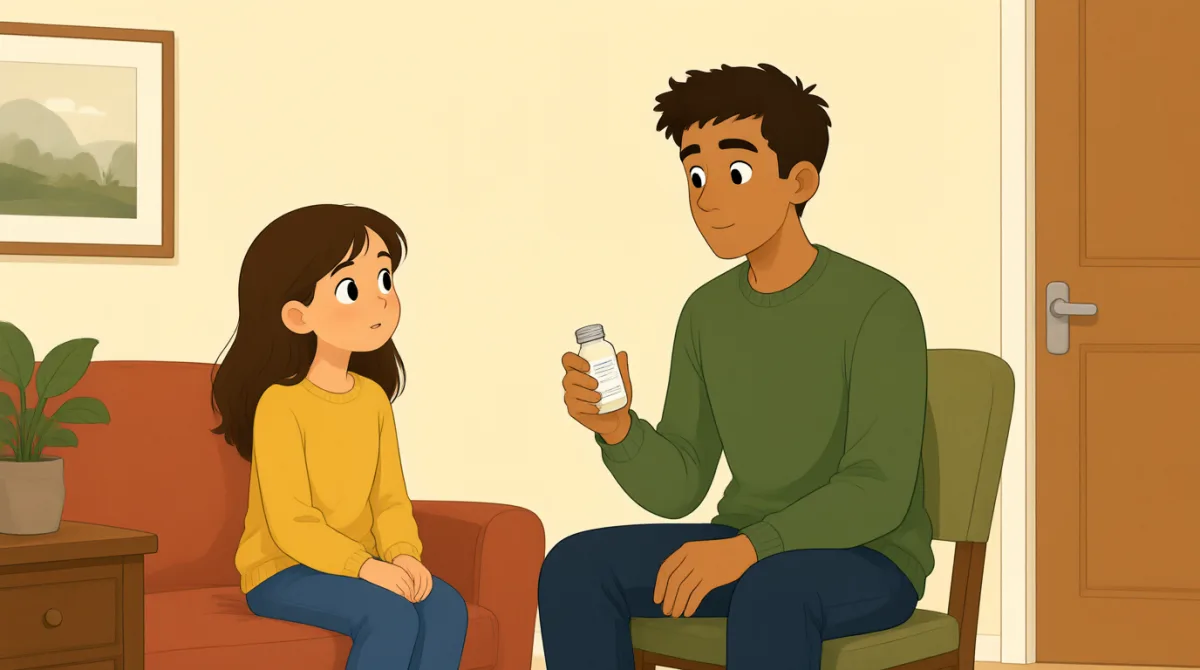

I picked up my prescription earlier, but I want to make sure I understand the directions. When should I take it?
मैं पहले अपनी दवा ले आई थी, लेकिन यह पक्का करना चाहती हूँ कि मुझे निर्देश समझ आ गए हैं। मुझे इसे कब लेना चाहिए?

Take one tablet twice a day, about twelve hours apart. Try to take it at roughly the same times each day.
दिन में दो बार एक गोली लें, दोनों खुराकों के बीच लगभग बारह घंटे का अंतर रखें। कोशिश करें कि इसे हर दिन लगभग एक ही समय पर लें।
Should I take it with food, or does that not matter? I usually skip breakfast when I’m rushing to work.
क्या मुझे इसे खाने के साथ लेना चाहिए, या इससे कोई फ़र्क नहीं पड़ता? काम की जल्दी में मैं अक्सर नाश्ता छोड़ देती हूँ।
It’s best to take it with food or a glass of milk. That can help prevent stomach irritation, so don’t take it on an empty stomach.
इसे खाने या एक गिलास दूध के साथ लेना बेहतर है। इससे पेट में जलन होने से बचाव हो सकता है, इसलिए इसे खाली पेट न लें।
Got it. If I forget a dose, should I take two tablets next time to catch up?
समझ गई। अगर मेरी कोई खुराक छूट जाए, तो क्या उसकी भरपाई के लिए अगली बार दो गोलियाँ लेनी चाहिए?
No, don’t double up. Take the missed dose when you remember, unless it’s nearly time for your next one; then skip it.
नहीं, एक साथ दो खुराकें न लें। छूटी हुई खुराक याद आते ही लें, जब तक कि अगली खुराक का समय लगभग न हो गया हो; अगर ऐसा है, तो छूटी हुई खुराक छोड़ दें।
How long should I keep taking it? I’m feeling better already, so I was wondering if I could stop early.
मुझे इसे कितने समय तक लेते रहना चाहिए? अब तो मेरी तबीयत बेहतर लग रही है, इसलिए सोच रही थी कि क्या मैं इसे समय से पहले बंद कर सकती हूँ।
Finish the full course, even if you feel better. Stopping early can make the infection harder to treat, so follow the label.
दवा का पूरा कोर्स पूरा करें, भले ही आप बेहतर महसूस कर रही हों। इसे बीच में बंद करने से संक्रमण का इलाज करना मुश्किल हो सकता है, इसलिए लेबल पर दिए निर्देशों का पालन करें।
Okay, I’ll set reminders for morning and evening, and take each tablet with food. Thanks for walking me through it.
ठीक है, मैं सुबह और शाम के लिए रिमाइंडर लगा लूँगी और हर गोली खाने के साथ लूँगी। मुझे सब समझाने के लिए धन्यवाद।
शब्दावली7
- directionsनिर्देश
Instructions for how to take or use a medicine. You can ask someone to explain the directions if they are unclear.
दवा कैसे लेनी या इस्तेमाल करनी है, इस बारे में बताई गई हिदायतें। अगर निर्देश स्पष्ट न हों, तो आप किसी से उन्हें समझाने के लिए कह सकते हैं।
- twice a dayदिन में दो बार
Two times each day. This phrase is often used to describe how frequently to take medicine.
हर दिन दो बार। यह वाक्यांश अक्सर बताता है कि दवा कितनी बार लेनी है।
- twelve hours apartबारह घंटे के अंतराल पर
With twelve hours between one dose and the next. Use “hours apart” to explain the time between repeated actions.
एक खुराक और अगली खुराक के बीच बारह घंटे का अंतर होना। दोहराई जाने वाली गतिविधियों के बीच का समय बताने के लिए “hours apart” का इस्तेमाल होता है।
- on an empty stomachखाली पेट
Without having eaten food. The phrase is often used when explaining whether medicine should be taken before or after a meal.
कुछ खाए बिना। इस वाक्यांश का इस्तेमाल अक्सर यह बताने के लिए होता है कि दवा खाना खाने से पहले या बाद में लेनी चाहिए।
- double upदोहरी खुराक लेना
To take twice as much as usual, often to make up for a missed dose. In this dialogue, Jack says not to do this.
आमतौर पर जितनी मात्रा लेते हैं, उससे दोगुनी मात्रा लेना—अक्सर छूटी हुई खुराक की भरपाई के लिए। इस बातचीत में जैक ऐसा न करने को कहता है।
- catch upभरपाई करना
To make up for something missed or delayed. You can use it to ask whether you should take extra medicine after forgetting a dose.
छूटी हुई या देर से हुई किसी चीज़ की भरपाई करना। खुराक लेना भूल जाने के बाद आप पूछ सकते हैं कि क्या अतिरिक्त दवा लेकर इसकी भरपाई करनी चाहिए।
- full courseदवा का पूरा कोर्स
The complete period of treatment prescribed for an illness. This phrase is useful when discussing how long to take medicine.
किसी बीमारी के लिए डॉक्टर द्वारा बताई गई पूरी अवधि का इलाज। दवा कितने समय तक लेनी है, इस बारे में बात करते समय यह वाक्यांश काम आता है।
मुख्य वाक्य8
- 1
I picked up my prescription earlier, but I want to make sure I understand the directions.
मैं पहले अपनी दवा ले आई थी, लेकिन यह पक्का करना चाहती हूँ कि मुझे निर्देश समझ आ गए हैं।
Use this to explain why you are asking for help with medication instructions. “I want to make sure I understand…” is also useful when checking any important information.
दवा लेने के निर्देशों के बारे में मदद क्यों माँग रहे हैं, यह बताने के लिए इस वाक्य का इस्तेमाल करें। “I want to make sure I understand…” का इस्तेमाल किसी भी ज़रूरी जानकारी को जाँचने के लिए भी किया जा सकता है।
- 2
Take one tablet twice a day, about twelve hours apart.
दिन में दो बार एक गोली लें, दोनों खुराकों के बीच लगभग बारह घंटे का अंतर रखें।
This gives a clear amount and schedule. The pattern “Take [amount] [how often]” is useful for giving simple instructions.
इसमें दवा की मात्रा और समय-सारणी साफ़ तौर पर बताई गई है। आसान निर्देश देने के लिए “Take [amount] [how often]” का ढाँचा उपयोगी है।
- 3
Should I take it with food, or does that not matter?
क्या मुझे इसे खाने के साथ लेना चाहिए, या इससे कोई फ़र्क नहीं पड़ता?
This is a natural way to ask whether food affects how you should take something. You can reuse “Should I take it with…?” for other medication questions.
यह पूछने का स्वाभाविक तरीका है कि खाना किसी चीज़ को लेने के तरीके को प्रभावित करता है या नहीं। दवा से जुड़े दूसरे सवालों के लिए “Should I take it with…?” का इस्तेमाल कर सकते हैं।
- 4
That can help prevent stomach irritation, so don’t take it on an empty stomach.
इससे पेट में जलन होने से बचाव हो सकता है, इसलिए इसे खाली पेट न लें।
This explains a reason and gives a clear instruction. Use “That can help prevent…” to describe how an action may avoid a problem.
इस वाक्य में एक कारण बताया गया है और साफ़ निर्देश दिया गया है। किसी काम से समस्या होने की आशंका कम कैसे हो सकती है, यह बताने के लिए “That can help prevent…” का इस्तेमाल करें।
- 5
Take the missed dose when you remember, unless it’s nearly time for your next one; then skip it.
छूटी हुई खुराक याद आते ही लें, जब तक कि अगली खुराक का समय लगभग न हो गया हो; अगर ऐसा है, तो उसे छोड़ दें।
This sentence explains what to do after forgetting a dose and includes an exception. The structure “Do X, unless…; then…” is useful for giving conditional instructions.
यह वाक्य बताता है कि खुराक लेना भूल जाने पर क्या करना चाहिए और इसमें एक अपवाद भी शामिल है। शर्त के साथ निर्देश देने के लिए “Do X, unless…; then…” का ढाँचा उपयोगी है।
- 6
Finish the full course, even if you feel better.
दवा का पूरा कोर्स पूरा करें, भले ही आप बेहतर महसूस कर रही हों।
Use this to tell someone to continue a treatment for the prescribed time. “Even if” introduces something that does not change the advice.
किसी को बताई गई पूरी अवधि तक इलाज जारी रखने के लिए यह वाक्य इस्तेमाल करें। “Even if” ऐसी बात का परिचय देता है जिससे सलाह नहीं बदलती।
- 7
Stopping early can make the infection harder to treat, so follow the label.
इसे बीच में बंद करने से संक्रमण का इलाज करना मुश्किल हो सकता है, इसलिए लेबल पर दिए निर्देशों का पालन करें।
This gives a reason for following the instructions. The pattern “X can make [something] harder to…” is useful for explaining possible consequences.
इसमें निर्देशों का पालन करने का कारण बताया गया है। संभावित नतीजे समझाने के लिए “X can make [something] harder to…” का ढाँचा उपयोगी है।
- 8
Okay, I’ll set reminders for morning and evening, and take each tablet with food.
ठीक है, मैं सुबह और शाम के लिए रिमाइंडर लगा लूँगी और हर गोली खाने के साथ लूँगी।
This sentence shows that the speaker understands and will follow the instructions. You can adapt “I’ll set reminders for…” when describing a plan to remember regular tasks.
इस वाक्य से पता चलता है कि बोलने वाले ने निर्देश समझ लिए हैं और उनका पालन करेंगे। नियमित काम याद रखने की योजना बताते समय “I’ll set reminders for…” को अपने हिसाब से इस्तेमाल कर सकते हैं।