Noticing the Broken Fence
متوجهشدن از خرابشدن حصار
Jack notices that the fence between his yard and his neighbor Mia’s has started leaning. They take a closer look and talk about what needs fixing.
جک متوجه میشود حصار بین حیاط او و حیاط همسایهاش، میا، کج شده است. آنها از نزدیکتر نگاه میکنند و دربارهٔ چیزهایی که باید تعمیر شوند صحبت میکنند.
گفتوگو8
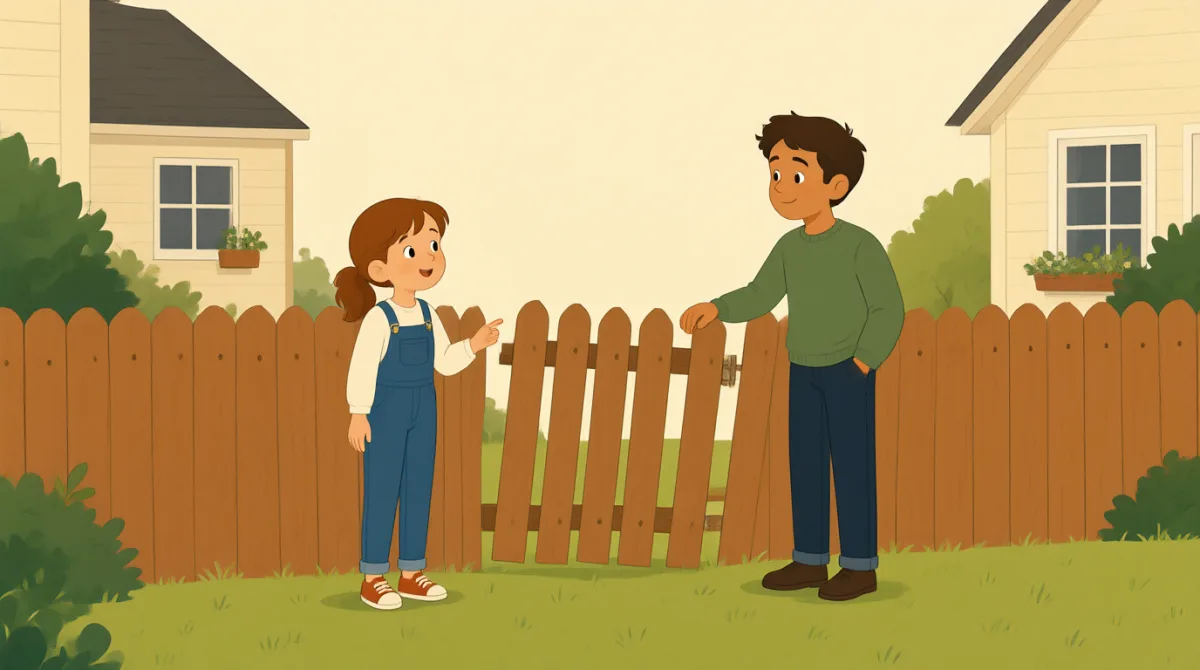

Hey, Mia, have you noticed the fence between our yards? It’s started leaning pretty badly near the back.
سلام میا، متوجه حصار بین حیاطهامون شدی؟ قسمت پشتش حسابی کج شده.

Oh, I hadn’t seen that. Is it leaning toward your yard or mine?
اوه، من متوجه نشده بودم. به سمت حیاط تو کج شده یا حیاط من؟
Toward mine, mostly. I spotted it this morning when I was taking out the trash.
بیشتر به سمت حیاط من. امروز صبح وقتی داشتم زبالهها رو بیرون میبردم دیدمش.
Let’s take a closer look. The boards look a little loose from here, too.
بیا از نزدیکتر نگاه کنیم. از اینجا تختهها هم یهکم شل به نظر میرسن.
Yeah, this post is wobbly, and there’s a gap at the bottom. I think the ground shifted after all that rain.
آره، این تیرک لق شده و پایینش هم یه فاصله افتاده. فکر کنم بعد از اون همه بارون، زمین جابهجا شده.
That makes sense. Do you think we can fix just this section, or does the whole fence need work?
منطقیه. فکر میکنی فقط همین قسمت رو میتونیم تعمیر کنیم یا کل حصار نیاز به تعمیر داره؟
Hard to tell yet. A couple of boards might need replacing, but we should check the posts before it gets worse.
هنوز معلوم نیست. شاید لازم باشه چندتا از تختهها رو عوض کنیم، ولی قبل از اینکه بدتر بشه باید تیرکها رو بررسی کنیم.
Agreed. Let’s figure out what needs fixing first. Then we can look into the cost and decide what to do.
موافقم. اول ببینیم چیها نیاز به تعمیر دارن. بعد میتونیم هزینهش رو بررسی کنیم و تصمیم بگیریم چی کار کنیم.
واژگان8
- started leaningشروع به کجشدن
Began to tilt to one side. Use this to describe something that is no longer standing straight.
یعنی چیزی شروع کرده به خمشدن یا کجشدن به یک طرف. وقتی چیزی دیگر صاف و عمودی نایستاده، از این عبارت استفاده کن.
- take a closer lookاز نزدیکتر نگاه کردن
Look at something more carefully. You can use this when you want to inspect a problem together.
یعنی چیزی را با دقت بیشتری نگاهکردن. وقتی میخواهید با هم مشکلی را بررسی کنید، میتوانید از این عبارت استفاده کنید.
- wobblyلق
Unsteady and moving from side to side. Here, it describes a fence post that may need repair.
یعنی محکم و ثابت نیست و از یک طرف به طرف دیگر تکان میخورد. اینجا برای توصیف تیرک حصاری به کار رفته که شاید نیاز به تعمیر داشته باشد.
- a gap at the bottomیک فاصله در قسمت پایین
An open space near the lower edge of something. Use this phrase to point out a space that should not be there.
یعنی فضای خالی نزدیک لبهٔ پایینی چیزی. از این عبارت برای اشاره به فاصلهای استفاده کن که نباید وجود داشته باشد.
- the ground shiftedزمین جابهجا شد
The earth moved or changed position. This phrase can explain why a fence or other structure has become unstable.
یعنی خاک حرکت کرد یا از جای خود تغییر موقعیت داد. این عبارت میتواند توضیح دهد چرا حصار یا سازهٔ دیگری ناپایدار شده است.
- Hard to tell yet.هنوز معلوم نیست.
It is not possible to know for sure at this time. Use this short response when you need more information before deciding.
یعنی در حال حاضر نمیشود با اطمینان چیزی را دانست. وقتی پیش از تصمیمگیری به اطلاعات بیشتری نیاز داری، از این پاسخ کوتاه استفاده کن.
- need replacingنیاز به تعویض داشتن
Need to be removed and replaced with new ones. Use this phrase when something is too damaged to keep using.
یعنی چیزی باید برداشته شود و مورد تازهای جای آن را بگیرد. وقتی چیزی آنقدر آسیب دیده که دیگر نمیشود از آن استفاده کرد، این عبارت به کار میرود.
- look into the costهزینه را بررسی کردن
Find out how much something will cost. You can use this phrase when you are considering a repair or purchase.
یعنی فهمیدن اینکه چیزی چقدر هزینه دارد. وقتی به تعمیر یا خرید چیزی فکر میکنی، میتوانی از این عبارت استفاده کنی.
جملات کلیدی8
- 1
It’s started leaning pretty badly near the back.
قسمت پشتش حسابی کج شده.
This sentence clearly describes a problem and says where it is. Reuse “It’s started [doing something]” to report a recent change.
این جمله مشکلی را بهروشنی توصیف میکند و میگوید کجا قرار دارد. برای گزارش یک تغییر تازه، از الگوی “It’s started [doing something]” (تازه شروع کرده [کاری را انجام دهد]) دوباره استفاده کن.
- 2
Let’s take a closer look.
بیا از نزدیکتر نگاه کنیم.
This is a natural way to suggest examining something more carefully together. You can use it when checking a problem or detail.
این راهی طبیعی برای پیشنهاد بررسی دقیقتر چیزی با هم است. وقتی مشکلی یا جزئیاتی را بررسی میکنید، میتوانی از آن استفاده کنی.
- 3
I think the ground shifted after all that rain.
فکر کنم بعد از اون همه بارون، زمین جابهجا شده.
This sentence gives a possible reason for what happened. Reuse “I think [something happened] after [event]” to explain a likely cause.
این جمله دلیل احتمالی اتفاقی را بیان میکند. برای توضیح یک علت احتمالی، از الگوی “I think [something happened] after [event]” (فکر میکنم بعد از [رویداد]، [اتفاقی افتاده]) دوباره استفاده کن.
- 4
Do you think we can fix just this section, or does the whole fence need work?
فکر میکنی فقط همین قسمت رو میتونیم تعمیر کنیم یا کل حصار نیاز به تعمیر داره؟
This is a useful way to ask whether a repair can be limited or needs to be larger. Reuse the “just this …, or the whole …?” structure when comparing options.
این روش مفیدی برای پرسیدن دربارهٔ محدودبودن تعمیر به بخشی از کار یا نیاز به تعمیر گستردهتر است. هنگام مقایسهٔ گزینهها، از ساختار “just this …, or the whole …?” (فقط همین … یا کل …؟) دوباره استفاده کن.
- 5
Hard to tell yet.
هنوز معلوم نیست.
This short, conversational response says you do not have enough information to decide. You can use it before checking something more carefully.
این پاسخ کوتاه و محاورهای میگوید اطلاعات کافی برای تصمیمگیری نداری. میتوانی پیش از بررسی دقیقتر چیزی از آن استفاده کنی.
- 6
A couple of boards might need replacing, but we should check the posts before it gets worse.
شاید لازم باشه چندتا از تختهها رو عوض کنیم، ولی قبل از اینکه بدتر بشه باید تیرکها رو بررسی کنیم.
This sentence identifies a possible repair and suggests a sensible next step. Reuse “might need [action], but we should [next step]” to discuss uncertain problems.
این جمله به تعمیر احتمالی اشاره میکند و پیشنهاد میدهد قدم بعدی منطقی چه باشد. برای صحبت دربارهٔ مشکلاتی که هنوز از آنها مطمئن نیستی، از الگوی “might need [action], but we should [next step]” (شاید لازم باشد [کاری انجام دهیم]، ولی باید [قدم بعدی را برداریم]) دوباره استفاده کن.
- 7
Let’s figure out what needs fixing first.
اول ببینیم چیها نیاز به تعمیر دارن.
This is a practical way to suggest identifying the problem before making a plan. You can use “Let’s figure out…” to propose solving something together.
این راهی عملی برای پیشنهاد پیداکردن مشکل پیش از برنامهریزی است. برای پیشنهاد حل مشترک یک مسئله، میتوانی از “Let’s figure out…” (بیا بفهمیم…) استفاده کنی.
- 8
Then we can look into the cost and decide what to do.
بعد میتونیم هزینهش رو بررسی کنیم و تصمیم بگیریم چی کار کنیم.
This sentence lays out a clear next step after assessing a problem. Reuse “look into the cost” when you need to find out the price before deciding.
این جمله قدم بعدی روشنی را پس از بررسی مشکل بیان میکند. وقتی لازم است پیش از تصمیمگیری از قیمت چیزی باخبر شوی، از “look into the cost” (هزینه را بررسی کردن) دوباره استفاده کن.